Papers
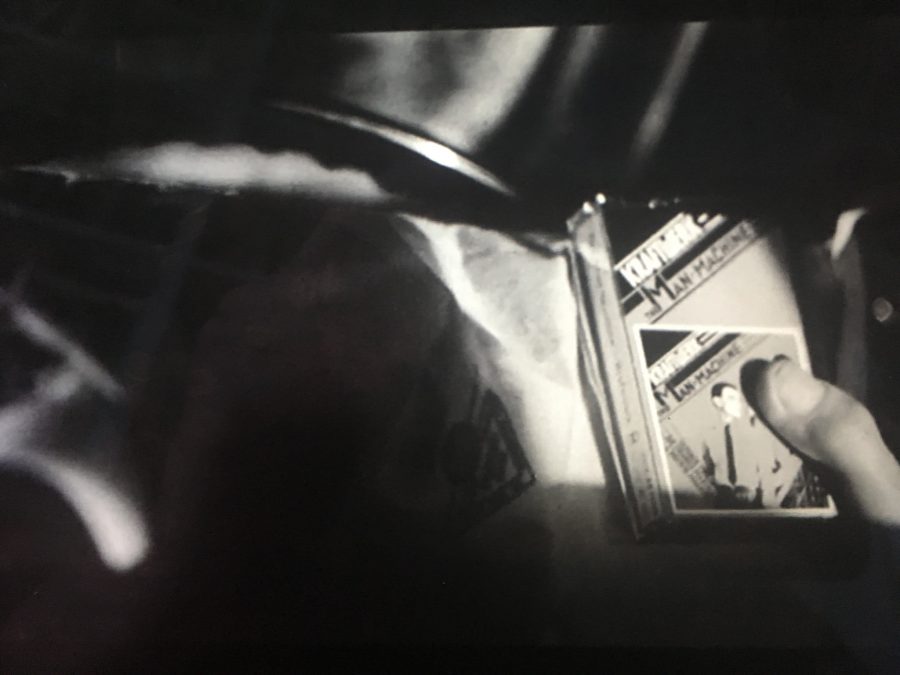
“We are the children of Fritz Lang and Werner von Braun. We are the link between the ‘20s and the ‘80s. All change in society passes through a sympathetic collaboration with tape recorders, synthesisers and telephones. Our reality is an electronic reality.”
David Cunningham, Deputy Director of the IMCC, on Kraftwerk, modernism and the late great Florian Schneider in the latest issue of Radical Philosophy here.
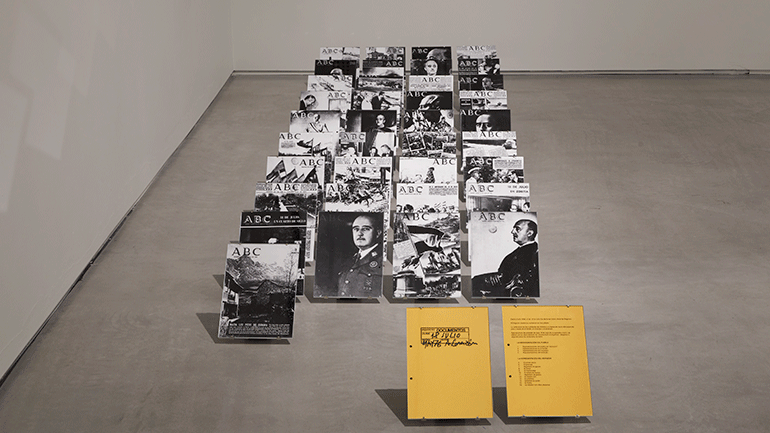
Delighted to say that podcast recordings of the IMCC Public Lectures and Exchanges on Philosophy, Politics and Culture, held in collaboration with the Centre for Research in Modern European Philosophy, held at Westminster between January and March 2019 are now available online.
17 January 2019 – Lecture No 1:
Professor Catherine Malabou (CRMEP, Kingston) – Is Science the Subject of Philosophy? Miller, Badiou and Derrida
24 January 2019 – Lecture No 2:
Dr Lucy Bond (IMCC, Westminster)/Professor Howard Caygill (CRMEP, Kingston) – Is Memory the Basis of History (After Trump)?
7 February 2019 – Lecture No 3:
Professor Stella Sandford (CRMEP, Kingston) – Reason in Reverse – Kant and Freud on Faults
28 February 2019 – Lecture No 4:
Dr Radha D’Souza (Westminster Law School)/Professor Peter Hallward (CRMEP, Kingston) – What’s Wrong with Human Rights?
14 March 2019 – Lecture No 5:
Professor Étienne Balibar (CRMEP, Kingston) – Towards a Socialist Cosmopolitanism
28 March 2019 – Lecture No 6:
Dr David Cunningham (IMCC, Westminster)/Professor Peter Osborne (CRMEP, Kingston) – The Poetics of Contemporary Art
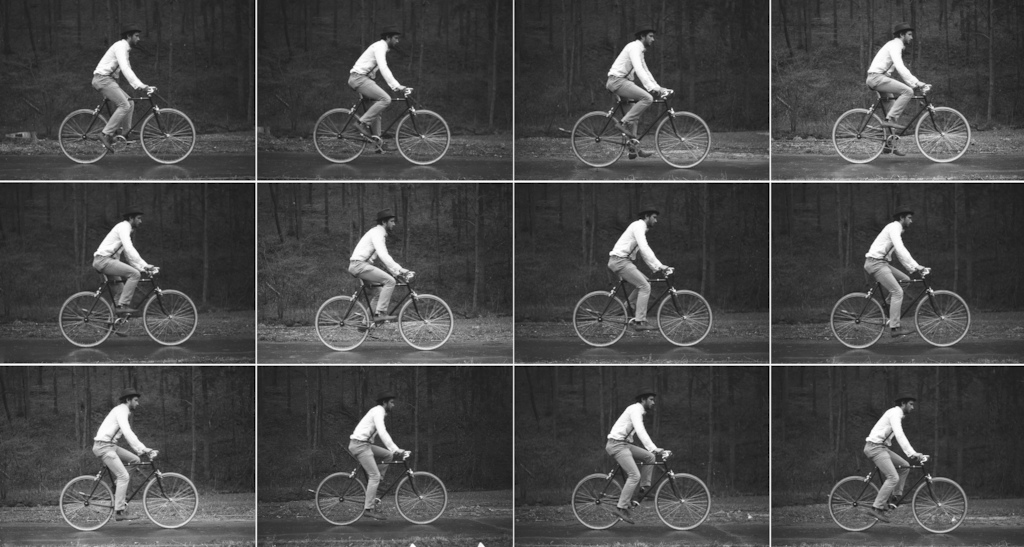
We are delighted to announce the publication of a new essay by IMCC member, Sara Dominici, ‘”Cyclo-Photographers”, Visual Modernity and the Development of Camera Technologies, 1880s-1890s’, in the journal History of Photography (42.1). For a few lucky people, you can download a copy for free via the following link (the first 50 on a first come first served basis):
https://www.tandfonline.com/eprint/w2ZiVhX3mTNjcAaV2EYy/full
Sara demonstrates in the essay how the intertwined development of popular photography and cycling in Britain was felt so close that, in the 1880s, contemporary commentators could write of ‘cyclo-photographers’. The camera apparatus available at this time, bulky and fragile, was largely impractical to carry on a ride, and thus cyclo-photographers joined outdoor photographers in asking manufacturers for simpler and easier to operate cameras. However, a close reading of primary sources reveals that such demands were also the result of a new engagement with the possibility of seeing enabled by cycling itself. What was the cyclo-photographers’ experience of visual modernity? The article explores whether, and in what ways, the parallel emergence of a desire for compact cameras was linked to the new, and interconnected, ways of moving and seeing that the engagement with these two modern cultural technologies had made possible.
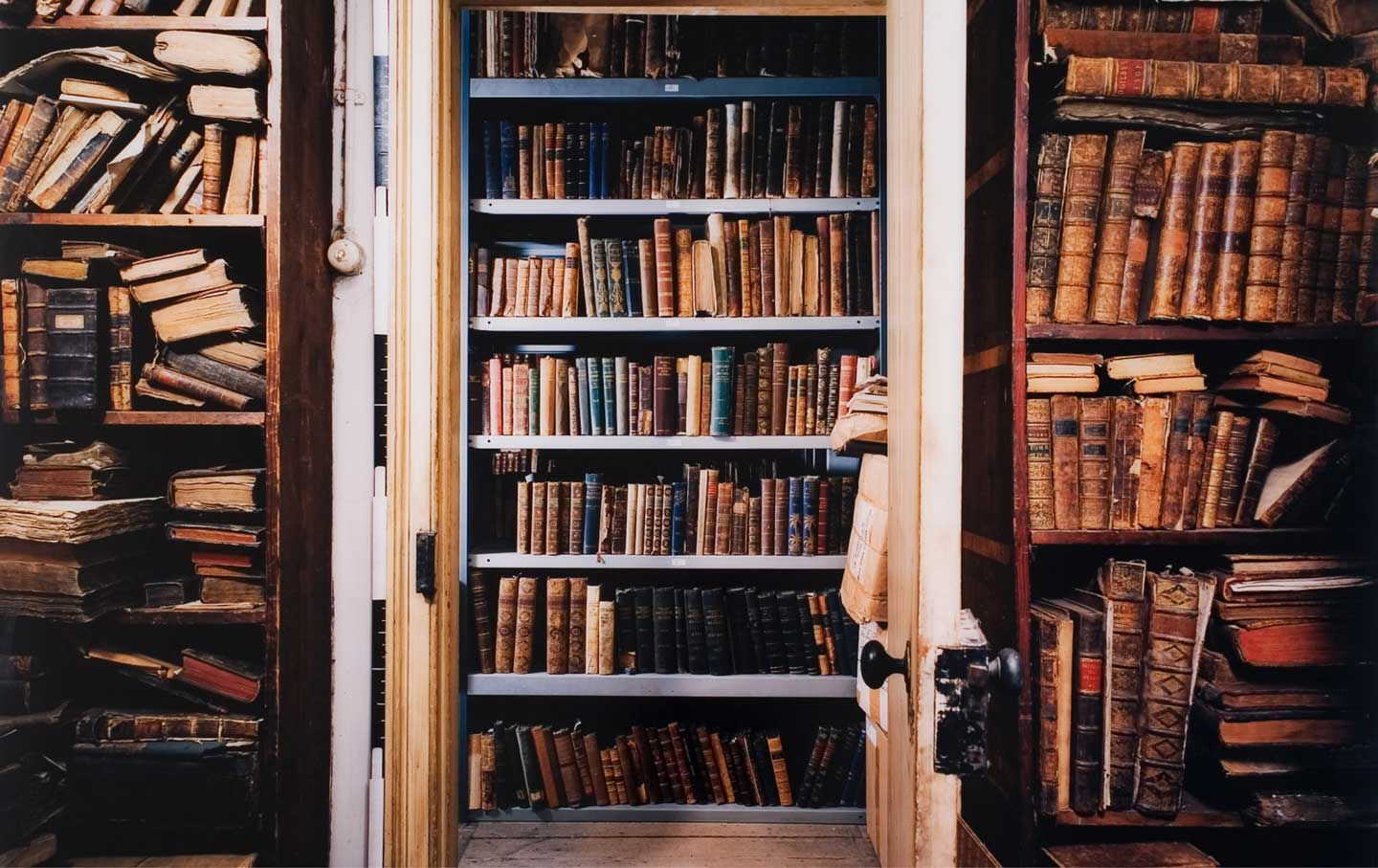
There’s an interview in French with our own Elinor Taylor about her forthcoming book The Popular Front Novel in Britain, 1934-1940 in the excellent journal période. Read it here.
J’ai commencé à m’intéresser aux rapports que la littérature entretient avec le communisme et l’antifascisme lorsque j’étais une étudiante de premier cycle. Je m’interrogeais sur la manière dont les écrits modernistes, dont on considère qu’ils ont atteint leur point culminant au milieu des années 1920, ont été transformés par la montée du fascisme et l’avènement de la Seconde Guerre mondiale. Je m’intéressais également aux écrivains prolétariens et socialistes, tout en constatant que ces figures, ainsi que les développements sociopolitiques plus vastes des dernières années de l’entre-deux-guerres, n’étaient alors que rarement abordés dans l’histoire littéraire majoritaire. […].
While we’ve got your attention: a few more recent publications by IMCC people to plug also …
The latest double issue of New Formations, on the theme of Death and the Contemporary, with contributions from Andrea Brady, Lisa Downing, Roger Luckhurst, Warren Montag, and a host of others, is co-edited by our Georgina Colby. Courtesy of the nice people at Lawrence & Wishart, you can read Georgina’s introduction to the issue for free here.
As if that wasn’t enough, our own Lucy Bond has also co-edited the recent special issue of Textual Practice on ‘Planetary Memory in Contemporary American Fiction’, including her own article on Philipp Meyer’s American Rust. Check out the issue introduction here.
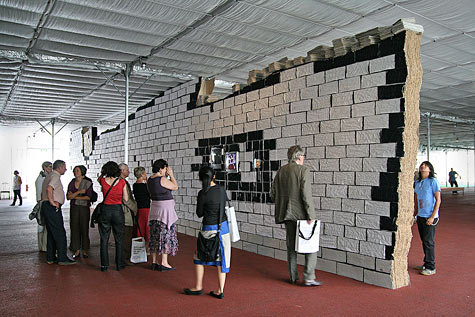
A quick plug for the new Journal of Visual Culture Reader, a virtual themed issue, which includes material assembled from JVC’s extensive archives. To celebrate the coinciding in 2017 of the Venice Biennale, documenta, and Skulptur Projekte Münster, the ‘Exhibitionary Cultures’ reader includes – all free of charge – an array of contributions by artists, architects, academics and critics, curators, and museum and gallery educators, including David Cunningham of the IMCC’s critique (co-authored with Stewart Martin) of the Documenta 12 Magazines Project. Other pieces cover subjects as wide-ranging as the 55th Venice Biennale, the American Museum of Natural History, the Guangzhou Triennial, the Buenos Aires commons, South Africa’s Apartheid Museum, Maison des Civilisations et de L’unité Réunionnaise, the National Museum of the American Indian, the Singapore Biennale, and the Paris Universal Exposition of 1900.
Find the entirely gratis reader here: http://journals.sagepub.com/page/vcu/collections/virtual-issues/exhibitionary-cultures
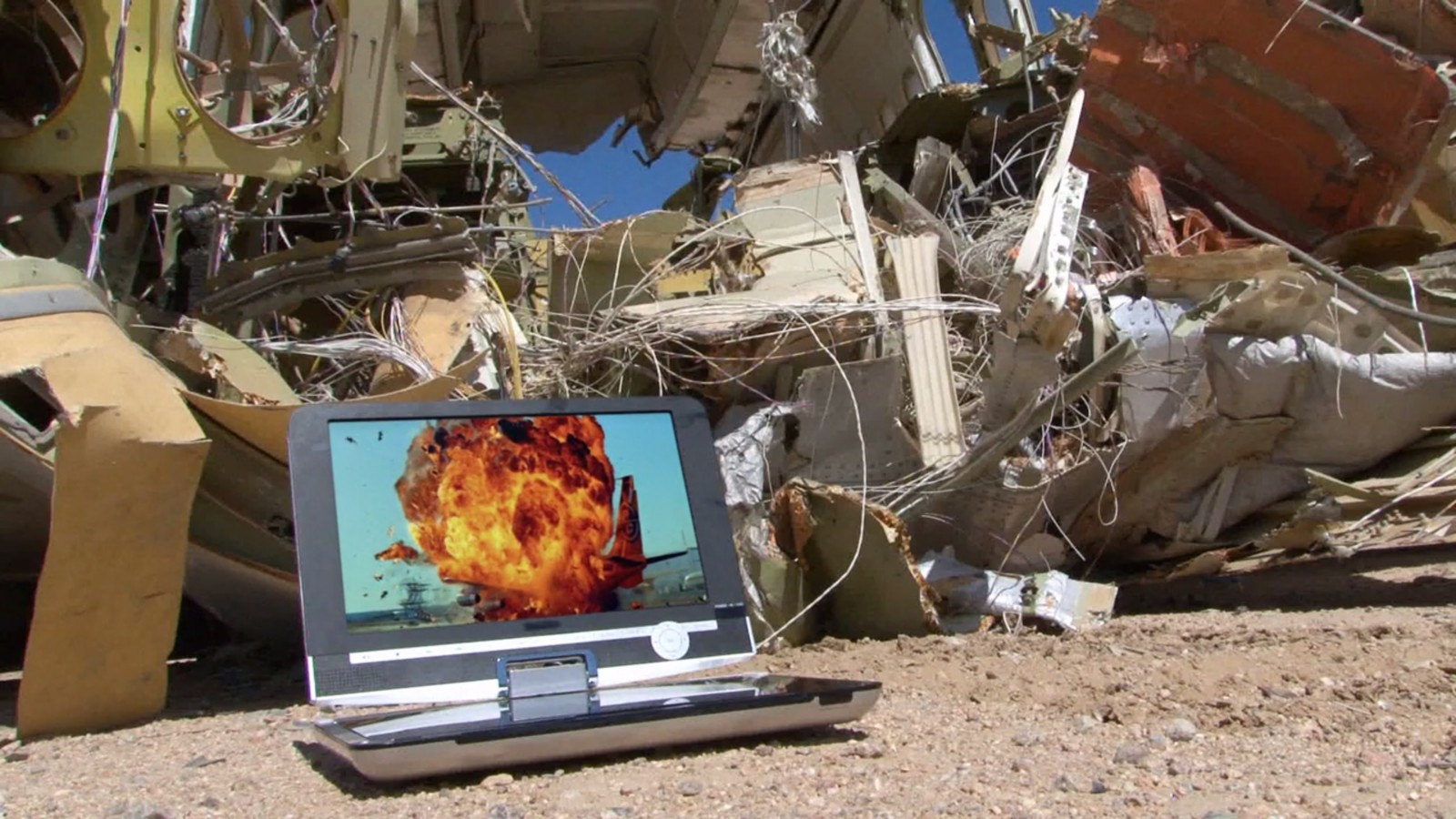
The final two installments of David Cunningham’s series of pieces on the theme of Photography and the Language of Things are now up on the Still Searching blog hosted by the Winterthur Fotomuseum in Switzerland: Part Five and Part Six.
Here’s the opening to the final piece …
I ended my last post with the suggestion that underlying the recent turn to the ‘object’ or ‘thing’ one might glimpse a certain ‘posthumanist’ anxiety – an anxiety occasioned by the degree to which capitalist modernity is a world “ruled by abstractions”, in the words of Marx; abstractions that have come to assume an objective reality which is ‘quasi-independent’ of the things, objects and individuals that constitute them, but which is not ‘material’ in any usual empirical sense. Such abstract social forms – money, the commodity, the value form – do not merely ‘conceal’ the ‘real’ social relations and objective networks constitutive of capitalism, but, on the contrary, actually are the ‘real’ relations that structure capitalist modernity as an increasingly global mode of social life encompassing human and non-human ‘things’ alike. The actual organisation of social and material relations is driven by a real abstraction that, far from being a question of mere faulty thinking or false consciousness, “moves within the object itself”. […]
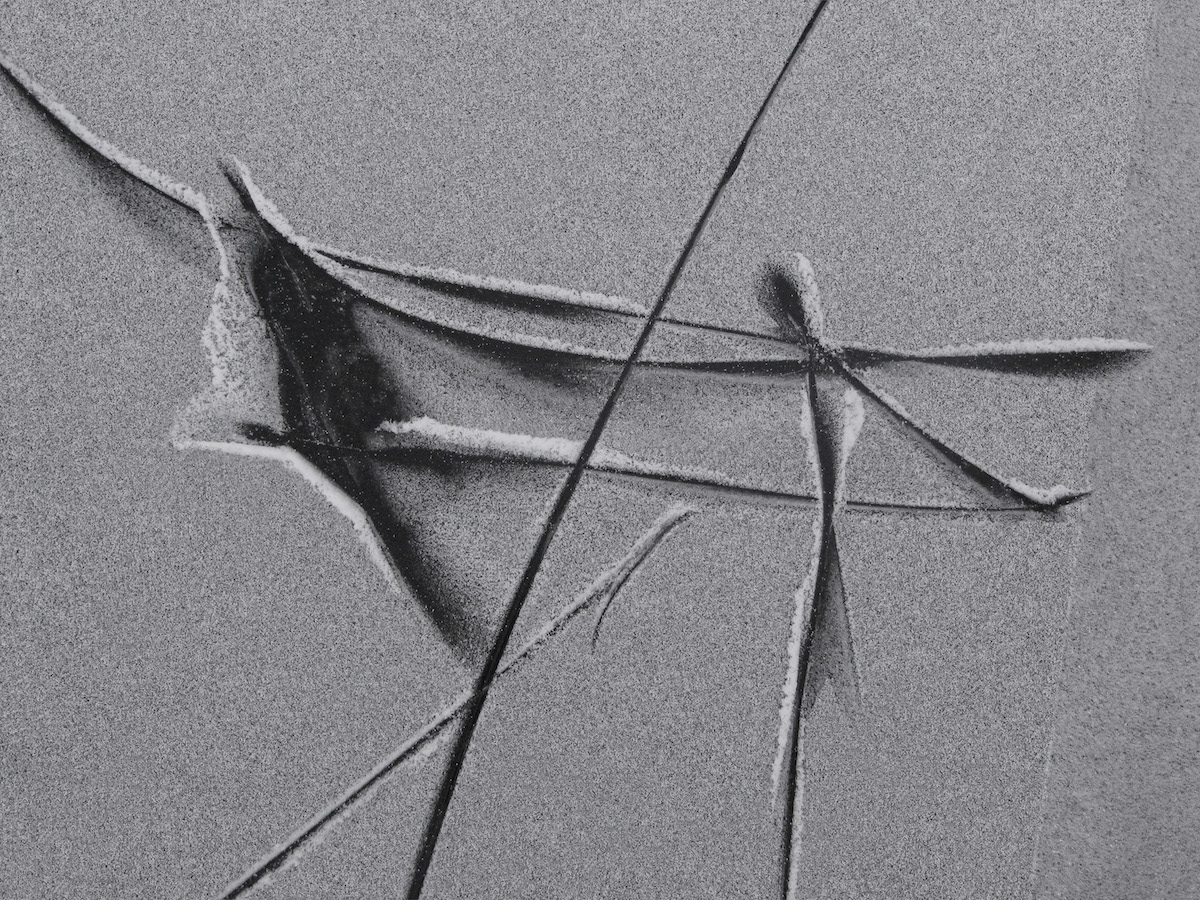
In the second of our collaborations with the excellent “One Image” blog hosted by the Photographers Gallery in London, Sally Willow and Isabelle Coy-Dibley, who are both studying for PhDs in the Institute, have contributed short pieces on works currently on exhibition in the gallery.
Sally Willow writes on an image by Nancy Hellebrand, which features in the exhibition Double Take: Drawing and Photography: “The line has been traced: starting top-left, looping down into a heavy curve that rises, doubling-up lightly on the right to begin a swift and certain downward stroke with slight faltering hesitation at its stem. It is underlined for clarity at the base.” You can read the rest of Sally’s piece here.
Isabelle Coy-Dibley writes about Jolana Havelkova’s Fist Time Skating: “Like a fingerprint trapped in ice, the unique contours of a body inscribed in a transitory moment, imprinting what will be lost once the ice thaws, fleetingly capturing a temporal and spatial pattern drawn by an absent body refusing to be forgotten. The motif of fragmentation, shattering the coherency of a unified body, became the visual rhetoric of modernist art, rupturing the sense of totality within the individual subject. Havelkova’s First Time Skating extends and surpasses this rupture through the disembodiment of the body in its entirety.” Read the rest of Isabelle’s piece here.
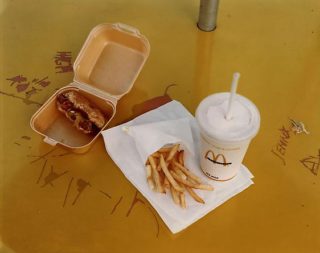
The second, third and fourth installments of David Cunningham’s series of pieces on the theme of Photography and the Language of Things are now up on the Still Searching blog hosted by our friends at the Winterthur Fotomuseum in Switzerland: Part Two, Part Three, Part Four.
Here’s the intro to the second:
In my previous post I tried to sketch out some of those questions provoked by a contemporary desire, in the words of Hito Steyerl, to side with and affirm the object. While this affirmation has coincided with a more general turn towards the object or thing in recent theoretical writing – and, consequently, away (or so it is said) from earlier concerns with language, text, discourse and sign – it has also been attached, in Steyerl and others, to a more specific call to rethink the character of ‘the image’, and of ‘our’ relationship to it, as one framed not by an “identification” with the image “as representation”, but precisely “with the image as thing”.
I want to focus in future posts upon some of the wider philosophical and political issues that are, I think, at stake in this, for photographic theory at least – including those quasi-animistic claims often made today for the capacity of the thing or object to speak of its own accord (sometimes combined with rather over-excited accounts of machine vision and photography’s automation), as well as, in my final post, the kinds of political oppositions, between, for example, a politics of representation and one of participation, that are frequently said to follow from this. In this current post, however, it seems useful, before doing so, to trace something like a ‘pre-history’ of the contemporary valorisation of the image as thing (as opposed to the image as representation) in order to try to draw out more clearly in my subsequent posts what might be distinctive about the particular ways in which this is conceived of today. [Continue …]
Parts Five and Six will be appearing before the end of June.

The IMCC’s David Cunningham will be contributing a series of pieces over the next six weeks on the theme of Photography and the Language of Things to the renowned Still Searching blog hosted by our friends at the Winterthur Fotomuseum in Switzerland. The first one has just gone up…
In her short 2010 text “A Thing Like You and Me”, Hito Steyerl traces what she describes as a shift from an “emancipatory practice” that would be tied to the “desire to become a subject” (of, say, politics or history) to the emergence, today, of a “different possibility”: “How about siding with the object for a change? Why not affirm it? Why not be a thing?” This desire to side with the object is one that has been much echoed across large parts of the humanities and social sciences over the last decade. Indeed, from the influential work of Bruno Latour and Bill Brown’s ‘thing theory’, to various species of ‘new materialism’, object-oriented ontology and posthumanism – as well as in its reception by recent art practice – such a turn to the object is rapidly approaching the status of a new doxa for contemporary theoretical work tout court. In this blog I want to explore – in an inevitably rather sketchy way – some questions that are for me provoked by this desire to side with the object, and, in particular perhaps, with what it might mean for an account of the photographic image as a site of continuing debates concerning representation, abstraction and realism. …
Read the rest of the post here.
And more to follow…
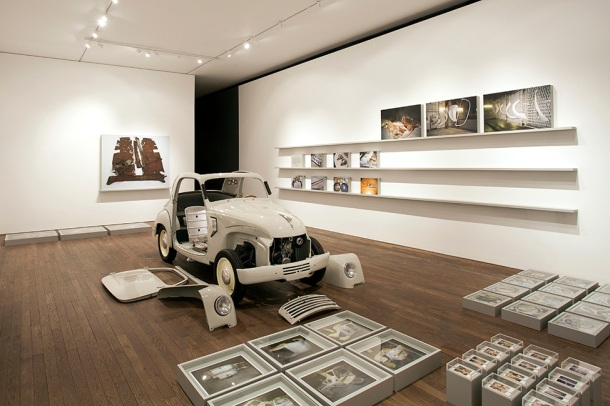
In the first of two collaborations with the excellent blog hosted by the Photographers Gallery in London, Jennabeth Talliaferro, a student on our MA Creative Writing: Writing the City, has contributed a short piece on Erik Kessels’ installation at the Gallery, Unfinished Father.
“Like legacy, photography is an overlapping of the past and present. In Erik Kessels’ work, Unfinished Father, the artist achieves simultaneous representation of these seemingly separate ideas. His father’s dilapidated and gutted Fiat Toppolino is juxtaposed with photographs of car parts orderly displayed. The viewer sees an old car whose former life and purpose are a mere memory.”
You can read the rest of Jennabeth’s piece here.
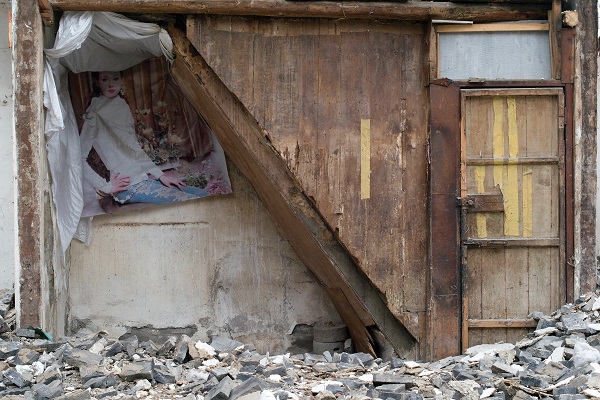
An excellent interview with James H. Bollen, author of Wallpaper: The Shanghai Collection, by our very own Anne Witchard at the Los Angeles Review of Books. As Anne writes in her introduction: “The title of James H. Bollen’s new book — Wallpaper: The Shanghai Collection — makes an ironic gesture towards the materialism and consumerism that drives the ongoing destruction of Shanghai’s domestic heritage. This collection of wallpapers is available only as torn remnants clinging to half-demolished walls. The conceptual framework of this project could not be more apt. The images are grouped according to quotations from the essays of William Morris, genius both of wallpaper design and of a bygone socialist optimism. The peeling layers of bulldozed homes reveal the declining fortunes of successive generations of Shanghai’s shikumen tenants.”
Read the full interview here.
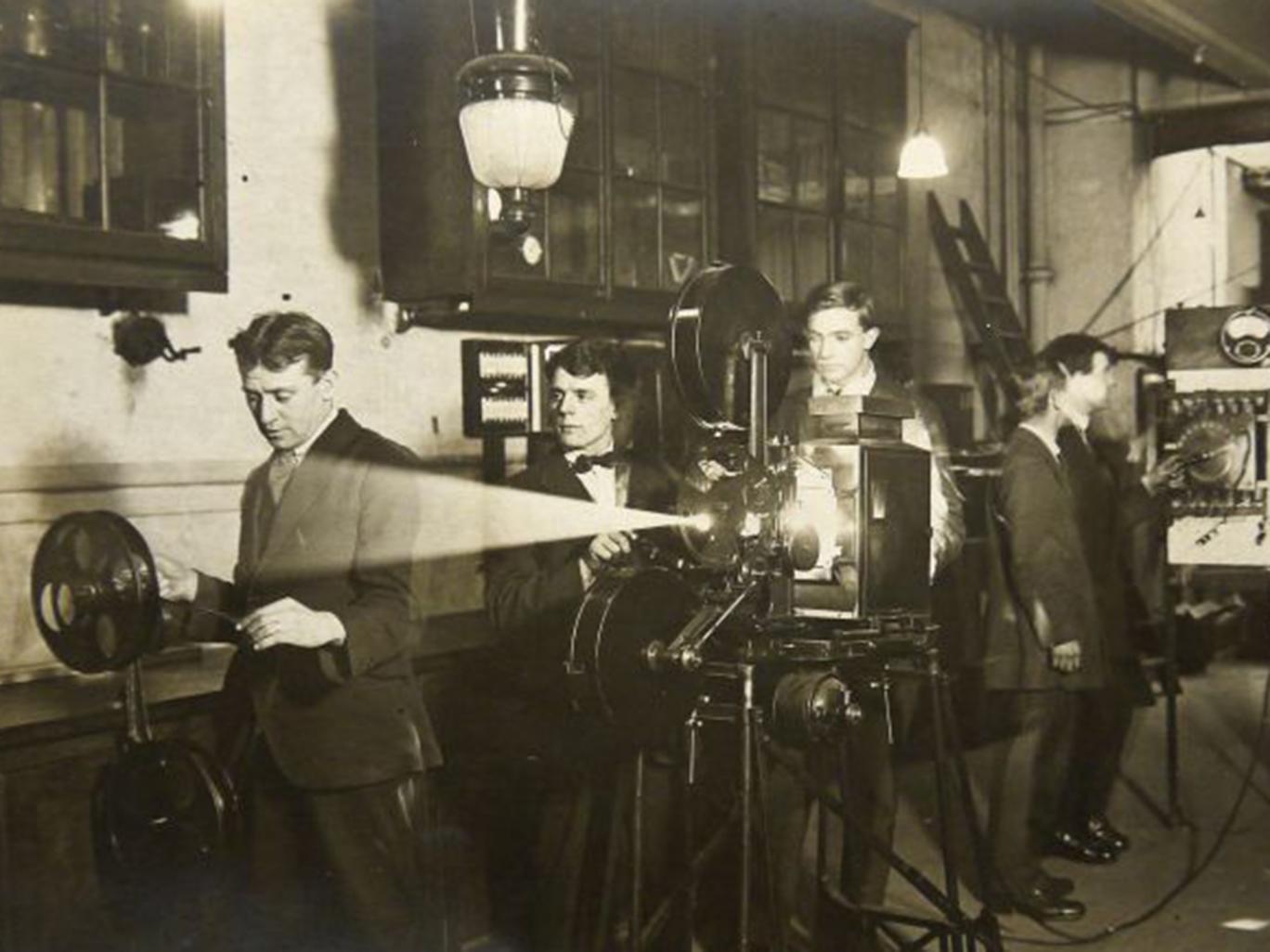
We’re pleased to announce that a new article by Sara Dominici, Post-Doctoral Fellow in the IMCC, has just appeared in the journal Photography and Culture. Entitled ‘Tourist Photographers and the Promotion of Travel: The Polytechnic Touring Association 1888-1939’, the article traces the ways in which the PTA’s passage from viewing tourists as citizens to educate, to customers to please, paralleled the move from using photography-based images to mixed media. While such a development was certainly a response to unprecedented market demands, Dominici argues that it should also be considered in relation to the widening of photographic perceptions engendered by the democratization of the medium, to which the PTA responded, first as educator, then as service provider. In doing so, the article raises several questions about the shifting relationship between “high,” or established, and “low,” or emerging, forms of culture, as mass photography and the mass marketing of tourism developed.
You can find Sara’s article here.
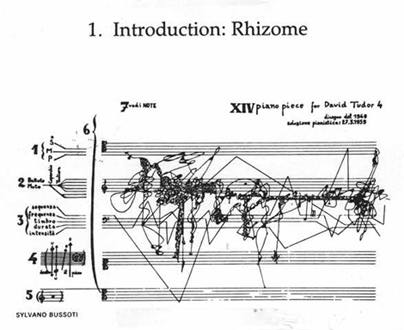
For those of a heavy theory bent, the special issue of Theory, Culture and Society on Transdisciplinary Problematics has finally appeared, including David Cunningham’s ‘Logics of Generalization: Derrida, Grammatology and Transdisciplinarity‘, as well as further articles by Eric Alliez, Etienne Balibar, Lisa Baraitser, Felix Guattari, Peter Osborne, Nina Power, Stella Sandford, Michel Serres, and others. Available from the TC&S website here.
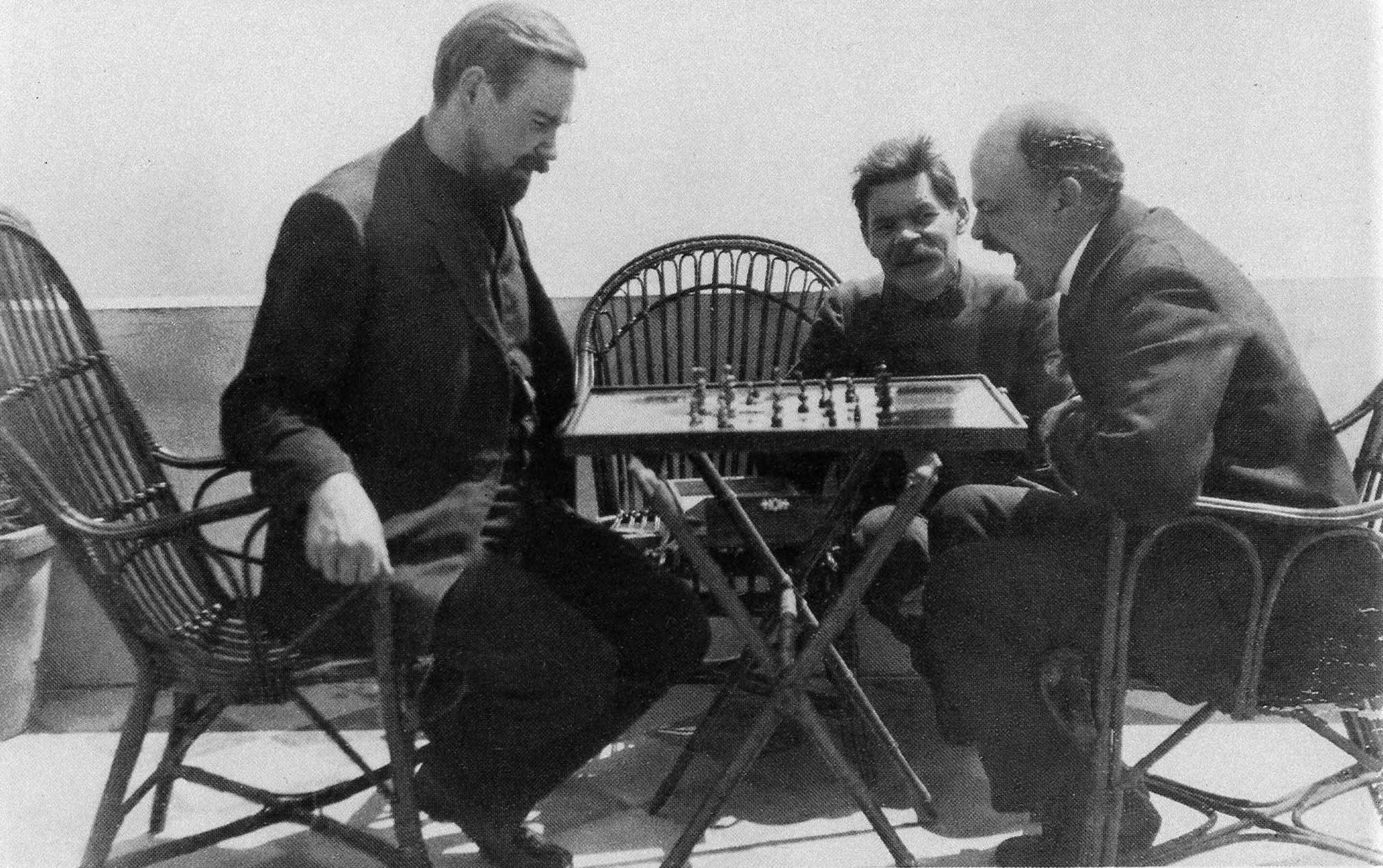
Catch it before it goes: John Beck’s review of McKenzie Wark’s Molecular Red: Theory for the Anthropocene is currently up as a freebie on the Radical Philosophy website here.
Buy the whole issue and get Lucy Bond’s review of Morgan Wortham’s Thought in Pain thrown in for good measure: http://www.radicalphilosophy.com/issues/193

David Cunningham’s article in the latest issue of Radical Philosophy on the current debates around “accelerationism” is currently up as a freebie on the Radical Philosophy website here.

A magnificent and heart-felt guest blog by our own Michael Nath at interestingliterature.com on writers and their lungs, from Lawrence Sterne to Proust.
As an extra distraction from the job of writing his life, Sterne gave his own worst organ to Tristram Shandy. Before we object to such a dubious gift, let’s marvel at the wrapping, that image of fluency contending with nature – not to mention the ‘Flanders’ effect (over the sea/close as the garden). Pickling disease with mirth, Tristram reports an episode of haemoptysis at the sight of a cardinal pissing with two hands. For the weak of lungs, every laugh is a dice throw. As an undergraduate, Sterne himself was already coughing blood; making it to 55 without Streptomycin must have required unusual vitality.

A quick plug for the first issue of Mnemoscape Magazine, “The Anarchival Impulse”, and for their brand new website: www.mnemoscape.org
Mnemoscape Magazine is a biannual online magazine dedicated to furthering research into contemporary visual culture and art practices that operate at the interstices of political and historical scrutiny, with a special focus on issues of memory, methodology and the archival impulse.
0.The Anarchival Impulse / editorial by Mnemoscape
1.the Archive of Destruction: Pedro Lagoa interviewed by Elisa Adami
2.Anarchaeology Series. A Project by Az.Namusn.Art / article by Alessandra Ferrini
3.Watered down modernity. Iconoclastic fluids in Alexander Apóstol’s archival mediations / Alexander Apóstol in conversation with Lisa Blackmore
4.Against Historiographical Positivism: Some Skeptical Reflections about the Archival Fetishism / article by Giulia Bassi
5. Art Criticism 2.0 / article by Paolo Chiasera
6.Showcase: Alessandro Di Pietro, dOCUMENTA (13) Das Begleitbuch / The Guidebook KATALOG / CATALOG 4/3
7.Between the Archive and the Unarchivable / article by Wolfgang Ernst
8.Simon Starling’s Show ‘Analogue Analogies’ at Staatsgalerie Stuttgart / exhibition review by Yvonne Bialek
9.(An)Archival Experiment through the ICA / article by Lucy Bayley, Ben Cranfield and Anne Massey
10.The Pathological Rhythm of the Archive / article by Eirini Grigoriadou
11.Multiple Signatures of Subtraction / article by Robert Luzar
12.Showcase: Emilio Vavarella, The Sicilian Family
13.Returning to the Tabularium / curatorial essay by Alana Kushnir (with showcase by Lawrence Lek, Memory Palace)
14.Retrograde Stairwell / short story by Chris Mason

Alex Warwick’s review of David McNally’s Monsters of the Market: Zombies, Vampires and Global Capitalism is currently up as a freebie on the Radical Philosophy site. Read or download here: http://www.radicalphilosophy.com/web/do-the-monster-mash
“It is no longer necessary to begin, as it might have been ten years ago, by pointing out that we live in Gothic times, and going on to detail the Gothic’s many and various manifestations in contemporary culture. Even the bluntest of critical responses have moved beyond ‘mankind’s deepest fears’ – though often not much beyond them – to recognition of more than an idea of unchanging human nature. Part of the problem lies in the sprawling category that Gothic has become, perhaps always was, in its blurry designation of architectural form, novelistic subject matter, visual effect, subcultural style, musical genre and metaphorical trope. Because of the jumbling together of different phenomena, Gothic is everywhere and nowhere. Indeed, this is partly the point of David McNally’s book: that, as he says, ‘the essential features of capitalism, as Marx regularly reminded us, are not immediately visible … we are left to observe things and persons … while the elusive power that grows and multiplies through their deployment remains unseen, uncomprehended.’ [Read On…]”
Lou Reed: Rock as Minimal Modernism
Tagged as Modernism, music, radical philosophy

For those of an art rock bent, David Cunningham’s ‘obituary’ of Lou Reed is now up as a freebie on the Radical Philosophy website here: http://www.radicalphilosophy.com/obituary/rock-as-minimal-modernism
Materialities of Text: New Formations special issue
Tagged as archive, Literature, technology, Theory

A new issue of the journal New Formations is out co-edited by the IMCC’s Sas Mays. Entitled ‘Materialities of Text: From the Codex to the Net’, the collection came out of an online conference hosted by the Institute’s ‘Archiving Cultures’ affiliate. Further information on the issue is available here. You can also download a copy of Sas’s introduction to the issue, co-authored with Nick Thoburn, for free at: http://www.lwbooks.co.uk/journals/newformations/pdfs/nf78 intro.pdf


The Institute for Modern and Contemporary Culture
University of Westminster Department of English, Linguistics and Cultural Studies
32-38 Wells Street, London W1T 3UW. United Kingdom.