-
Architecture
archive
art
Ballard
body
China
cinema
ecology
education
Europe
Ezra Pound
futurology
gothic
image
law
Literature
London
magic
memory
Modern
Modernism
museums
music
novel
performance
photography
poetry
politics
radical philosophy
science
science fiction
Sinclair
Situationism
sound art
Surrealism
technology
television
the avant-garde
The Future
Theory
thomson
time
Urban
visual culture
war
Posts tagged visual culture
Archives for the Future: An Art and Visual Culture Conference, March 29
Tagged as archive, art, The Future, visual culture
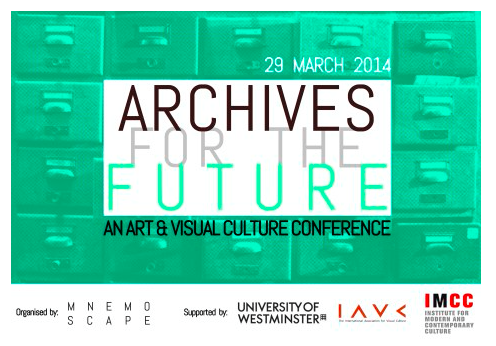
Saturday 29th March 2014, 9.00-5.00
Fyvie Hall, University of Westminster, 309 Regent Street, London W1B 2HW
Organised by Mnemoscape with the support of the Institute for Modern and Contemporary Culture and the International Association for Visual Culture.
Keynote Speakers: Francis Gooding (Birkbeck) and Uriel Orlow (Westminster)
Archives are becoming increasingly fetishized and (an)aestheticized in contemporary art practice and academic discourse. Archives have generally been considered as conservative institutions aimed at preserving the past in the present – and so perpetuating the traditional structures of power. In contrast, this conference is interested in bringing to light the generative and creative side of the archive. How can archives be used to generate the ‘new’ and to convey possible alternatives to the present status quo? How can we turn archives from historical records into instruments of future planning and agencies of radical thinking?
Full programme now available at: http://archivesforthefuture.wordpress.com/programme/
For any further information about the conference, please contact the conveners, Elisa Adami and Alessandra Ferrini at mnemoscape@gmail.com
Reading and Exhibiting Nature: An International Conference, Feb 7-9
Tagged as art, ecology, visual culture

February 7-9 2014
University of Westminster, 35 Marylebone Road, London NW1 5LS
Reading and Exhibiting Nature: An International Conference
In January and February 2014 Ambika P3, the flagship exhibition space at the University of Westminster, will present Out of Ice by visual artist Elizabeth Ogilvie. This new commission will involve environments created with ice and ice melt, constructions, films of ice systems, film of scientific expedition from Antarctica, and poetic film, much of it created through collaborations with Inuit in Northern Greenland, and reflecting on their deep and sustaining relationships with ice. The exhibition will portray the psychological, physical and poetic dimensions of ice and water and draw attention to ice processes. It will describe the presence of ice in the world from a human perspective in which the observational traditions of fieldwork will be combined with the artist’s trademark visual splendour.
In concert with the exhibition, the University of Westminster is convening ‘Reading and Exhibiting Nature’, a three-day conference examining how nature is being understood in contemporary cultural and artistic production. With a focus both in and beyond the polar regions, we will explore how artists and scientists are apprehending and representing natural phenomena, engaging with emerging non-human materialities and translating environmental data into aesthetic experience. The conference seeks to explore the shifting definitions of nature and how nature, including plants, animals, land, water/ice and weather inserts itself into human affairs and is represented culturally.
The ‘Reading and Exhibiting Nature’ conference is planned in association with the University of Westminster and co-hosted by Universities of Aberdeen and Edinburgh and Anchorage Museum, Alaska.
Keynote Address will be by Professor Tim Ingold, Chair of Social Anthropology at the University of Aberdeen
Full conference: Standard rate £200. One day rate £110; Student rate £90. One day rate £65.
Please see the draft programme and some hotel suggestions.
Autobiography and the Archive screening, Thurs 30th January
Tagged as archive, art, cinema, visual culture

A reminder of ‘Autobiography and the Archive’, a screening of work by Uriel Orlow, Miranda Pennell, and Sarah Purcell exploring the archive, collective memory, and personal history, curated by Mnemoscape for our regular partners at the Whitechapel Gallery and sponsored by the Institute. The screening is from 7-9pm on Thursday 30th January 2014, tickets £8.50/£6.50 concessions. Flier attached here: MS — Autobiography and the Archive (1).
The screening will be preceded by a drinks reception in the Creative Studio at the Whitechapel to celebrate the publication of the Journal of Visual Culture’s ‘The Archives Issue’. The special issue features contributions from Sas Mays and Marquard Smith, alongside Basel Abbas and Ruanne Abou-Rahme (with Tom Holert), susan pui san lok, Uriel Orlow, Chris Horrocks, Shezad Dawood (and Mark Bartlett), Nina Lager Vestberg, Gary Hall, and Trevor Paglen and Juliette Kristensen.
Reminder: Kreider + O’Leary, Jan 17th
Tagged as Architecture, art, cinema, visual culture

Kreider + O’Leary, ‘Ways to Cut the Earth Open’
Friday 17 January, 7pm
The Old Cinema, University of Westminster, 309 Regent Street
‘Ways to Cut the Earth Open’ is a cross-platform survey that examines a number of sites recently explored by Kreider + O’Leary in their nomadic practice. Using the sectional cut and the filmic splice as starting points they explore strands from their recent site-based works to thread together narratives of place and displacement. Predicated on an aesthetics of response while engaging with the complexity inherent in a given site, their work is both a form and act of communication: therefore, and necessarily, clouded by ambiguity. This prompts a critical investigation into the role of ambiguity for creative practices that relate to site, including writing and the moving image.
Kreider + O’Leary are a poet and architect who collaborate to make performance, installation and time-based media work in relation to sites of architectural and cultural interest. Since 2003, they have worked collaboratively to construct work in prisons, churches, military sites, film locations and desert environments, as well as in more traditional gallery venues across the UK, Europe, the US, Australia, and Japan. Their work ‘Light Vessel Automatic’ was exhibited at Performing Architecture at Tate Britain in February 2013. They are currently exhibiting a new work entitled ‘Edge City’ at the Lisbon Architecture Triennale.
Visit: http://www.kreider-oleary.net/
All welcome
Archives for the Future conference, March 29th
Tagged as archive, art, visual culture
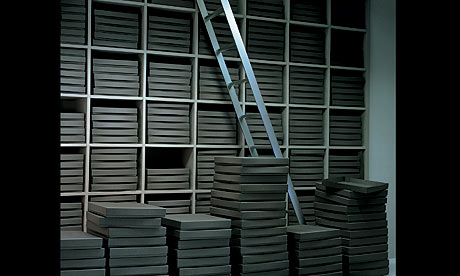
Archives for the Future: An Art and Visual Culture Conference
Saturday 29th March 2014, 9.30-5.00
Fyvie Hall, University of Westminster, 309 Regent Street, London W1B 2HW
Organised by Mnemoscape with the support of the Institute for Modern and Contemporary Culture.
Keynote Speakers: Francis Gooding (Birkbeck) and Uriel Orlow (Westminster)
Archives are becoming increasingly fetishized and (an)aestheticized in contemporary art practice and academic discourse. This conference comes out of a shared sense of frustration at this. In response, it intends to explore the present and futuristic potential embedded in the archive. Archives have generally been considered as conservative institutions aimed at preserving the past in the present – and so perpetuating the traditional structures of power. In contrast, we are interested in bringing to light the generative and creative side of the archive, what Derrida has defined as its ‘institutive’ power. How can archives be used to generate the ‘new’ and to convey possible alternatives to the present status quo? How can we turn archives from historical records into instruments of future planning and agencies of radical thinking? Is it possible to build an archive which works as an open space of imagination and a mean of projection into the future? Is it possible to archive the future to come and, at the same time, to remain open to the unpredictable and the unknown?
Further details and programme at: http://archivesforthefuture.wordpress.com/
For more information about the conference, please contact the conveners, Elisa Adami and Alessandra Ferrini at mnemoscape@gmail.com

There will be drinks and nibbles at the Whitechapel Gallery (5:30pm onwards) on Thursday 30th January 2014 to celebrate the publication of the Journal of Visual Culture’s ‘The Archives Issue’. The special issue features contributions from Sas Mays and Marquard Smith, alongside Basel Abbas and Ruanne Abou-Rahme (with Tom Holert), susan pui san lok, Uriel Orlow, Chris Horrocks, Shezad Dawood (and Mark Bartlett), Nina Lager Vestberg, Gary Hall, and Trevor Paglen and Juliette Kristensen.
The launch will be followed (at 7-9pm, tickets £8.50/£6.50 concessions) by ‘Autobiography and the Archive’, a screening of work by Uriel Orlow, Miranda Pennell, and Sarah Purcell exploring the archive, collective memory, and personal history, curated by Mnemoscape (ex-MA students in the IMCC, Elisa Adami and Alessandra Ferrini).
The Polytechnic Touring Association seminar, Nov 13
Tagged as education, photography, visual culture

Wednesday 13th November, 5.30pm
Room 106, University of Westminster, 32-38 Wells Street, London W1T 3UW
Sara Dominici, University of Westminster
“The Polytechnic Touring Association: from culture as education to culture as leisure (1888-1939)”
This paper looks at how the idea of culture promoted by the Polytechnic Touring Association (PTA) changed in the period from 1888, the year subsequently celebrated as the origin of the PTA, and the end of the interwar period. During this timeframe the organisation of the tours shifted from endorsing the Polytechnic’s philanthropic approach, to responding to a commercial context. In 1911 the travel firm had become a separate business. This influenced the PTA’s approach to the tourists, which from individuals to instruct became customers to please and, in turn, the understanding of what would make cultural travel an improving experience. The early excursions were described as ‘educational holiday tours’, thus emphasising travel as an organised form of learning; by the 1930s, these were promoted as ‘holidays to the loveliest places in Europe’, suggesting instead a more ‘relaxed’ approach to the encounter with cultural sites. This paper discusses this passage by considering how the transformation of culture into a product of consumption influenced its commercialisation. Specifically, it evaluates what was understood to be ‘educational’ in the experience of travel offered by the PTA, as the organisation transitioned from providing a learning experience to a service.
Sara is a PhD student affiliated to the IMCC, currently completing her doctoral thesis on the PTA.
Staging Science events, Dec 6 and 7 2013
Tagged as cinema, London, museums, science, visual culture

Hosted by our colleagues in the new Centre for the Study of Science and Imagination, a series of exciting events on Staging Science in December:
Staging Historical and Contemporary Science: A Roundtable
Friday December 6, 2013, 6.30-8.00pm (drinks from 6pm)
The Boardroom, University of Westminster, 309 Regent Street
Jim Al-Khalili (Physicist, Science Communicator and Broadcaster)
Tim Boon (Head of Research, Science Museum)
Imran Khan (Chief Executive, British Science Association)
Katrina Nilsson (Head of Contemporary Science, Science Museum)
Jonathan Renouf (Executive Producer, BBC Science Unit)
Staging Science ColloquiumSaturday December 7, 2013, 9.00-6.00pm
The Boardroom, University of Westminster, 309 Regent Street
Speakers include: Iwan Morus (Aberystwyth), Daniel Brown (Southampton), Robert Kargon (Johns Hopkins), Jeremy Brooker (Independent Researcher), Tiffany Watt-Smith (Queen Mary), Kirsten Shepherd-Barr (Oxford), Jean-Baptiste Gouyon (Science Museum, London), Bernard Lightman (York, Canada), Martin Willis (Westminster)
6.00-7.00pm: Drinks Reception and Book Launch for Jeremy Brooker’s Temple of Minerva (Regent Street Building Foyer)
followed by
A Performance of the Pepper’s Ghost Illusion with Charles Dickens’s ‘The Haunted Man’
Produced, directed and performed by Richard Hand and Geraint D’Arcy (University of South Wales)
There will be 2 performances of the Pepper’s Ghost Illusion – 7.00-7.30 and 7.45-8.15 (The Old Cinema)
Places for all the events that make up Staging Science are limited. Please apply early for each event as below. In your email please make clear which event or events you wish to attend. Many thanks.
To reserve a place at the Roundtable (Friday evening) please contact Rebecca Spear on rebecca.spear@my.westminster.ac.uk
To reserve a place at the colloquium (Saturday day), which comes with an invitation to the Pepper’s Ghost performance (Saturday evening), please contact Rebecca Spear on rebecca.spear@my.westminster.ac.uk.
Please do advise Rebecca if you wish to come to the colloquium but are not able to attend the evening Performance.
To inquire about a place at the Pepper’s Ghost performance only please contact Professor Martin Willis on m.willis@westminster.ac.uk
For updates on Staging Science connect to SCIMAG’s blog site at: http://scienceimagination.wordpress.com
Call for Papers: Archives for the Future: An Art and Visual Culture Conference
Tagged as archive, art, The Future, Theory, visual culture

Archives for the Future: An Art and Visual Culture Conference
Organised by Mnemoscape and supported by the IMCC.
Call for Papers: Deadline submission: 18 November 2013
Archives are becoming increasingly fetishized and (an)aestheticized in contemporary art practice and academic discourse. This conference comes out of a shared sense of frustration at this. In response, it intends to explore the present and futuristic potential embedded in the archive. Archives have generally been considered as conservative institutions aimed at preserving the past in the present – and so perpetuating the traditional structures of power. In contrast, we are interested in bringing to light the generative and creative side of the archive, what Derrida has defined as its ‘institutive’ power. How can archives be used to generate the ‘new’ and to convey possible alternatives to the present status quo? How can we turn archives from historical records into instruments of future planning and agencies of radical thinking? Is it possible to build an archive which works as an open space of imagination and a mean of projection into the future? Is it possible to archive the future to come and, at the same time, to remain open to the unpredictable and the unknown?
We invite submissions that are concerned with reinstating the archive as site of political confrontation, of action and intervention in the present, as well as as site of re-projection and re-imagination for the future. We are particularly interested in creating a dialogue between theory and practice and as such we welcome contributions from artists, thinkers and curators alike.
To submit a proposal please send an abstract (300-500 words), a CV, five key words and a short biographical note (100 words). Please send in a single Word document to: mnemoscape@gmail.com
For more information about the conference, please contact the conveners, Elisa Adami and Alessandra Ferrini at mnemoscape@gmail.com
Death, Aesthetics and Representation, Wednesday September 11 2013
Tagged as art, Literature, photography, visual culture

The final event in the series Death and the Contemporary, ‘Death, Aesthetics and Representation’ will take place on Wednesday September 11 from 7:00pm to 8:30pm, at The Photographers’ Gallery, 16 – 18 Ramillies St, London W1F 7LW, featuring contributions from a panel of keynote speakers including Professor Roger Luckhurst, Dr Timothy Secret, Audrey Linkman and Briony Campbell.
‘Death, Aesthetics and Representation’ is hosted by Georgina Colby in collaboration with Anthony Luvera. Through plenary discussions with keynote writers, visual artists and theorists, ‘Death and the Contemporary’ seeks to explore issues surrounding the representation of death in contemporary culture.
The following links contain further information about ‘Death and the Contemporary’ and ticket sales for ‘Death, Aesthetics and Representation’. Tickets for the event are priced at £7 or £4 concession.
http://thephotographersgallery.org.uk/death-aesthetics-reoresentation
http://www.deathandthecontemporary.com/
Visual Activism conference, March 14-16 2014, San Francisco
Tagged as politics, visual culture

Call for Proposals: Visual Activism
The International Association of Visual Culture (IAVC) invites proposals for its third biennial conference in San Francisco, March 14-16, 2014.
The conference is centered on the concept of Visual Activism. How can we better understand the relationships between visual culture and activist practices? There are ways in which art can take the form of political/social activism and there are also ways in which activism takes specific, and sometimes surprising, visual forms that are not always aligned with or recognizable by art-world frameworks. How can we engage in conversations about abstract or oblique visual activism, for instance as is demanded in conditions of extreme censorship? How can we approach the complexity of governmental or commercial ‘visual activism’ to better address hegemonies of visual culture (for example, in advertising and the mass media)? To what degree do forms of visual activism travel, and in what ways are they necessarily grounded in locally specific knowledge and geographically specific spaces?
Presentations should respond to these questions or related topics and may take the form of scholarly papers (20 minutes), artist talks (20 minutes), short performances (5 to 30 minutes), or lighting-round interventions (5 minutes). Proposals should include a 400-word abstract, links to websites with additional publications or relevant images and information, and a CV. Please send proposals to edu@sfmoma.org (with ‘visual activism’ as the subject line) no later than October 1, 2013.
Please email edu@sfmoma.org to be added to the mailing list to receive updates about the conference such as registration, the calendar of events and participants.
For further information about the International Association of Visual Culture, or to join the IAVC, please click here.
Launch of new book: Monstrosity: The Human Monster in Visual Culture
Tagged as body, Theory, visual culture

We are delighted to announce the publication of a new book by the IMCC’s Alexa Wright, Monstrosity: The Human Monster in Visual Culture, from I.B. Tauris.
From the ‘Monster of Ravenna’ to the ‘Elephant Man’, Myra Hindley and Ted Bundy, the visualization of ‘real’, human monsters has always played a part in how society sees itself. But what is the function of a monster? Why do we need to embody and represent what is monstrous? This book investigates the appearance of the human monster in Western culture, both historically and in our contemporary society. It argues that images of real (rather than fictional) human monsters help us both to identify and to interrogate what constitutes normality; we construct what is acceptable in humanity by depicting what is not quite acceptable.
There will be a drinks reception to celebrate the launch of Monstrosity on Wednesday 26 June, from 6.30-8.30, in the café at Toynbee Studios, 28 Commercial Street, London E16AB. RSVP to Naomi French at: nfrench@ibtauris.com
Alexa Monstrosity Book Launch Invitation
Alex has also written a new piece for the IB Tauris blog. Read it here: http://theibtaurisblog.com/2013/06/25/facing-evil/
Thomson & Craighead exhibition extended until July 13th
Tagged as art, technology, thomson, visual culture

Thomson & Craighead’s Never Odd Or Even has been chosen as Show of the Week in Time Out, which, in a review awarding the exhibition five stars, remarks that this ‘mini-survey makes a strong case for the duo being two of our most forward-looking and underrated artists’. The show itself has been extended until Saturday 13 July, so there’s still a chance to visit before the gallery takes an extended summer break until the next exhibition in September.
Their first ever survey show, featuring seminal works such as ‘More Songs of Innocence and of Experience’ (2012), and ‘Time Machine in alphabetical order’ (2011), Never Odd or Even also includes a new work that grows day by day: ‘London Wall W1W’ (2013) is the artists’ physical manifestation of Tweets drawn from within a one-mile radius of Carroll / Fletcher, which are then turned into propaganda-style posters and adhered to the gallery wall. Keep up to date with the latest tweets from W1W on @CarrollFletcher and tclondonwall.tumblr.com.
From 7pm on Wednesday 10 July, the artists are repeating the popular tour of the show they gave in June. Bookings can be made at carrollfletcher.eventbrite.com.
Call for Papers: The Mediated City
Tagged as Architecture, Urban, visual culture
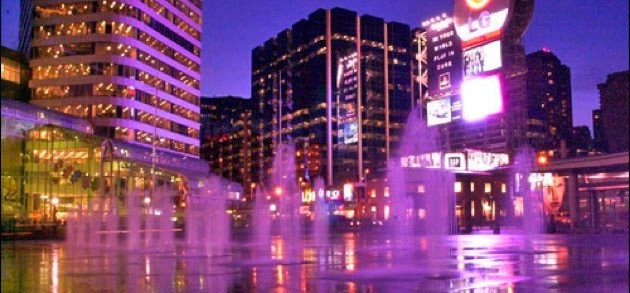
The Mediated City
Two multidisciplinary conferences examining “the city”… a virtual, filmic, social, political and physical construct.
The Mediated City examines the metropolis as a contested concept. It offers a platform for multiple and diverse examinations of the city. It aims to bring together people from diverse backgrounds to fragment, multiply and reconfigure our readings of the city; to offer multiple and conflicting discipline perspectives. The intention is to share views of the city as physical entity, online community, film set, photographic backdrop, geographical map, sociological case study, political metaphor, digital or video game etc.. – to examine it as a mediated and shared phenomenon.
London Conference
April 1-3 2014, Ravensbourne College
Los Angeles Conference
October 2014 (tbc), Woodbury University
London Conference deadlines
15 September 2013: abstracts / initial proposals
Possible Formats:
20 minute presentations
60 minute panel discussions on selected themes
Workshop collaborative sessions
Screenings / Q&As
For full details visit: http://architecturemps.com
Call for Papers: ‘Visual Studies as Academic Discipline’ conference, Centre for Visual Studies, Zagreb, Croatia, November 2013
Tagged as education, Europe, visual culture

The past two decades have witnessed a large increase in academic interest in all visual phenomena, including those strictly visual – from painting and film to experimental video and multimedia installations – as well as all the forms of applied arts: graphic and industrial design, fashion and advertising. In many countries, this interest in visual practice is accompanied by the interest in visual theories, primarily in the new discipline of visual studies that keep acquiring academic legitimacy at universities worldwide.
Visual studies have emerged as a result of parallel expansion that occurred respectively in the fields of art history and film studies, whose radical members have converged particular theories of still and moving images, towards an integral science of images. After W.J.T. Mitchell and Gottfried Boehm have sanctioned the pictorial turn as the basic interest of hyper-mediatized society, it became clear that various visual phenomena demand a much wider theoretical platform, one which would take into consideration the definitive erasure of borders between high and low art, between elite and popular culture, as well as between creators and consumers of visual messages.
For the first time in history, the users of images became the producers of images, within an unrestrained circular process, wherein images yield new insights, while insights demand their instantaneous pictorial foundation. The development and expansion of telecommunication technologies have transformed the traditionally understood technical images into a new communication code that is accessible to everyone. However, does this accessibility simultaneously presume that the new communication code is intelligible to everyone using it? Do we really know what are the images telling us, what do they want from us or what is it that we want from them? Do we know in which manner the most recent researches in technosciences prove, by the way of visualization, their radical tenets on biocybernetic complex systems, and how is the notion of image inscribed into the performative bodies of art and fashion today?
The International Scientific Conference Visual Studies as Academic Discipline aims to gather a wide circle of university oriented theorists, so that they can jointly consider the ways in which they deliberate and teach about images, primarily about their overlapping meanings, that arise through the intermedia networking of various visual practices, as well as through the transdisciplinary analyses of contemporary theories. This symposium wishes to examine the theoretical legitimacy of a wide field of visual representations: art, film, photography, design, fashion and performance. It also wishes to consider the disciplinary status of actual visual studies as an (established) scientific paradigm.
We invite all the concerned colleagues to submit their presentations on one of the proposed subjects:
1. The theoretical and disciplinary status of visual studies – two decades after the pictorial turn
2. Visual studies as a “radical” version of art history or a critical detour?
3. The epistemological aspects of visual studies in university curricula
4. The potentials of the applied science of images: interactions between art, film, design, fashion and performance
5. “Non-disciplinarity” as an approach to the multimedia image of the world
6. Fashion studies today: from the theory of fashion to the design of body
Presentations are limited to 20 minutes. In order to participate at the Conference, please send abstract of your paper (150 words) together with short CV to email: purgar@vizualni-studiji.com and zarko.paic@zg.t-com.hr until 21st of July 2013. The scientific board will notify you of the status of your proposal until 25th of July 2013.
Keynote speaker:
W.J.T. Mitchell, University of Chicago, USA
Plenary speakers:
Michele Cometa, University of Palermo, Italy
Marquard Smith, University of Westminster, London, GB
Members of the workgroup Visual Culture in Europe:
Nina Lager Vestberg, Norwegian University of Science and Technology, Trondheim, Norway
Øyvind Vågnes, The Bergen Center for Visual Culture, Norway
Joaquín Barriendos, Columbia University, New York, USA
Ana Maria Guasch, University of Barcelona, Spain
Safet Ahmeti, Center for Visual Studies, Skopje, Macedonia
Max Liljefors, Lund University, Sweden
Almira Ousmanova, European Humanities University, Vilnius, Lithuania
Scientific and organisational board:
Žarko Paić, PhD, Associate Professor, Faculty of Textile Technology, University of Zagreb
Krešimir Purgar, PhD, Center for Visual Studies, Zagreb
Sandra Bischof, PhD, Dean of Faculty of Textile Technology, University of Zagreb
Katarina Nina Simončič, PhD, Assistant Professor, Faculty of Textile Technology, University of Zagreb
Nikola Petković, PhD, Professor, Faculty of Humanities and Social Sciences, University of Rijeka
Leonida Kovač, PhD, Assistant Professor, Academy of Fine Arts, University of Zagreb
Suzana Marjanić, PhD, Senior Research Associate, Institute of Ethnology and Folklore, Zagreb
Goran Sergej Pristaš, Associate Professor, Academy of Dramatic Art, University of Zagreb
Silva Kalčić, Lecturer, Faculty of Textile Technology, University of Zagreb
Petra Krpan, MSc, Faculty of Textile Technology, University of Zagreb
Laura Potrović, MSc, Academy of Dramatic Art, University of Zagreb
Nikola Devčić, Director of the Association “White Wave”, Zagreb
Organizers:
Center for Visual Studies, Zagreb; Tvrđa – Magazine for theory, culture and visual arts; Croatian Writers’ Society; Faculty of Textile Technology, University of Zagreb; Association “White Wave”, Zagreb
The Conference will take place at the Faculty of Textile Technology in Zagreb, from 7th to 9th November 2013. Details will be regularly updated on the web site www.visual-studies.com.
The Conference is organized within the activities of the workgroup Visual Culture in Europe, and is the fourth such event, following previous ones held in London (2010), Barcelona (2011) and Trondheim (2012).
The Conference Visual Studies as Academic Discipline is endorsed by The International Association for Visual Culture.

Through the Looking Glass: Shifting Perceptions of War seminar
Tagged as cinema, visual culture, war

Group for War and Culture Studies, University of Westminster, Research Seminar Series 2012/2013
Through the Looking Glass: Shifting Perceptions of War
Wednesday 8 May 2013, 6 pm – 8 pm, Room 351
University of Westminster, 309 Regent Street, London W1B 2UW
Joram ten Brink, University of Westminster
‘The Act of Killing’
Joram will talk about a documentary he recently produced: “The Act of Killing”, directed by Joshua Oppenheimer and a major outcome of the Arts & Humanities Research Council’s Genocide and Genre Research Project awarded to The Centre for Research and Education in Arts and Media at the University of Westminster. The documentary challenges former Indonesian death squad leaders to re-enact their real-life mass-killings in whichever cinematic genres they wish, including classic Hollywood crime scenarios and lavish musical numbers. The film has received widespread critical acclaim most recently at the Toronto and the Berlin Film Festivals.
Maki Kimura, University College London
‘Narrative as a Site of Subject Construction: The “Comfort Women” Debate’
The ordeal of `Comfort Women’ who were sexually enslaved by the Japanese Imperial Military during the Second World War became widely known in the 1990s through these women’s accounts of their experience. Instead of considering their narratives as historical data which reflect the `true’ historical past, the talk locates them within a broader framework of thinking of narratives. Drawing on the understanding of narrative as a key to the self and the subject which has been developed in narrative research, as well as Judith Butler on interpellation and Gayatri Chakravorty Spivak on subaltern agency, the talk argues that the `Comfort Women’s’ testimonies should not be read one-dimensionally in the light of `truth’ and `falsity’, but should rather be considered as the site of their subject-formation. Their narratives are where agency concurrently emerges, and `Comfort Women’ are thus not powerless victims but are active participants in their creation of their own narratives and their own selves.
Entrance free. To reserve a place, please R.S.V.P. Dr Caroline Perret at: C.Perret@westminster.ac.uk
Modernity on Display: International Exhibitions seminar
Tagged as Architecture, Modern, Modernism, science, technology, visual culture

Modernity on Display: Technology, Science and the Culture Wars at International Expositions circa World War II
Thursday 4th April 2013, 4 – 7 p.m.
Boardroom, University of Westminster, 309 Regent Street, London W1B 2UW.
Speakers:
Professor Robert Kargon, Willis K. Shepard Professor of the History of Science, Johns Hopkins University, Baltimore.
Dr Arthur Molella, Director, The Lemelson Center, National Museum of American History, Smithsonian Institution, Washington DC.
International expositions are receiving significant attention from historians of science and technology, and of culture more generally. These complex events mirror ideological and national rivalries as well as domestic social, economic and political struggles. In short, they are remarkable indices of important historical tensions. Especially interesting are the international expositions planned and/or mounted just before the outbreak of the Second World War. These expositions reflected the political regimes of the host countries, and in some cases serious divisions within them. They also highlight increasingly tense ideological divisions between nations representing liberal or social democratic republics (France and the US), communist (Soviet Union) and reactionary modernist or fascist regimes such as Germany, Italy and Japan.
The book in progress on which this seminar will be based includes chapters about World’s Fairs and expositions from 1937 to 1942, drawing upon three actually built, Paris, 1937, Dusseldorf 1937 and New York 1939, and two planned in detail but, owing to the coming of war, never executed, Tokyo 1940 and Rome 1942. The presentations will use two examples – New York 1939 and Rome 1942 – to illuminate the representation of science and technology at these fairs as indicators of modernity as part of the on-going culture and propaganda wars preceding actual hostilities.
Organised by the Graduate School, University of Westminster
R.S.V.P. Sharon Sinclair, sinclas@westminster.ac.uk
‘Archiving China in Britain’ conference, April 27th, 2013
Tagged as archive, China, visual culture

ARCHIVING CHINA IN BRITAIN
Saturday 27 April, 9.30am–6pm
The Boardroom, University of Westminster, 309 Regent Street, London W1B 2UW
This one-day conference is co-hosted by the Department of English, Lingusitics and Cultural Studies with the University of Westminster Contemporary China Centre, keeper of the Chinese Poster Collection, an archival holding of more than 800 posters from the Mao era.
RSVP anne@translatingchina.info
For further details please visit translatingchina.info
CFP: ‘Critical Cartography of Art and Visuality in the Global Age’, University of Barcelona
Tagged as art, visual culture

Our friends in the Art, Globalization, and Interculturality research group in the Department of Art History, University of Barcelona, are pleased to announce a ‘call for papers’ for their upcoming international conference entitled ‘Critical Cartography of Art and Visuality in the Global Age’. Please see further details below.
1st INTERNATIONAL CONFERENCE
Critical Cartography of Art and Visuality in the Global Age.
April 26-27, 2013, Barcelona, SPAIN
AULA MAGNA. Department of Art History, University of Barcelona (UB)
AUDITORIUM. Museum of Contemporary Art (MACBA)
The First International Conference Critical Cartography of Art and Visuality in the Global Age aims to engage with the complexities of the new status of art and visuality in contemporary art practice in the context of “globalization”. Focusing on the paradigms of identity, alterity, memory, locality and interculturality, as well as on new ways of understanding the political, ecological, technological, economical and scientific dimensions of the current age, the conference seeks to locate the topos from which each of these paradigms forges links between theoretical concepts and innovative work methodologies.
Scholars, artists, and research students working in the field of global art are invited to submit proposals for one of the following panel themes:
1. Media Art Documentation. New Tools for the Humanities.
Convenor: Carles Guerra, Keynote: Oliver Grau
2. The Utopian Globalists
Convenor: Anna Maria Guasch, Keynote: Jonathan Harris
3. Labor, Woman and Politics
Convenor: Juan Vicente Aliaga, Keynote: Angela Dimitrakaki
4. Art and the Post-Natural Condition
Convenor: Joaquín Barriendos Rodríguez, Keynote: T.J. Demos
Each panel will be comprised of four speakers, each allocated 20 minutes for their presentation, with the convenor encouraging debate among the presenters.
All abstract submissions (even if not selected for a panel presentation) will be considered for the publication Critical Cartography of Art and Visuality in the Global Age. New Methodologies, Concepts, and Analytic Scopes, an edited collection resulting from the conference to be published by the University of Barcelona.
A completed application form including a 300 word abstract and a brief CV should be submitted to Nasheli Jiménez del Val at artglobalage@gmail.com by February 18, 2013. Authors will be notified of acceptance for the panel, the publication, or both, by March 8, 2013.
http://artglobalizationinterculturality.com/activities/conferences/conference-2013/


The Institute for Modern and Contemporary Culture
University of Westminster Department of English, Linguistics and Cultural Studies
32-38 Wells Street, London W1T 3UW. United Kingdom.