News
CFP: ‘Exhibiting Performance’, University of Westminster, London, 1-3 March 2013 – DEADLINE: 11TH FEB!
Tagged as art, performance

Confirmed Participants:
Franko B, artist; Steve Beresford, Performer and Musician, University of Westminster; Mel Brimfield, artist; Gavin Butt, Goldsmith College; Jon Cairns, Central St Martins; Maria Chatzichristodoulou, curator and performer, University of Hull; Tania Chen, Musician; Rob la Frenais, Curator The Arts Catalyst; Richard Layzell, artist, Middlesex University; Stewart Lee, writer and performer; Kira O’Reilly, artist, University of Hull; Marquard Smith, University of Westminster; Margherita Sprio, University of Westminster; Gary Stevens, artist; Tracey Warr, writer and curator, Oxford Brookes University; Silvia Ziranek, artist.
Exhibiting Performance Conference, 1-3 March 2013
University of Westminster, 309 Regent Street, London, W1B 2UW
The Centre for Research and Education in Arts and Media (CREAM) is convening Exhibiting Performance, a three-day event considering contemporary issues central to the display of performanceart. Following on from the Exhibiting Photography (2011) and Exhibiting Video (2012) International Conferences, this event will bring together notable artists, curators and writers, and provide a forum for a number of inter-related questions: On what terms has the rise of Performance in contemporary arts taken place? How do our museums and galleries disseminate and exhibit Performance? How does the live act of Performance inform questions around the body and the audience? How is Performance documented, archived and transacted? How does technology contribute to the development of Performance?
The conference will be framed by the exhibition of work by artists and writers responding to a live performance by Philip Lee and Cally Trench, Do you remember it – or weren’t you there? at London Gallery West, and Indeterminacy, a John Cage performance by Stewart Lee, Tania Chen and Steve Beresford.
There will be four half-day themes:
Curating: With Tate Modern opening the Tanks for performance events and Marina Abramovic’s major exhibition at New York’s MoMA in 2010, is performance art now mainstream, and on what terms? How do museums and galleries understand performance art?
Dissemination and Documentation: How is performance documented ? If you missed the performance is that it? What value does an art work in a different medium which gives a memory of a performance have?
The Body and Audiences: What is the role of the body in performance today ? Why do so many performance artists perform naked ? Is the naked body a sign of authenticity or does the taboo distract from meaning ? How is the relationship between artist and audience different from or similar to other areas of art?
Performance and Technology: How does technology mediate performance ? What are the ontologies of networked, mediated and recorded performance practices ? How is videoperformance ‘live’? How do different technologies of camera (webcam, surveillance, etc) and screens (CRT, flat, projection, mobile phone, computer, etc) change our concept of performance?
ABSTRACT SUBMISSION
Please send a 200-word abstract by 11 February, 2013. Successful applicants will be notified by 15 February, 2013. They must include the presenter’s name, affiliation, email and postal address, together with the paper’s title. Please send abstracts to Amanda Wheeler A.Wheeler@westminster.ac.uk
PROGRAMME AND REGISTRATION
This conference will take place from 4.00pm on Friday 1 March to Sunday 3 March 2013. The fee for registration will be:
Full conference: Standard rate £85. One day rate £50
Full conference: Student rate £40. One day rate £30.
Performance only: £10
This covers all conference documentation, refreshments, receptions and administration costs. Registration will open at the begining of February 2013.
EXHIBITION:
Do you remember it – or weren’t you there?
Philip Lee and Cally Trench
31 January 2013 – 3 March 2013
London Gallery West, School of Media, Art and Design
University of Westminster, Watford Road, Harrow
Middlesex HA1 3TP
PERFORMANCE
Indeterminacy, a John Cage performance
Sunday 3 March 2013, 6.30pm
Stewart Lee, Tania Chen and Steve Beresford
University of Westminster
309 Regent Street
London W1R 8AL
CFP: ‘Critical Cartography of Art and Visuality in the Global Age’, University of Barcelona
Tagged as art, visual culture

Our friends in the Art, Globalization, and Interculturality research group in the Department of Art History, University of Barcelona, are pleased to announce a ‘call for papers’ for their upcoming international conference entitled ‘Critical Cartography of Art and Visuality in the Global Age’. Please see further details below.
1st INTERNATIONAL CONFERENCE
Critical Cartography of Art and Visuality in the Global Age.
April 26-27, 2013, Barcelona, SPAIN
AULA MAGNA. Department of Art History, University of Barcelona (UB)
AUDITORIUM. Museum of Contemporary Art (MACBA)
The First International Conference Critical Cartography of Art and Visuality in the Global Age aims to engage with the complexities of the new status of art and visuality in contemporary art practice in the context of “globalization”. Focusing on the paradigms of identity, alterity, memory, locality and interculturality, as well as on new ways of understanding the political, ecological, technological, economical and scientific dimensions of the current age, the conference seeks to locate the topos from which each of these paradigms forges links between theoretical concepts and innovative work methodologies.
Scholars, artists, and research students working in the field of global art are invited to submit proposals for one of the following panel themes:
1. Media Art Documentation. New Tools for the Humanities.
Convenor: Carles Guerra, Keynote: Oliver Grau
2. The Utopian Globalists
Convenor: Anna Maria Guasch, Keynote: Jonathan Harris
3. Labor, Woman and Politics
Convenor: Juan Vicente Aliaga, Keynote: Angela Dimitrakaki
4. Art and the Post-Natural Condition
Convenor: Joaquín Barriendos Rodríguez, Keynote: T.J. Demos
Each panel will be comprised of four speakers, each allocated 20 minutes for their presentation, with the convenor encouraging debate among the presenters.
All abstract submissions (even if not selected for a panel presentation) will be considered for the publication Critical Cartography of Art and Visuality in the Global Age. New Methodologies, Concepts, and Analytic Scopes, an edited collection resulting from the conference to be published by the University of Barcelona.
A completed application form including a 300 word abstract and a brief CV should be submitted to Nasheli Jiménez del Val at artglobalage@gmail.com by February 18, 2013. Authors will be notified of acceptance for the panel, the publication, or both, by March 8, 2013.
http://artglobalizationinterculturality.com/activities/conferences/conference-2013/

30 January 2013 in room MG14 Marylebone Campus, Marylebone Road
Our friends in Westminster’s School of Architecture and the Built Environment are hosting an event next week entitled ‘What is the role of culture in the regeneration of the areas around the Olympic Park?’ The event draws together practitioners and academics from a variety of professional backgrounds who will share their experiences and perspectives of cultural projects in the areas around the Olympic Park.
6.10 Introduction – Chair: Marion Roberts – Professor of Urban Design – University of Westminster
6.20 Dr Nancy Stevenson – Programme Leader: Tourism and Events – The Cultural Olympiad and cultural legacy
6.35 Ceryl Evans – Head of Museums and Culture, London Borough of Hackney – Mapping the Change
6.50 Dr Isaac Marrero Guillamón – Post Doctoral Researcher, Birkbeck – Critical art and the Olympic State of Exception
7.05 Adriana Marques – Principal Advisor for Arts and Culture, London Legacy Development Corporation – Culture at the heart of the Olympic Legacy
7.20 Liza Fior – Partner, Muf Architecture/Art – Future project and proposals
7.35 Questions and Discussion
Contact Details: For further details and to book please follow this link
http://culturalolympicpark.eventbrite.com
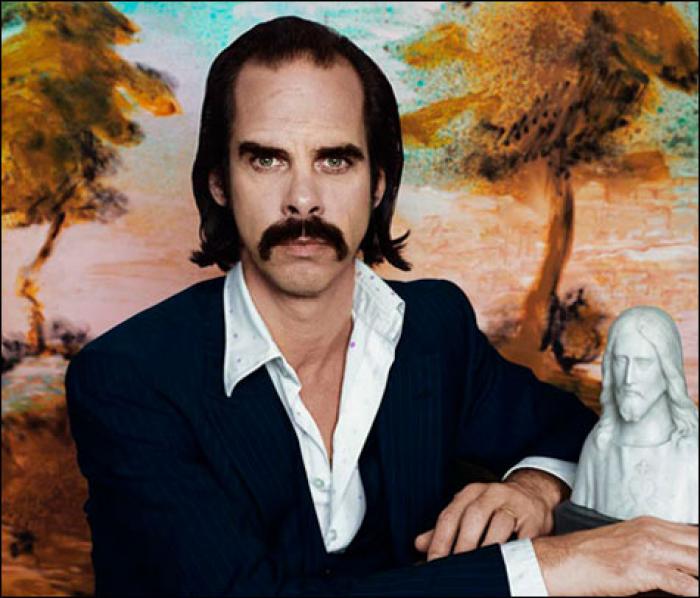
We are delighted to announce the publication of The Art of Nick Cave: New Critical Essays, edited by our colleague John Baker and published by Intellect Books.
Known for his work as a performer and songwriter with the Birthday Party, the Bad Seeds, and Grinderman, Australian artist Nick Cave has also pursued a variety of other projects, including writing and acting. This collection of critical essays provides a comprehensive overview of his multifaceted career. The contributors, who hail from an array of disciplines, consider Cave’s work from many different angles, drawing on historical, psychological, pedagogical, and generic perspectives. Illuminating the remarkable scope of Cave’s achievement, they explore his career as a composer of film scores, a scriptwriter, and a performer, most strikingly in Ghosts of the Civil Dead; his work in theatre; and his literary output, which includes the novels And the Ass Saw the Angel and The Death of Bunny Munro, as well as two collections of prose. Together, the resulting essays provide a lucid overview of Nick Cave’s work that will orient students and fans while offering fresh insights sure to deepen even expert perspectives.
You can order the book here: http://www.intellectbooks.co.uk/books/view-Book,id=4900/
Railways and Fiction
Tagged as Literature, novel, technology
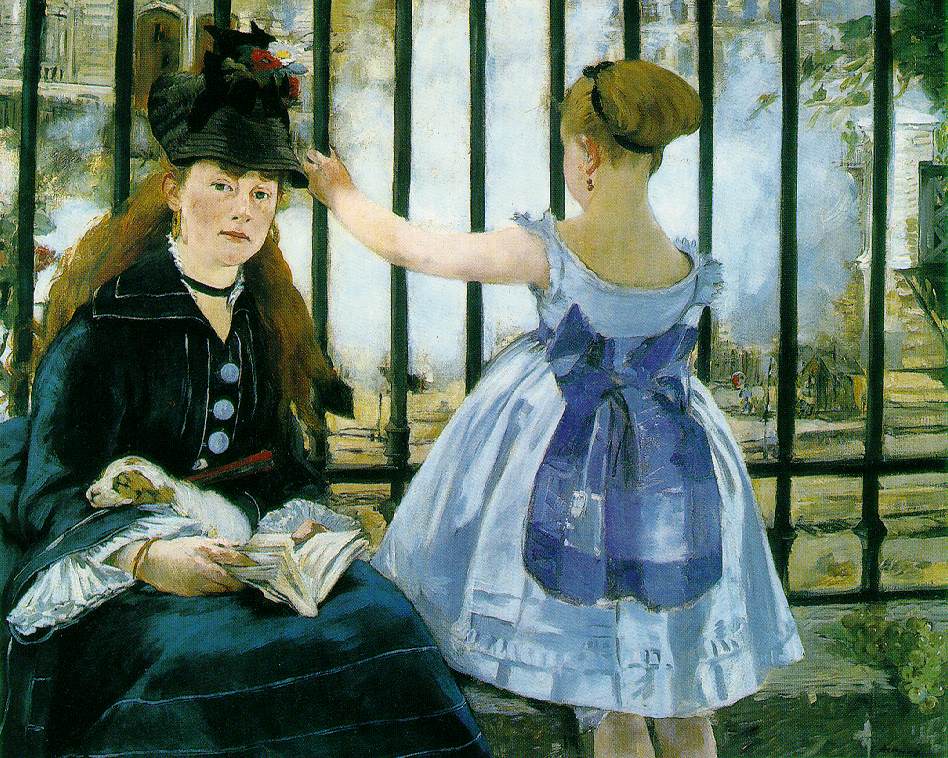
A new piece by Chris Daley in the excellent online journal Alluvium about railway fiction. Here’s the first couple of paragraphs:
Railways are news. On the one hand, they are the source of consternation as above inflation fare rises couple with the perceived drudgery of commuting to characterise the railways as a site of soaring ticket prices and overcrowded, invariably late trains. But this sentiment lives alongside whimsy and romanticism, be it through preservation lines or the restoration of ageing steam engines. This paradoxical image of the railway system is, however, nothing new within the British popular imagination and as Ian Carter (2000) points out, this may have something to do with the railways’ historical link to contested areas of modern everyday life: “So much that we take for granted today was invented or perfected in the nineteenth century to facilitate railways’ development, or to limit their potential for political, fiscal or physical mayhem: standardised time, a disciplined and uniform labour force, large-scale bureaucratic organisation, joint-stock industrial corporations, close State regulation of private capitalists’ activities.”
Similarly, British fiction has maintained an ambivalent relationship with railways. Confronted with a new revolutionary transport system, Victorian novelists offered the most sustained exploration of the potentialities of trains, yet by being, as Nicholas Daly (1999) puts it, ‘the agent and icon of the acceleration of the pace of everyday life’ (463) in the mid-nineteenth century, the railways were also a source for the countless anxieties of industrialisation. Contemporary fiction, in Britain at least, is curiously quiet on the railways, with their appearance often limited to neo-Victorian narratives that attempt to reignite the energy of the steam age. However, to mark the 150 year anniversary of the London Underground, Penguin will release, in March, a series of railway writings that could, perhaps, ignite an imaginative investigation of a transport system that is often seen as mundane, yet is simultaneously a potent symbol of transformation. It is therefore apt to briefly map the terrain of railways in fiction and popular culture in order to anticipate where any future speculation may venture.
Read further at: http://www.alluvium-journal.org/2013/01/12/railways-and-fiction/
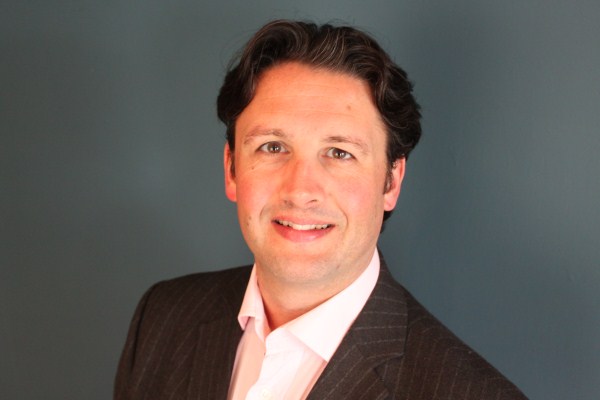
The IMCC is delighted to welcome Martin Willis who is joining us this month as Professor in Science, Literature and Communication based within the Department of English, Linguistics and Cultural Studies at Westminster. Martin’s main research interests lie in the intersections between Victorian literature and science, in particular the literary imagination’s response to marginal sciences such as mesmerism and spiritualism, and by literature’s interrogation of scientific sites and conflicts, from the laboratory and seance room to debates in disease theory and vivisection controversies. He is also Editor of of the Journal of Literature and Science, a peer-reviewed journal dedicated to scholarship exploring the cross-fertilisation between literature and science across all literary periods.
Martin’s most recent book, Vision, Science and Literature, 1870-1920: Ocular Horizons, was published by Pickering and Chatto in 2011 and was winner of both the 2011 British Society for Literature and Science Book Prize and 2012 European Society for the Study of English Cultural Studies Book Prize. Drawing on science, technology, and literature, the book aims to analyse the interaction between science, sight and the literary imagination in order to understand better how vision was continually transformed as its boundaries were breached by scientific and technological innovation.
Modernism and Magic
Tagged as cinema, Literature, magic, Modernism

We’re delighted to announce the publication of Leigh Wilson’s new book Modernism and Magic: Experiments with Spiritualism, Theosophy and the Occult (Edinburgh University Press), which we will be launching at the Green Man pub in Riding House Street on Thursday 10th January.
The book presents a new account of the relation between modernism and occult discourses. While modernism’s engagement with the occult has been approached by critics as the result of a loss of faith in representation, an attempt to draw on science as the primary discourse of modernity, or as an attempt to draw on a hidden history of ideas, Wilson argues that these discourses have at their heart a magical practice which remakes the relationship between world and representation. As she demonstrates, the courses of the occult are based on a magical mimesis which transforms the nature of the copy, from inert to vital, from dead to alive, from static to animated, from powerless to powerful. Modernism and Magic explores the aesthetic and political implications of this relationship in the work of those writers, artists and filmmakers who were most self-consciously experimental, including James Joyce, Ezra Pound, Dziga Vertov and Sergei M. Eisenstein.
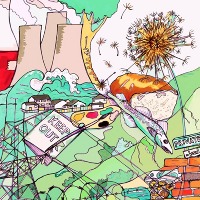
A quick plug for Stir Magazine, edited by former Westminster student Jonny Gordon-Farleigh. Having published over the last couple of years online, Stir is launching into print as a quarterly in April. The issues will feature co-operatives, community-led politics and lots of other bottom-up alternatives. The first issue will be specially themed on the commons and will be co-edited by David Bollier (editor of The Wealth of the Commons: A World Beyond Market and State).
Annual subscription will be £14 for four issues including P&P. In the meantime, you can read the online publication at: http://stirtoaction.com/
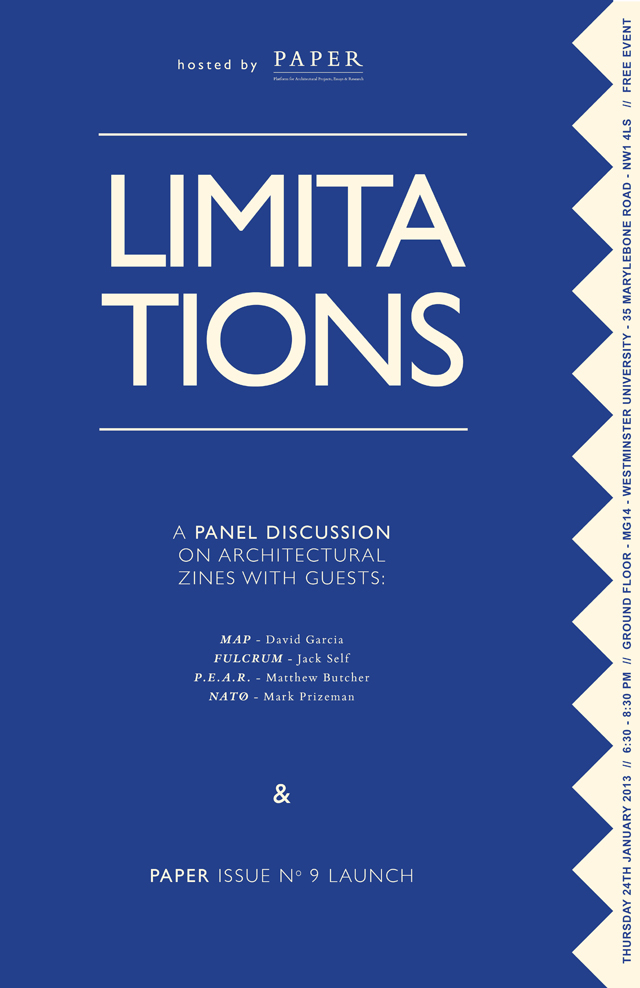
Room MG14, University of Westminster, 35 Marylebone Road, NW1
Thursday 24th January, 6.30-8.30
Speakers: David Garcia, Jack Self, Matthew Butcher, Mark Prizeman
Staff and students at University of Westminster are collaborating with Hanmi Gallery, Fitzrovia, on a forthcoming exhibition entitled ‘The Global Archive’. Please do come along for the Private View.
‘The Global Archive’
24th Thursday January – 9th Saturday February 2013, 12-6 pm (Monday closed)
Private View : 23rd Wednesday January, 6 – 9 pm
Artists: Tom Corby, Shezad Dawood, Young-In Hong, susan pui san lok
Curated by: Marquard Smith with Emma Brasó and Nina Trivedi
In collaboration with: Institute for Modern and Contemporary Culture, University of Westminster, and the International Association for Visual Culture
Artists:
Tom Corby is an artist and writer interested in issues of climate, technology and systems. His interdisciplinary works have been presented at the Institute of Contemporary Arts and the Victoria and Albert Museum, as well as internationally at the Japan Media Art Festival or the Zentrum für Kunst und Medientechnologie (ZKM) in Karlsruhe. He lives and works in London.
One of the winners of the 2011 Abraaj Capital Art Prize, Shazed Dawood’s work has been exhibited internationally, including presentations at Tate Britain, the 53rd Venice Biennale, and the Busan Biennale, 2010. Recent projects include a solo touring exhibition that opened at Modern Art Oxford in April 2012, and the installation of his New Dream Machine Project II at Parasol Unit. In 2012, he was nominated for the Jarman Award. He lives and works in London.
Young-In Hong completed her PhD at Goldsmiths in 2011. She has developed a number of site-specific projects including Double Encounter at i-myu Projects, London and The Performing City in Aicho, Japan. Recent group exhibitions include the Museum of Art and Design, New York, Rokeby Gallery, London, and A Foundation Liverpool. She lives and works between London and Seoul.
susan pui san lok is an artist and writer based in London. Her multidisciplinary works evolve out of interests in notions of nostalgia and aspiration, place and migration, translation and diaspora. Recent solo projects include Lightness (2012) and Faster, Higher (2008), both in collaboration with Film & Video Umbrella, DIY Ballroom/Live (2007) and Golden (2005-7), an exhibition/residency at Beaconsfield, London, and Chinese Arts Centre, Manchester.
Curators:
Marquard Smith curates, writes, programmes, commissions, and edits. He is Director of the Institute for Modern and Contemporary Culture at University of Westminster, and Editor-in-Chief of Journal of Visual Culture.
Emma Brasó was curatorial fellow at CCA Glasgow in 2012. She is a curator and art historian conducting a PhD on pseudonymity at University of Westminster.
Nina Trivedi is currently a doctoral researcher at University of Westminster. She has a MFA in Curating from Goldsmiths College and has had recent curatorial projects in London and Berlin.
Architecture_Media_Politics_Society Kenneth Frampton interview
Tagged as Architecture, Modernism, Urban

If there is a modern invention that is apocalyptical, it is not the atomic bomb. It is the automobile…
A quick notice that Vol 1, no. 4 of ARCHITECTURE_MEDIA_POLITICS_SOCIETY is now available on-line. This month’s issue, ‘A Critical Architecture: Comments on Politics and Society’, is a fascinating interview-article with Kenneth Frampton.
Read it at: http://architecturemps.com/full-text/
Anne Witchard on ‘Lucky cat’ show, resonance fm this Saturday
Tagged as China, Literature, London, Modernism

Listen this Saturday 1st December at 3.30pm to our own Anne Witchard on the Lucky Cat show on Resonance FM, hosted by Zoe Baxter. Anne will be talking about her latest book Lao She in London (Hong Kong University Press 2012) which details the time Chinese writer Lao She spent in London in the 1920s. The book reveals Lao She’s encounter with British high modernism and literature from Dickens to Conrad to Joyce as well as his tiem spent in the notorious and much sensationalised East End Chinatown of Limehouse.
If you don’t happen to be in central London, you can listen online at: Resonance 104.4FM.
Stefan Szczelkun’s Agit Disco has been widely and very positively reviewed in a number of recent publications. The project collects the playlists of its 23 writers to tell the story of how music has politically influenced and inspired them. The book provides a multi-genre survey of political musics that goes beyond protest songs into the darker hinterlands of musical meaning.
In Anarchist Studies 20.2, Jim Donaghey describes Agit Disco as ‘highly effective in sparking a reconsideration of the reader’s or listener’s experience of music and politics’, in a way which ‘will surely encourage others to begin their own dialogues, and contribute to those million compilation CDs that Szczelkun hopes for’, while Phil England, in The Wire, remarks that the ‘personal selections inside, directly or indirectly, prompt all kinds of questions, reanimating them as a living dialogue in the present.
In a lengthy review in the journal Socialism and Democracy, Matt Callahan is particularly insightful: ‘The music industry long ago made pop music journalism an extension of its dominance over music production, distribution and consumption. Agit Disco has the great virtue of enabling informed discussion of music by people who clearly cherish the music they are discussing. The value of music, therefore, is of a different order of magnitude than that of a disposable unit manufactured for financial gain. What comes across is a love and respect for music, a celebration of music’s timeless role in the life of communities and in their resistance to oppression … The task Agit Disco sets out to accomplish, therefore, bears a superficial resemblance to both cultural studies and pop music journalism while on a more profound level making a critique of both. That this critique comes in the form of a praxis as opposed to a conventional polemic is actually part of the critique – targeting self-proclaimed or institutionally sanctioned “experts” who in addition to passing judgement on what is good music and its proper relationship with politics, rule out the intelligence and creativity of working-class and other supposedly less qualified people’.
There is also an interview with Stefan Szczelkun and Anthony Iles published in BANTmag (Turkey): http://www.bantmag.com/mag/04/page/view/448
Agit Disco is published by Mute books, 46 lexington st, london, w1f 0lp. www.metamute.org
Derrida: A Biography review
Tagged as radical philosophy
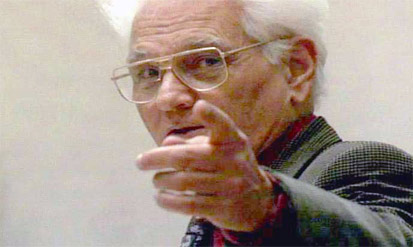
For fans of Jacques Derrida, David Cunningham’s review of Benoit Peeters’s recently published biography, which appears in the latest issue of Radical Philosophy, is currently up as a freebie on the website. You can read it here: http://www.radicalphilosophy.com/web/grande-biog

Wednesday 14th November, 4.00pm – 5.15pm
Wells Street, room 106
Bianca Leggett (Birkbeck College, University of London)
Englishness Elsewhere: Exploring Parochialism in the Contemporary English Travel Novel
Ever since the days of Defoe’s Robinson Crusoe, English fiction has repeatedly portrayed travelling protagonists who feel possessed by the need to be English elsewhere, that is, to travel. Terry Eagleton has suggested that the ‘striking number of contemporary novels written in England but set in some non-English locale suggests ‘a sense that from the viewpoint of “creative” writing there is something peculiarly unpropitious about the typical social experience of an industrially declining, culturally parochial, post-imperial nation.’ This paper traces the historical and cultural origins of the myth of the English as a nation that both loves travel and yet remains staunchly parochial, suggesting that contemporary Crusoe-stories are part of how the English have attempted to understand their role in a post-war postcolonial world. It considers how this myth is revisited and revised in three stories of Englishmen in Continental Europe, Ian McEwan’s The Innocent (1990), Julian Barnes’s Metroland (1980) and Geoff Dyer’s Paris Trance (1998). While each novel comments on historically distinct moments in English attitudes to European identity, their similarities suggest a shared desire to critique English insularity. Finally, the paper asks whether the portrait of Englishness which finally emerges is more ambivalent than it first appears, suggesting that its admonitory messages are tempered by elements of postcolonial melancholia and nostalgia.

The Institute is excited and delighted to welcome our new Visiting Professor in the IMCC, Professor Allan Stoekl. Allan will be based at the Institute during 2012-13, while on research leave in London from his position as Professor of French and Comparative Literature at Pennsylvania State University.
Allan’s many publications include the books Politics, Writing, Mutilation: The Cases of Bataille, Blanchot, Roussel, Leiris and Ponge (University of Minnesota Press, 1985); Agonies of the Intellectual: Commitment, Subjectivity, and the Performative in the Twentieth-Century French Tradition (University of Nebraska Press, 1992); and Bataille’s Peak: Energy, Religion, and Postsustainability (University of Minnesota Press, 2007). He was editor of a seminal special issue of Yale French Studies, ‘On Bataille’ (1990), and also translated Paul Fournel’s Need for the Bike (2003).
During his time at Westminster, Allan will be working on a new book provisionally entitled Avatars of the Postsustainable City, while also contributing to the work of the Institute in various ways. We very much look forward to working with him!

Advance news of the next series of English Literature and Culture research seminars taking place in the first semester this year.
Seminars are fortnightly on Wednesday afternoons, from 4pm to around 5.30pm, and will be held in room 106 in the University’s Wells Street building.
Wednesday 17th October
Christopher Daley (University of Westminster)
‘Too Many Machines’: British Science Fiction Film and Television of the 1950s
Wednesday 31st October
Zara Dinnen (Birkbeck College)
Did we Miss it? The Legacy of Cyberculture in Contemporary Representations of Digital Technology
Wednesday 14th November
Bianca Leggett (Birkbeck College)
Englishness Elsewhere: Considering Cosmopolitanism in the English Travel Novel
Wednesday 28th November
Martin Eve (University of Sussex)
‘Opening children’s eyes’: Pynchon, Bolano, Overloaded Forms and the Didactic Function
The Institute is delighted to welcome three new members who are joining the Department of English, Linguistics and Cultural Studies this academic year.
Georgina Colby joins us as a Lecturer in Contemporary Literature. She is the author of Bret Easton Ellis: Underwriting the Contemporary (Palgrave), and is currently working on a second book on the author Kathy Acker. She has also published widely on the intersections of literary practice and visual culture in contemporary US art, and is presently organising a major series of events to be held in London on ‘Death and the Contemporary’.
Lucy Bond is joining us as post-doctoral research and teaching fellow. Her PhD at Goldsmiths focused on the commemoration of 9/11 in the American public sphere, looking particularly at memorial practices embodied in literature and material culture, and at the ways in which a reification of the discourse surrounding the attacks has limited the production of a successful counter-narrative able to critique the attacks’ appropriation and manipulation by the institutions and individuals of the wider hegemonic sphere.
Matt Charles is also joining us as post-doctoral research and teaching fellow. Matt’s PhD thesis was completed at the Centre for Research in Modern European Philosophy, now based at Kingston University, titled ‘Speculative Experience and History: Walter Benjamin’s Goethean Kantianism’. He is also a member of the editorial collective of the journal Radical Philosophy. Matt’s current research concerns theories of mass education, and the recent pedagogical turn in theory, and he will be organising a major conference on Walter Benjamin’s pedagogic materialism at Westminster later next year.
New Journal Launch: Architecture_Media_Politics_Society
Tagged as Architecture, politics, Urban, visual culture

ARCHITECTURE_MEDIA_POLITICS_SOCIETY is a new on-line, fully peer reviewed academic journal.
The journal is a forum for the analysis of architecture in the mediated environment of contemporary culture. It seeks to expand an understanding of architecture and its relationship with media, politics and society in its broadest sense. One international paper is published each month that deals with an issue or theme relevant to the journal. Dual language publications are encouraged. Selected authors are also invited to submit articles for a printed version of the journal.
Currently, the journal forum operates as a platform for a research project entitled Architecture as Political Image; an investigation into the use of architecture in political campaign imagery in the United States and the United Kingdom. It is run in affiliation with Ravensbourne (University College), London, and Florida State University, Tallahassee.
ISSN 2050-9006 For details about submissions visit the web site: www.architecturemps.com
UPDATE: The second volume of issue one has just been published entitled Mythopoetics of the Kunsthalle. The issue contains an article arguing for a major reconsideration of the architectural profession that uses the notion of the Kunsthalle as its theoretical framework. The author, Manuel Schartzberg, is an architect and tutor currently working in the US. Previously, he worked for David Chipperfield Architects in the UK and his paper is partly based on his time there. You can read it at the web site: www.architecturemps.com
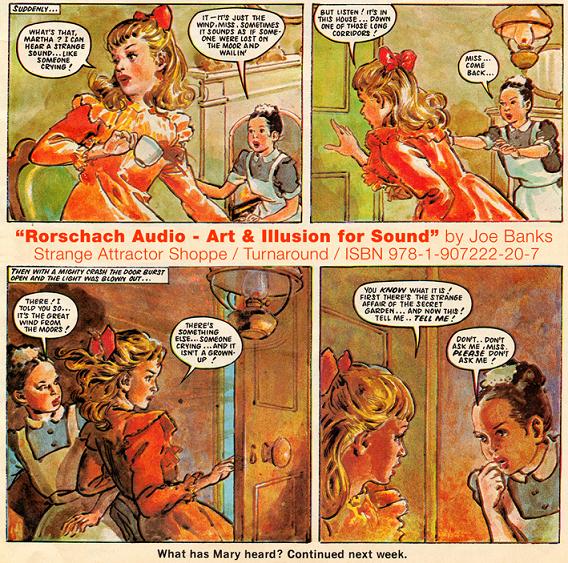
Joe Banks, former AHRC Research Fellow at the Institute, is out and about over the next month or so, promoting his Rorscach Audio project. The Times Literary Supplement has reviewed the “Rorschach Audio” book as “engaging… packed with interest” (TLS 5707, page 30), the project’s research archive is also on-line, and talks are now confirmed for The ICA, London, 15 Sept 2012 (as part of the closing events for Bruce Nauman’s exhibition “Days”) and at the Liverpool Biennial, 6 Oct 2012, organised by Mercy.


The Institute for Modern and Contemporary Culture
University of Westminster Department of English, Linguistics and Cultural Studies
32-38 Wells Street, London W1T 3UW. United Kingdom.