-
Architecture
archive
art
Ballard
body
China
cinema
ecology
education
Europe
Ezra Pound
futurology
gothic
image
law
Literature
London
magic
memory
Modern
Modernism
museums
music
novel
performance
photography
poetry
politics
radical philosophy
science
science fiction
Sinclair
Situationism
sound art
Surrealism
technology
television
the avant-garde
The Future
Theory
thomson
time
Urban
visual culture
war
Posts tagged cinema
Autobiography and the Archive screening, Thurs 30th January
Tagged as archive, art, cinema, visual culture

A reminder of ‘Autobiography and the Archive’, a screening of work by Uriel Orlow, Miranda Pennell, and Sarah Purcell exploring the archive, collective memory, and personal history, curated by Mnemoscape for our regular partners at the Whitechapel Gallery and sponsored by the Institute. The screening is from 7-9pm on Thursday 30th January 2014, tickets £8.50/£6.50 concessions. Flier attached here: MS — Autobiography and the Archive (1).
The screening will be preceded by a drinks reception in the Creative Studio at the Whitechapel to celebrate the publication of the Journal of Visual Culture’s ‘The Archives Issue’. The special issue features contributions from Sas Mays and Marquard Smith, alongside Basel Abbas and Ruanne Abou-Rahme (with Tom Holert), susan pui san lok, Uriel Orlow, Chris Horrocks, Shezad Dawood (and Mark Bartlett), Nina Lager Vestberg, Gary Hall, and Trevor Paglen and Juliette Kristensen.
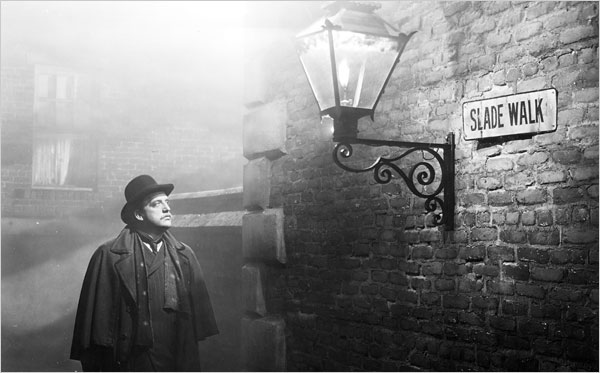
Our own Alex Warwick, co-editor of Jack the Ripper: Media Culture History, will be introducing John Brahms’ 1944 version of The Lodger as part of the BFI’s Gothic Season on Monday 20th January, 8.45 pm.
Get your ticket here.
Reminder: Kreider + O’Leary, Jan 17th
Tagged as Architecture, art, cinema, visual culture

Kreider + O’Leary, ‘Ways to Cut the Earth Open’
Friday 17 January, 7pm
The Old Cinema, University of Westminster, 309 Regent Street
‘Ways to Cut the Earth Open’ is a cross-platform survey that examines a number of sites recently explored by Kreider + O’Leary in their nomadic practice. Using the sectional cut and the filmic splice as starting points they explore strands from their recent site-based works to thread together narratives of place and displacement. Predicated on an aesthetics of response while engaging with the complexity inherent in a given site, their work is both a form and act of communication: therefore, and necessarily, clouded by ambiguity. This prompts a critical investigation into the role of ambiguity for creative practices that relate to site, including writing and the moving image.
Kreider + O’Leary are a poet and architect who collaborate to make performance, installation and time-based media work in relation to sites of architectural and cultural interest. Since 2003, they have worked collaboratively to construct work in prisons, churches, military sites, film locations and desert environments, as well as in more traditional gallery venues across the UK, Europe, the US, Australia, and Japan. Their work ‘Light Vessel Automatic’ was exhibited at Performing Architecture at Tate Britain in February 2013. They are currently exhibiting a new work entitled ‘Edge City’ at the Lisbon Architecture Triennale.
Visit: http://www.kreider-oleary.net/
All welcome
Southern Visual Legacy seminar, Weds 27th
Tagged as cinema, memory, photography
Wednesday 27 November, 4.00 pm
Room 106, University of Westminster, 106 Wells Street , London W1T 3UW
Christopher Lloyd, Goldsmiths, University of London
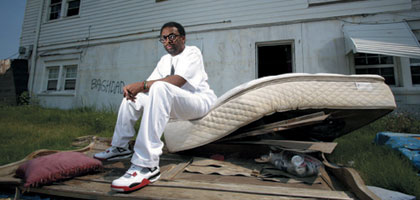
‘Looking at the “Southern Visual Legacy” in Spike Lee’s When the Levees Broke’
What are we to do with images of death that remind us of, and insist that we recall, other deathly cultural memories? What ethical obligations do we have to see death in larger ocular frameworks? These broad questions frame my analysis, which looks at a selection of photographs shown in Spike Lee’s documentary When the Levees Broke. Charting Hurricane Katrina and her aftermath, the film reveals the biopolitical life (and death) of Southerners in New Orleans and the Gulf region. More specifically, African-American life is revealed by Lee to be precariously entwined in the region’s historical and cultural contours. The images of African-American death that we see in the documentary, I argue, trigger visual memories of other pictures of corporeal trauma from the region’s past. If, as Katherine Henninger argues, ‘photographers and photographs in the South constitute a vast visual legacy: a complex series of continuities and ruptures that help shape southern identity itself’, then we must attend to such connections across Southern visual culture. My paper aims to contribute to this process, illuminating some of the memorative links between the photographs of dead black New Orleanians in When the Levees Broke with, particularly, lynching photographs and the image of Emmett Till in his coffin. In making explicit the ‘Southern visual legacy’ of Lee’s film, we might not only contribute insight into the debates on Southern identity and regionalism in the twenty-first century, but also signal ways of reading images of African-Americans through broader historical and cultural frames.

Criminal Programming: The algorithmic heist and narrative control
Hallvard Haug, Birkbeck, University of London
Wednesday 30 October, 4pm
Room 106, University of Westminster, Wells Street
Black Gold film showing
Room LA103, University of Westminster, Marylebone, Tues 22 October, 6pm
If you’ve never given much thought to the lives affected each time you choose one brand of coffee over another, allow this handsomely mounted documentary from British filmmakers Marc and Nick Francis to serve as a bracing, double-shot of reality. Focusing exclusively on the coffee-producing regions of Ethiopia — the so-called “birthplace of coffee” — the Francis brothers explore the long and unnecessarily convoluted chain that brings the area’s highly prized coffee beans to the shelves of your supermarket, specialty store or Starbucks. The market prices for coffee are set by buyers and sellers in the financial capitals of New York and London, far from the growers who are most often unaware of the market rate, and at the time of filming, farmers’ profits dropped to a 30-year low: One kilo of beans, which can brew up to 80 cups of $3-a-shot coffee nets the grower less than 23 cents. And yet over the last 15 years, retail sales of coffee have nearly tripled to $80 billion a year with four multinational corporations — Kraft, Nestle, Procter & Gamble and Sara Lee — dominating the market.
Followed by Q&A with the directors.
Staging Science events, Dec 6 and 7 2013
Tagged as cinema, London, museums, science, visual culture

Hosted by our colleagues in the new Centre for the Study of Science and Imagination, a series of exciting events on Staging Science in December:
Staging Historical and Contemporary Science: A Roundtable
Friday December 6, 2013, 6.30-8.00pm (drinks from 6pm)
The Boardroom, University of Westminster, 309 Regent Street
Jim Al-Khalili (Physicist, Science Communicator and Broadcaster)
Tim Boon (Head of Research, Science Museum)
Imran Khan (Chief Executive, British Science Association)
Katrina Nilsson (Head of Contemporary Science, Science Museum)
Jonathan Renouf (Executive Producer, BBC Science Unit)
Staging Science ColloquiumSaturday December 7, 2013, 9.00-6.00pm
The Boardroom, University of Westminster, 309 Regent Street
Speakers include: Iwan Morus (Aberystwyth), Daniel Brown (Southampton), Robert Kargon (Johns Hopkins), Jeremy Brooker (Independent Researcher), Tiffany Watt-Smith (Queen Mary), Kirsten Shepherd-Barr (Oxford), Jean-Baptiste Gouyon (Science Museum, London), Bernard Lightman (York, Canada), Martin Willis (Westminster)
6.00-7.00pm: Drinks Reception and Book Launch for Jeremy Brooker’s Temple of Minerva (Regent Street Building Foyer)
followed by
A Performance of the Pepper’s Ghost Illusion with Charles Dickens’s ‘The Haunted Man’
Produced, directed and performed by Richard Hand and Geraint D’Arcy (University of South Wales)
There will be 2 performances of the Pepper’s Ghost Illusion – 7.00-7.30 and 7.45-8.15 (The Old Cinema)
Places for all the events that make up Staging Science are limited. Please apply early for each event as below. In your email please make clear which event or events you wish to attend. Many thanks.
To reserve a place at the Roundtable (Friday evening) please contact Rebecca Spear on rebecca.spear@my.westminster.ac.uk
To reserve a place at the colloquium (Saturday day), which comes with an invitation to the Pepper’s Ghost performance (Saturday evening), please contact Rebecca Spear on rebecca.spear@my.westminster.ac.uk.
Please do advise Rebecca if you wish to come to the colloquium but are not able to attend the evening Performance.
To inquire about a place at the Pepper’s Ghost performance only please contact Professor Martin Willis on m.willis@westminster.ac.uk
For updates on Staging Science connect to SCIMAG’s blog site at: http://scienceimagination.wordpress.com
The Science Fiction Politics of Urban Crisis article
Tagged as cinema, novel, politics, radical philosophy, science fiction, Urban

A new article by David Cunningham and Alex Warwick has just appeared in the most excellent journal CITY, vol. 13, no. 4: ‘Unnoticed Apocalypse: The Science Fiction Politics of Urban Crisis’. The essay ranges over a number of contemporary texts from The Coming Insurrection to Rem Koolhaas’ Junkspace to the film District 9.
The nice people at Taylor & Francis Press are offering the first 50 people to make use of it free access to an eprint version from the following link: http://www.tandfonline.com/eprint/AqbgvrWCkCSXg8XZEwgd/full

Wednesday 29 May, 2013, 17.00 pm
Fyvie Hall, University of Westminster, 309 Regent Street, London W1B
UK Premieres of Farewell 1999 (25’) and The Dream Never Sets (74’), directed by Wu Wuna
Followed by conversation between Wu Wuna, Professor Harriet Evans and Dr. Kiki Yu
Following up on Farewell 1999 about her mother, The Dream Never Sets is another highly personal documentary from Wu Wuna, this time focusing on her father, who has claimed to be an inventor of note for as long as she can remember. A somewhat lighter, though equally complex offering, the film reviews her difficult relationship with the man who introduced sex toys to Taiwan and who now dreams of marketing the ultimate food blender around the world. The film sees Wu laying bare their often strained father-daughter bond in an effort to understand it herself, matters being made more difficult when she learns that he is seriously ill.
Organised as part of the 2013 Chinese Visual Festival.
Through the Looking Glass: Shifting Perceptions of War seminar
Tagged as cinema, visual culture, war

Group for War and Culture Studies, University of Westminster, Research Seminar Series 2012/2013
Through the Looking Glass: Shifting Perceptions of War
Wednesday 8 May 2013, 6 pm – 8 pm, Room 351
University of Westminster, 309 Regent Street, London W1B 2UW
Joram ten Brink, University of Westminster
‘The Act of Killing’
Joram will talk about a documentary he recently produced: “The Act of Killing”, directed by Joshua Oppenheimer and a major outcome of the Arts & Humanities Research Council’s Genocide and Genre Research Project awarded to The Centre for Research and Education in Arts and Media at the University of Westminster. The documentary challenges former Indonesian death squad leaders to re-enact their real-life mass-killings in whichever cinematic genres they wish, including classic Hollywood crime scenarios and lavish musical numbers. The film has received widespread critical acclaim most recently at the Toronto and the Berlin Film Festivals.
Maki Kimura, University College London
‘Narrative as a Site of Subject Construction: The “Comfort Women” Debate’
The ordeal of `Comfort Women’ who were sexually enslaved by the Japanese Imperial Military during the Second World War became widely known in the 1990s through these women’s accounts of their experience. Instead of considering their narratives as historical data which reflect the `true’ historical past, the talk locates them within a broader framework of thinking of narratives. Drawing on the understanding of narrative as a key to the self and the subject which has been developed in narrative research, as well as Judith Butler on interpellation and Gayatri Chakravorty Spivak on subaltern agency, the talk argues that the `Comfort Women’s’ testimonies should not be read one-dimensionally in the light of `truth’ and `falsity’, but should rather be considered as the site of their subject-formation. Their narratives are where agency concurrently emerges, and `Comfort Women’ are thus not powerless victims but are active participants in their creation of their own narratives and their own selves.
Entrance free. To reserve a place, please R.S.V.P. Dr Caroline Perret at: C.Perret@westminster.ac.uk
China in Britain #5: Archiving, April 27
Tagged as archive, art, China, cinema, photography

Archiving: China in Britain #5
Saturday April 27th, 2013, 9:30am – 5:00pm
The Boardroom, 309 Regent Street, London W1B 2UW
10:00 ‘Shifting tastes in Chinese art: a history of the Berkeley Smith collection of Chinese ceramics at Cheltenham Art Gallery & Museum (1921-1958)’, Louise Tythacott (University of Manchester )
10:30 ‘Let’s talk about the money’, Helen Wang (Dept of Coins and Medals, The British Museum)
11.15 ‘The First Chinese Books in London’, Frances Wood (Keeper of China Collections at the British Library)
12:15 ‘Mapping An Archive of Chinese Representations in British Cinema’, Hiu M. Chan (University of Cardiff)
12:45 Title TBA, Katie Hill (Sotheby’s)
1:30 – 2:30 Lunch
2:30 ‘The Historical Photographs of China Project’, Robert Bickers (University of Bristol)
3.15 ‘Found In Time: My Shanghai Heritage’, Peter Hibbard MBE (Former President and Founder of the North China Branch of the Royal Asiatic Society)
3.45 ‘Maoist posters in London: A perspective from the University of Westminster’, Emily Williams (University of Westminster)
5:00 Drinks Reception

Wednesday 20th February, 4pm – 5.15pm
Wells Street, room 106
Fran Bigman (University of Cambridge)
‘A Bit of Himself: British Male-authored Abortion Narratives from Waste (1907) to Alfie (1966)’
Modernism and Magic
Tagged as cinema, Literature, magic, Modernism

We’re delighted to announce the publication of Leigh Wilson’s new book Modernism and Magic: Experiments with Spiritualism, Theosophy and the Occult (Edinburgh University Press), which we will be launching at the Green Man pub in Riding House Street on Thursday 10th January.
The book presents a new account of the relation between modernism and occult discourses. While modernism’s engagement with the occult has been approached by critics as the result of a loss of faith in representation, an attempt to draw on science as the primary discourse of modernity, or as an attempt to draw on a hidden history of ideas, Wilson argues that these discourses have at their heart a magical practice which remakes the relationship between world and representation. As she demonstrates, the courses of the occult are based on a magical mimesis which transforms the nature of the copy, from inert to vital, from dead to alive, from static to animated, from powerless to powerful. Modernism and Magic explores the aesthetic and political implications of this relationship in the work of those writers, artists and filmmakers who were most self-consciously experimental, including James Joyce, Ezra Pound, Dziga Vertov and Sergei M. Eisenstein.

Classifying Films: The British Board of Film Classification in 2012
December 5th 2012, 3.00pm
Room 3.07, University of Westminster, Little Titchfield Street, London
Our friends and colleagues in the Centre for the Study of Law, Society and Popular Culture are pleased to announce the next instalment of the Entertainment Law: Theory Meets Practice series, which will be a guest lecture given by Lucy Brett, Head of Education and an Examiner at the British Board of Film Classification. The talk will involve the viewing of clips from key films from the BBFC’s archive! All are welcome.
The BBFC celebrates its centenary this year, and you might also be interested in the current film series and exhibition at the British Film Institute, Uncut, and also the new book Behind the Scenes at the BBFC, to which two members of the Law School at Westminster have contributed.
British Science Fiction Film and Television of the 1950s seminar
Tagged as cinema, science fiction, television
Wednesday 17th October, 4.00pm – 5.15pm
Room 106, 32-38 Wells Street, London W1T 3UW
Christopher Daley (University of Westminster)
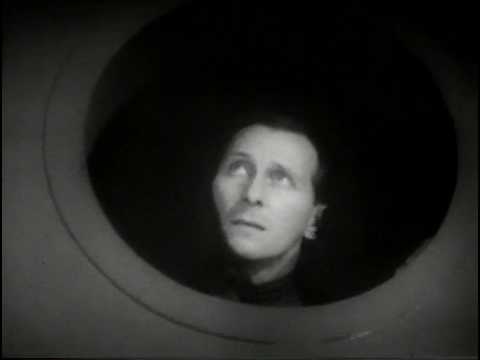
‘Too many machines’: British Science Fiction Film and Television of the 1950s
In analysing British cinema between 1945 and 1965, Tony Shaw (2001) argues that the influence of American cinema on British audiences was undeniable: ‘Hollywood films dominated the British market from the beginning to the end of the period and not to recognize the potentially significant role American productions had in shaping British perceptions of the Cold War would be misleading’ (p.4). Movies such as The Day the Earth Stood Still (1951), Invasion of the Body Snatchers (1956) and Forbidden Planet (1956) persist as potent symbols of an era which mixed fear of communism and nuclear war with utopian hopes for the technological conquest of other worlds. Whilst the political content of these popular films has been continuously reviewed by critics and scholars alike, the contemporaneous works of British filmmakers has received limited attention. In this paper, I will analyse a series of British films and television programmes which not only challenged or complicated the political content of prominent American SF productions, but crucially, made use of the speculative imagination to reflect upon the state-of-the-nation during a period of rapid technological and social transformation.
Reminder: Thomas Levin on surveillance, June 6th
Tagged as cinema, technology, visual culture

Wednesday 6th June 2012, 4pm
Room 358, University of Westminster, 309 Regent Street, London W1B 2UW
Professor Thomas Y. Levin
Princeton University / IKKM Bauhaus University, Weimar
“Ghostly Surveillance: Some Stabs in the Ciné-Narratological Dark”
Simultaneous with the increasingly widespread use of surveillance as a narrative device in contemporary cinema – its most obvious manifestation being the rise of so-called “real-time” transmission characteristic of CCTV systems in films such as The Truman Show — we are also witnessing a curious proliferation of ghosts within the surveillant machinery, from disturbing videocasettes desposited mysteriously on doorsteps (Lost Highway, Caché) to the re-appearance of people who are supposedly dead on the screens of corporate security systems (Michael Almereyda’s Hamlet [2000]) and the documentation of the presence of demons by means of home surveillance cameras (Paranormal Activity). While it could be argued that at least since Bentham, there has always been a ghostly dimension to surveillance (the panoptic tower functions despite the complete inability to determine whether anyone is actually really inside), what might these ghostly apparitions reveal about the assumptions we make about surveillance images, indeed about cinema as such?
Thomas Y. Levin teaches media theory and history, cultural theory, intellectual history, and aesthetics. His essays have appeared in October, Grey Room, New German Critique, Screen, The Yale Journal of Criticism, and Texte zur Kunst. He translated and edited the critical edition of Siegfried Kracauer’s The Mass Ornament: Weimar Essays (1995). He was part of the curatorial collective responsible for the first exhibition on the Situationist International at the Centre Pompidou, ICA London and the ICA Boston in 1989. Levin also conceived and curated the exhibition CTRL [SPACE], Rhetorics of Surveillance from Bentham to Big Brother which opened at at the ZKM Center for Art and Media Technology in Karlsruhe in October 2001 and edited the catalogue under the same title (with Ursula Frohne and Peter Weibel). His more recent curatorial activities include Anxious Omniscience: Surveillance and Contemporary Cultural Practice (Princeton University Art Museum, 2002), 911+1: The Perplexities of Security (Watson Institute, Brown University, 2002) and The Arts of the Future will be Radical Transformations of Situations, or They will be Nothing’: Guy Debord Cineaste (Slought Foundation, Philadelphia, 2006).
Open Call: Delfina Foundation, Videobrasil and Casa Tomada
Tagged as art, Brazil, cinema, visual culture
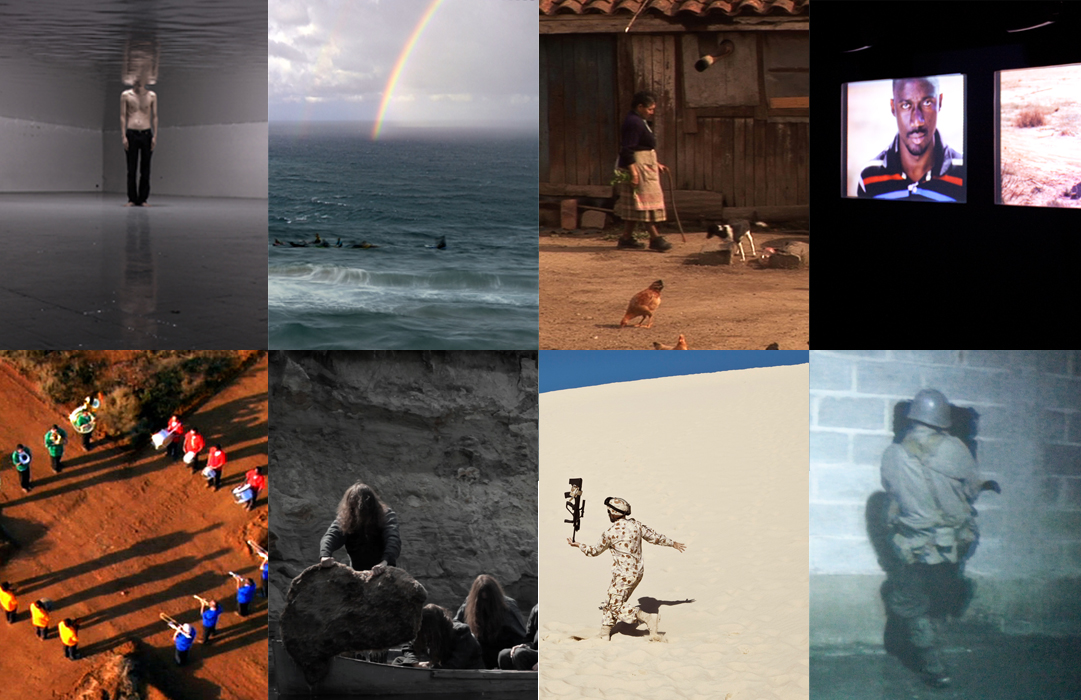
Our friends at the Associação Cultural Videobrasil in partnership with Delfina Foundation and Casa Tomada (São Paulo, Brazil) are pleased to invite applications from visual artists living and working in Brazil and the Middle East, North Africa & South Asia (MENASA) for a three-month artistic residency split between São Paulo and London. The Videobrasil em Contexto Prize (Videobrasil in Context) is focused on artists, under the age of 35, whose practice involves a strong element of research and production. Two artists (one from Brazil and another from MENASA) will be selected to undertake the three-month residencies from mid-September 2012 and produce a new works in response to Videobrasil’s Collection.
The Collection available for each artist are the works that have been part of the Southern Panoramas show each year since 1990, when Videobrasil focused on the geopolitical South. An overview of this 20+ year selection is available for the applicants at: www.videobrasil.org.br/vbonline During the residencies, various public platforms will be created for the artists in São Paulo and London. At the end of the residency, the artists will be asked to prepare a presentation of their projects to be part of the activities of the 30th Anniversary of the International Contemporary Art Festival SESC_Videobrasil in October 2013.
– Deadline for applications: 8th June 2012
– Artists shortlisted: June 15th, 2012
– Interviews with shortlisted artists through Skype: June 20th to July 22nd, 2012
– Announcement of Selection: 2nd July, 2012
– Program Length: September 17th – December 29th, 2012
[São Paulo: September 17th – October 29th, 2012; London: October 29th – December 17th, 2012]
For more information on the programme and selection process, please download an application form here in English.
Reminder: China in Britain #2. Film. May31st.
Tagged as China, cinema, London
China in Britain #2. Film
Thursday May 31st 2012, 9.45 am – 4.45 pm
Room 451, University of Westminster, 309 Regent Street, London W1B 2UW
This is the second in a series of colloquia organised as part of China in Britain: Myths and Realities, an AHRC-funded research network project to investigate changing conceptions of China and Chineseness in Britain, and based at Westminster. The colloquia will connect up the important yet disparate work being done by cultural historians, literary critics, curators, archivists, contemporary artists, film makers and Sino-British organisations. In bringing these specialists together, the project aims to provide a high profile platform for the discursive elaboration of the changing terms of engagement between British and Chinese people and to widen the terms of debate from diaspora studies and simplistic reductions around identity to an inter-disciplinary network of research practice relevant to contemporary debate.
This second event on film will begin with a screening at 10.00am of the 1988 film Soursweet, directed by Mike Newell (most popularly known for his direction of Four Weddings and a Funeral and Harry Potter and the Goblet of Fire). This will be followed by an afternoon talk from Newall and roundtable discussion (2.30pm).
The day will also include presentations of their film work by Rosa Fong and Lab Ky Mo (12.15pm) and conclude with a paper by Jeffrey Richards (Lancaster University) on ‘Fu Manchu and the Yellow Peril (3.45pm).
RSVP – Places are free but strictly limited so it is essential to register with the project’s Principal Investigator, Anne Witchard, at: anne@translatingchina.info
WEBSITE: http://www.translatingchina.info
Important Notice: China in Britain #1, May 10th: Change of Venue
Tagged as China, cinema, London, visual culture

China in Britain #1. Film
Thursday May 10th 2012, 10.00 am – 6.00 pm
An important message from the organisers: because of our support for UCU Strike Action on May 10th, the venue has been transferred from the University of Westminster to The Brunei Gallery, School of Oriental and African Studies, Thornhaugh St., Russell Square, London WC1H OXG: http://www.soas.ac.uk/gallery/
The first in a series of colloquia organised as part of China in Britain: Myths and Realities, an AHRC-funded research network project to investigate changing conceptions of China and Chineseness in Britain, and based at Westminster. The colloquia will connect up the important yet disparate work being done by cultural historians, literary critics, curators, archivists, contemporary artists, film makers and Sino-British organisations. In bringing these specialists together, the project aims to provide a high profile platform for the discursive elaboration of the changing terms of engagement between British and Chinese people and to widen the terms of debate from diaspora studies and simplistic reductions around identity to an inter-disciplinary network of research practice relevant to contemporary debate.
Participants include: Ross Forman (University of Warwick); Felicia Chan (University of Manchester) and Andy Willis (University of Salford); Jo Ho (filmmaker). The day will end with Guo Xiaolu introducing a screening of her film She, A Chinese, followed by a Q and A.
RSVP – Places are free but strictly limited so it is essential to register with the project’s Principal Investigator, Anne Witchard, at: anne@translatingchina.info
WEBSITE: http://www.translatingchina.info
China in Britain: Film #2, May 31st
Tagged as China, cinema, London

China in Britain #2. Film
Thursday May 31st 2012, 9.45 am – 4.45 pm
Room 451, University of Westminster, 309 Regent Street, London W1B 2UW
This is the second in a series of colloquia organised as part of China in Britain: Myths and Realities, an AHRC-funded research network project to investigate changing conceptions of China and Chineseness in Britain, and based at Westminster. The colloquia will connect up the important yet disparate work being done by cultural historians, literary critics, curators, archivists, contemporary artists, film makers and Sino-British organisations. In bringing these specialists together, the project aims to provide a high profile platform for the discursive elaboration of the changing terms of engagement between British and Chinese people and to widen the terms of debate from diaspora studies and simplistic reductions around identity to an inter-disciplinary network of research practice relevant to contemporary debate.
This second event on film will begin with a screening at 10.00am of the 1988 film Soursweet, directed by Mike Newell (most popularly known for his direction of Four Weddings and a Funeral and Harry Potter and the Goblet of Fire). This will be followed by an afternoon talk from Newall and roundtable discussion (2.30pm).
The day will also include presentations of their film work by Rosa Fong and Lab Ky Mo (12.15pm) and conclude with a paper by Jeffrey Richards (Lancaster University) on ‘Fu Manchu and the Yellow Peril (3.45pm).
RSVP – Places are free but strictly limited so it is essential to register with the project’s Principal Investigator, Anne Witchard, at: anne@translatingchina.info
WEBSITE: http://www.translatingchina.info


The Institute for Modern and Contemporary Culture
University of Westminster Department of English, Linguistics and Cultural Studies
32-38 Wells Street, London W1T 3UW. United Kingdom.