-
Architecture
archive
art
Ballard
body
China
cinema
ecology
education
Europe
Ezra Pound
futurology
gothic
image
law
Literature
London
magic
memory
Modern
Modernism
museums
music
novel
performance
photography
poetry
politics
radical philosophy
science
science fiction
Sinclair
Situationism
sound art
Surrealism
technology
television
the avant-garde
The Future
Theory
thomson
time
Urban
visual culture
war
Posts tagged photography

Photography and Abstraction: A Symposium
REGISTRATION NOW CLOSED. Apologies – we have been inundated with an unexpectedly large number of RSVPs and can no longer fit in any further attendees.
Friday 9 May 2014, 10.00 – 6.00 (followed by drinks)
Room 501, University of Westminster, 309 Regent Street, London W1B 2UW
PROGRAMME:
10.00 Coffee
10.30-12.30 Panel 1
Mark Dorrian (Edinburgh), “Medium/Violence/Abstraction”
Andy Fisher (Goldsmiths), “On the Scales of Photographic Abstraction”
David Bate (Westminster), “Daguerre’s Abstraction”
Chair: David Cunningham (IMCC)
12.30-1.30 Lunch
1.30-3.30 Panel 2
Clare Birchall (King’s, London), “Aesthetics of the Secret”
Peter Adey (Royal Hollway), “Capture and Testimony in the Art of Levity”
Ella Chmielewska (Edinburgh), “Writing Between the Photograph and Abstraction”
Chair: John Beck (IMCC)
3.30 Coffee
4.00-6.00 Panel 3
Joanna Zylinska (Goldsmiths), “Photography After the Human”
John Roberts (Wolverhampton), “Ideation and Photography: Critique of Laruelle’s Concept of Abstraction”
Chair: Sas Mays (IMCC)
6.00 Drinks
Free Entry. All Welcome. RSVP: cunninda@wmin.ac.uk
Wednesday 12th February, 1.00-3.00pm
Westminster Forum, 5th Floor, University of Westminster, 32-38 Wells Street, London W1T
“Enduring Violence: Photography in Rwanda After the 1994 Genocide”
Zoe Norridge, King’s College London
Dr Zoe Norridge joined King’s College London in 2012. Prior to King’s she was a Lecturer in Modern and Contemporary Literature and Director of the Aftermaths Research Strand at the University of York, Department of English and Related Literature. Since being selected as one of ten inaugural “New Generation Thinkers” by the BBC and AHRC in 2011, Zoe has made several short pieces for Radio 3. She also writes book reviews for The Independent and The TLS.
Southern Visual Legacy seminar, Weds 27th
Tagged as cinema, memory, photography
Wednesday 27 November, 4.00 pm
Room 106, University of Westminster, 106 Wells Street , London W1T 3UW
Christopher Lloyd, Goldsmiths, University of London
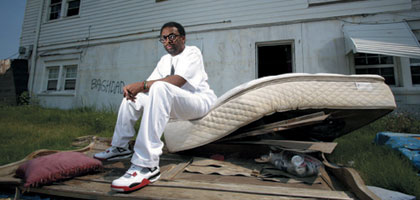
‘Looking at the “Southern Visual Legacy” in Spike Lee’s When the Levees Broke’
What are we to do with images of death that remind us of, and insist that we recall, other deathly cultural memories? What ethical obligations do we have to see death in larger ocular frameworks? These broad questions frame my analysis, which looks at a selection of photographs shown in Spike Lee’s documentary When the Levees Broke. Charting Hurricane Katrina and her aftermath, the film reveals the biopolitical life (and death) of Southerners in New Orleans and the Gulf region. More specifically, African-American life is revealed by Lee to be precariously entwined in the region’s historical and cultural contours. The images of African-American death that we see in the documentary, I argue, trigger visual memories of other pictures of corporeal trauma from the region’s past. If, as Katherine Henninger argues, ‘photographers and photographs in the South constitute a vast visual legacy: a complex series of continuities and ruptures that help shape southern identity itself’, then we must attend to such connections across Southern visual culture. My paper aims to contribute to this process, illuminating some of the memorative links between the photographs of dead black New Orleanians in When the Levees Broke with, particularly, lynching photographs and the image of Emmett Till in his coffin. In making explicit the ‘Southern visual legacy’ of Lee’s film, we might not only contribute insight into the debates on Southern identity and regionalism in the twenty-first century, but also signal ways of reading images of African-Americans through broader historical and cultural frames.
The Polytechnic Touring Association seminar, Nov 13
Tagged as education, photography, visual culture

Wednesday 13th November, 5.30pm
Room 106, University of Westminster, 32-38 Wells Street, London W1T 3UW
Sara Dominici, University of Westminster
“The Polytechnic Touring Association: from culture as education to culture as leisure (1888-1939)”
This paper looks at how the idea of culture promoted by the Polytechnic Touring Association (PTA) changed in the period from 1888, the year subsequently celebrated as the origin of the PTA, and the end of the interwar period. During this timeframe the organisation of the tours shifted from endorsing the Polytechnic’s philanthropic approach, to responding to a commercial context. In 1911 the travel firm had become a separate business. This influenced the PTA’s approach to the tourists, which from individuals to instruct became customers to please and, in turn, the understanding of what would make cultural travel an improving experience. The early excursions were described as ‘educational holiday tours’, thus emphasising travel as an organised form of learning; by the 1930s, these were promoted as ‘holidays to the loveliest places in Europe’, suggesting instead a more ‘relaxed’ approach to the encounter with cultural sites. This paper discusses this passage by considering how the transformation of culture into a product of consumption influenced its commercialisation. Specifically, it evaluates what was understood to be ‘educational’ in the experience of travel offered by the PTA, as the organisation transitioned from providing a learning experience to a service.
Sara is a PhD student affiliated to the IMCC, currently completing her doctoral thesis on the PTA.
Death, Aesthetics and Representation, Wednesday September 11 2013
Tagged as art, Literature, photography, visual culture
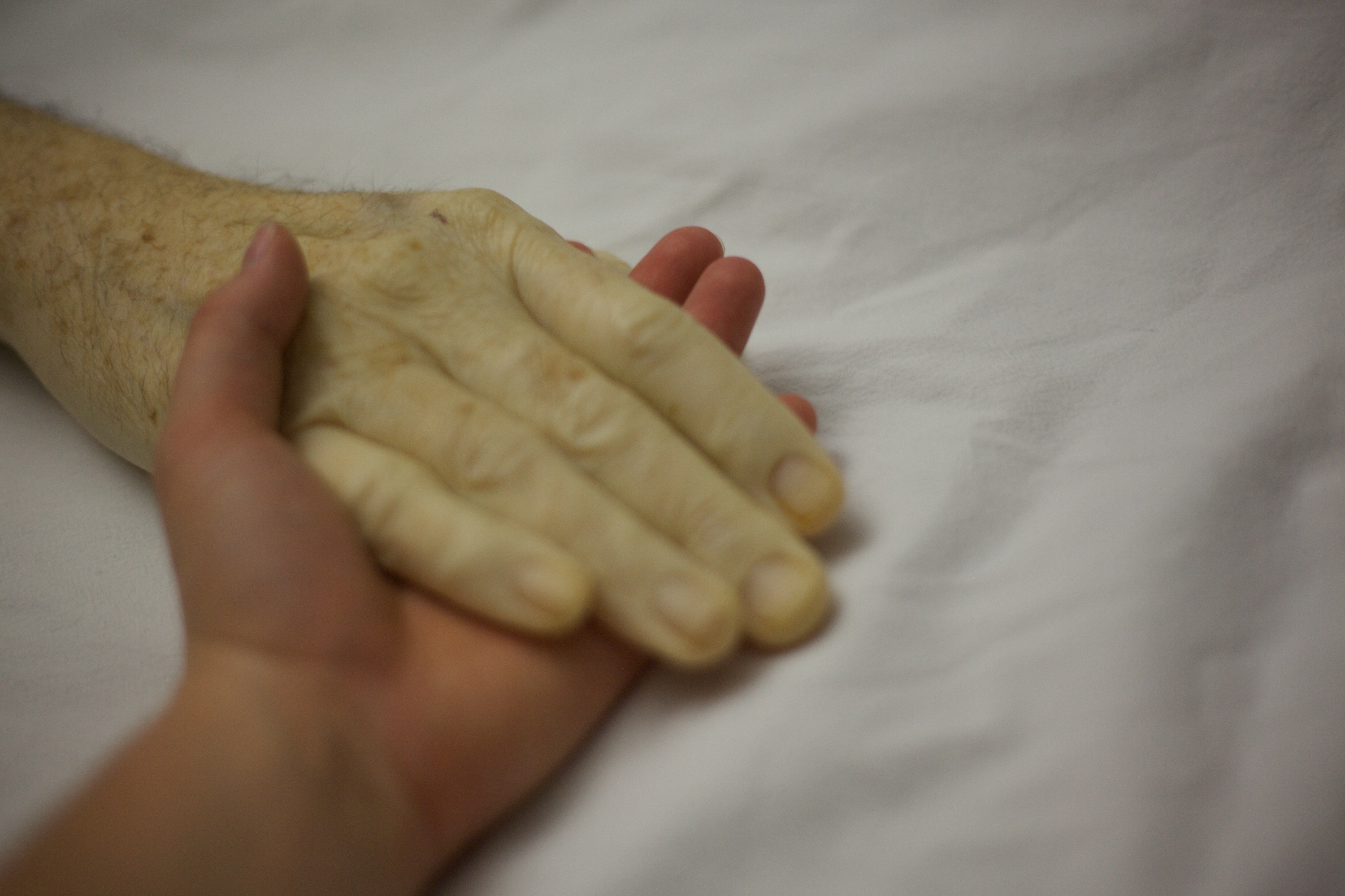
The final event in the series Death and the Contemporary, ‘Death, Aesthetics and Representation’ will take place on Wednesday September 11 from 7:00pm to 8:30pm, at The Photographers’ Gallery, 16 – 18 Ramillies St, London W1F 7LW, featuring contributions from a panel of keynote speakers including Professor Roger Luckhurst, Dr Timothy Secret, Audrey Linkman and Briony Campbell.
‘Death, Aesthetics and Representation’ is hosted by Georgina Colby in collaboration with Anthony Luvera. Through plenary discussions with keynote writers, visual artists and theorists, ‘Death and the Contemporary’ seeks to explore issues surrounding the representation of death in contemporary culture.
The following links contain further information about ‘Death and the Contemporary’ and ticket sales for ‘Death, Aesthetics and Representation’. Tickets for the event are priced at £7 or £4 concession.
http://thephotographersgallery.org.uk/death-aesthetics-reoresentation
http://www.deathandthecontemporary.com/
Citizen Curators exhibition, Photographers’ Gallery
Tagged as art, London, photography

‘#Citizen Curators’
July 1 – August 27 2013, The Photographers’ Gallery, 16 – 18 Ramillies Street, London W1F 7LW
How does social media transform the way we record, share and ultimately remember major events? #citizencurators is a Twitter project co-directed by our own Peter Ride which documents the way Londoners responded to the Olympics of 2012. It aims to show how the contemporary history of London 2012 could be recorded by the people who experienced it without the filtering of an institution.
In the project, any citizen of London could become a curator using social networking and tweet their responses in words or images with the hashtag #citizencurators. These were then collected and archived by the Museum of London. On the occasion of the first anniversary of the Games, The Photographers’ Gallery presents and reanimates the many photographs and tweets created by #citizencurators.
Further details at: http://thephotographersgallery.org.uk/citizencurators

Alexa Wright’s series A View from the Inside is the featured portfolio on Photo Monitor this month: http://www.photomonitor.co.uk/ – click on the image to get to the portfolio template.
China in Britain #5: Archiving, April 27
Tagged as archive, art, China, cinema, photography

Archiving: China in Britain #5
Saturday April 27th, 2013, 9:30am – 5:00pm
The Boardroom, 309 Regent Street, London W1B 2UW
10:00 ‘Shifting tastes in Chinese art: a history of the Berkeley Smith collection of Chinese ceramics at Cheltenham Art Gallery & Museum (1921-1958)’, Louise Tythacott (University of Manchester )
10:30 ‘Let’s talk about the money’, Helen Wang (Dept of Coins and Medals, The British Museum)
11.15 ‘The First Chinese Books in London’, Frances Wood (Keeper of China Collections at the British Library)
12:15 ‘Mapping An Archive of Chinese Representations in British Cinema’, Hiu M. Chan (University of Cardiff)
12:45 Title TBA, Katie Hill (Sotheby’s)
1:30 – 2:30 Lunch
2:30 ‘The Historical Photographs of China Project’, Robert Bickers (University of Bristol)
3.15 ‘Found In Time: My Shanghai Heritage’, Peter Hibbard MBE (Former President and Founder of the North China Branch of the Royal Asiatic Society)
3.45 ‘Maoist posters in London: A perspective from the University of Westminster’, Emily Williams (University of Westminster)
5:00 Drinks Reception
Death and Space, Somerset House, Oct 23rd
Tagged as Death, Literature, London, photography

Death and Space
Tue 23 October 2012, 6.15 pm
£5 full price; £3 student, unemployed and over 65s
The Deadhouse, Somerset House, The Strand, WC2R 1LA
‘Death and the Contemporary’ is a series of site-specific events organised by our new colleague Georgina Colby, along with Anthony Luvera, that will take place across London in October 2012 as part of the Inside Out Festival. Panel discussions with keynote philosophers, writers, visual artists, and theorists will provide an exciting interdisciplinary forum in which to consider issues surrounding the representation of death in contemporary culture.
The first event, ‘Death and Space’, is scheduled to take place at the Dead House, Somerset House, on October 23rd, 2012. Confirmed panellists include David Bate, Andrea Brady, Robert Hampson and Tom Hunter. A glass of wine in included in the ticket price.
Further details at: http://www.insideoutfestival.org.uk/events/death-and-the-contemporary/
China in Britain.4: Visual and Literary Cultures
Tagged as Architecture, China, Literature, Modernism, photography, visual culture
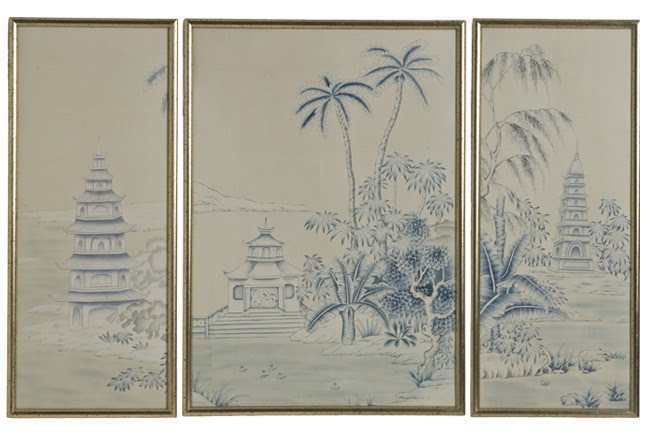
China in Britain: Myths and Realities
Aesthetics: Visual and Literary Cultures
December 8th 2012, 9:30am – 4:00pm
The Cayley Room, 309 Regent Street, London W1B 2UW
You are warmly invited to the fourth in this University of Westminster/AHRC funded series. The day will present an eclectic programme with presentations on modernist architecture, fashion and literature, chinoiserie, and both literature and photography ‘then and now’. Speakers in the morning are Sarah Cheang (Royal College of Art), Edward Denision (Bartlett, UCL), Patricia Laurence (City University of New York), and David Porter (Michigan). The afternoon sessions will include a presentation by photographer Grace Lau and conversations with Paul French, author of Midnight in Peking (Penguin 2012) and novelist Xiaolu Guo. The day will end with a drinks reception.
The full programme along with abstracts and biogs can be found at: www.translatingchina.info
Entrance – including lunch and refreshments – is free of charge so for catering purposes it is essential to book your place by emailing: anne@translatingchina.info

A great article on the BBC website about Alexa Wright’s A View for Inside. Here’s a snippet: `A View From Inside’ is an exploration of some alternative perspectives on reality. Her thought provoking portraits offer a window into the unique realities experienced by Theresa and nine other people who have been affected by a psychotic `disorder’ such as bipolar or schizophrenia. Alexa Wright’s aim is two fold. “One is bringing issues of mental health into the public domain, she said. ‘But the other is to look at our notion of reality. What is reality, we all operate in society on the basis that what we consider real is the same as what someone else might. But it’s interesting to look at a reality that only one person is privy to but for them is absolutely real when they are experiencing it.’
Read the full article here: http://www.bbc.co.uk/news/health-17618459

April 28th 2012, 1-5pm
Hardaland art Centre, Klosteret 17, PB 1745 Nordnes, 5816 Bergen, Norway
In conjunction with the exhibition A neutral, flexible structure by Martin Torgersrud, Hardaland Art Centre is staging a seminar, Blank Identification, touching on the themes of photography, abstraction and economy. The seminar comprises four lectures, and an open discussion with the audience of the ideas put forward by our guests, with all the digressions and associations that come with it.
Speakers:
Morten Torgersrud, artist, Kirkenes, Norway/Stockholm, Sweden
Matt Packer, Lewis Glucksman Gallery, University College Cork
Arne Skaug Olsen, art critic, Bergen
David Cunningham, Institute for Modern and Contemporary Culture, London
The seminar will be held in English. Participation is free, but due to limited avaliable seats we encourage everyone interested to notify us before April 25th to hks [at] kunstsenter.no.
The seminar is supported by Bergen Academy of Art and Design.
Further details at: http://www.kunstsenter.no/en/seminar-tom-identifisering

We are delighted to announce the publication of Alexa Wright’s book A View From Inside from White-Card. Including essays from Graham Thornicroft and Jeanne Randolph, A View From Inside challenges our preconceptions about what constitutes reality. The ten portrait photos in the book draw on the principles of eighteenth-century portrait painting to give form to the unique realities encountered by different people during psychotic episodes.
The book is published to accompany a series of ten framed photographic portraits (76 x 100 cm / 30 x 40 inches) designed for gallery exhibition.
RRP £22.00
ISBN: 978-0-9571558-0-0
For more information visit: www.alexawright.com
Exhibition at 309 Regent Street: AV London & Through the Lens
Tagged as art, London, photography, Urban
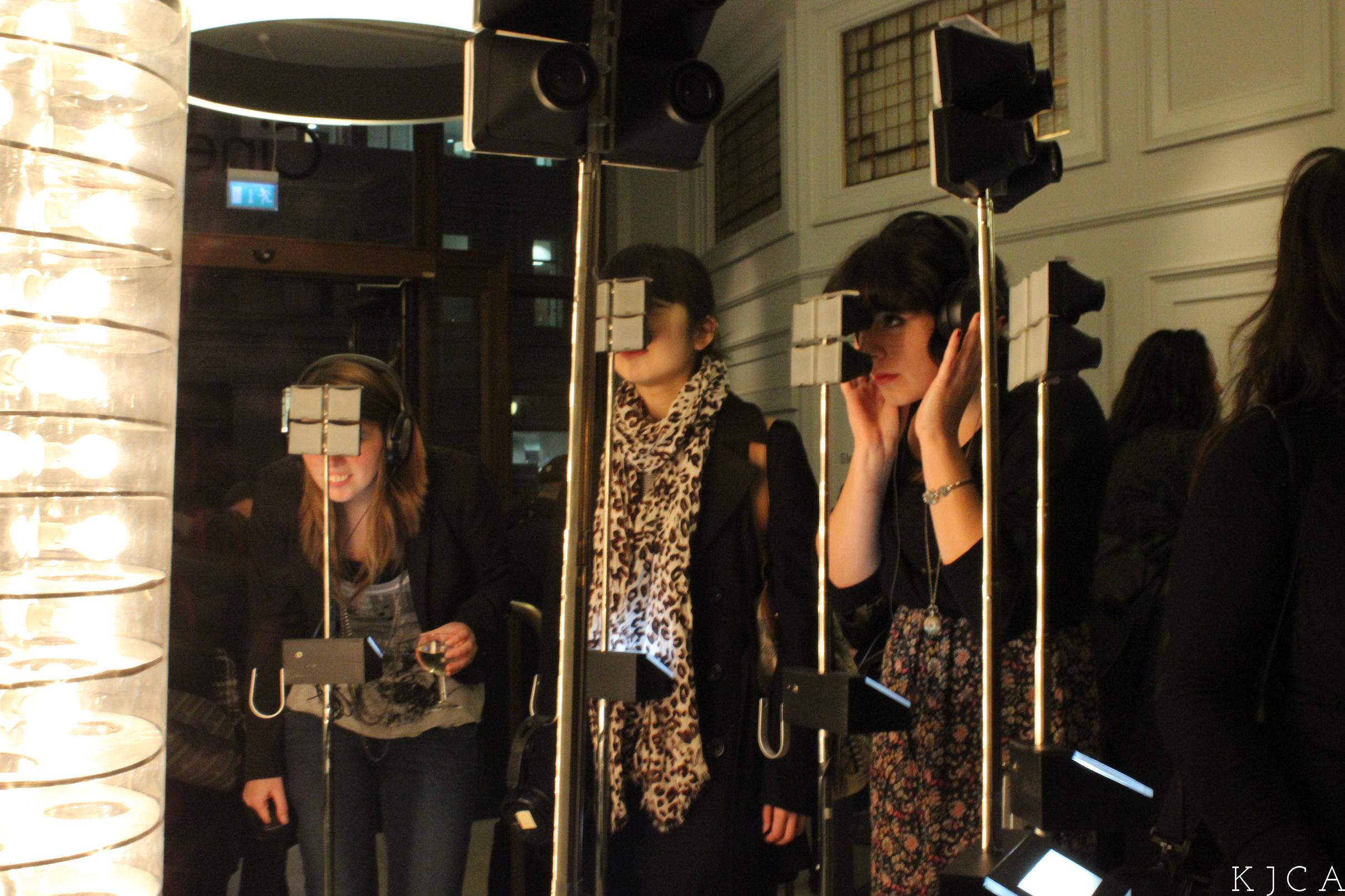
AV London
Through the Lens: Embodying the City
12th December 2011 to 12th January
309 Regent Street Gallery, University of Westminster, London W1B 2UW
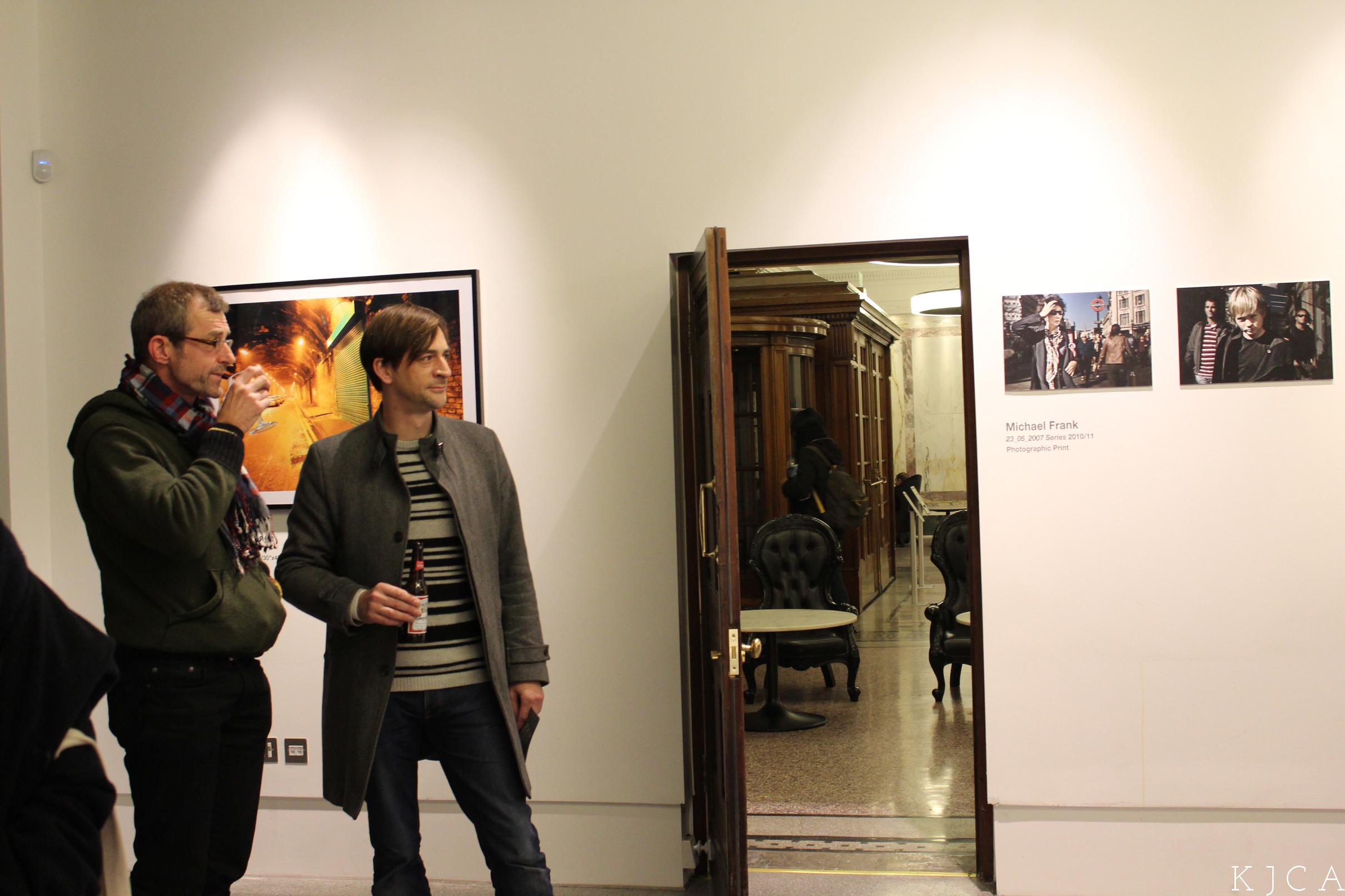
A very successful opening party for two exhibitions, ‘AV London’ and ‘Through the Lens: Embodying the City’, curated by students on our Masters programmes in Cultural and Critical Studies, Museums, Galleries & Contemporary Culture, and Visual Culture. Thanks to Kristian Agustin for the photos. Both shows are on until January 12th at 309 Regent Street, so do go and check them out.
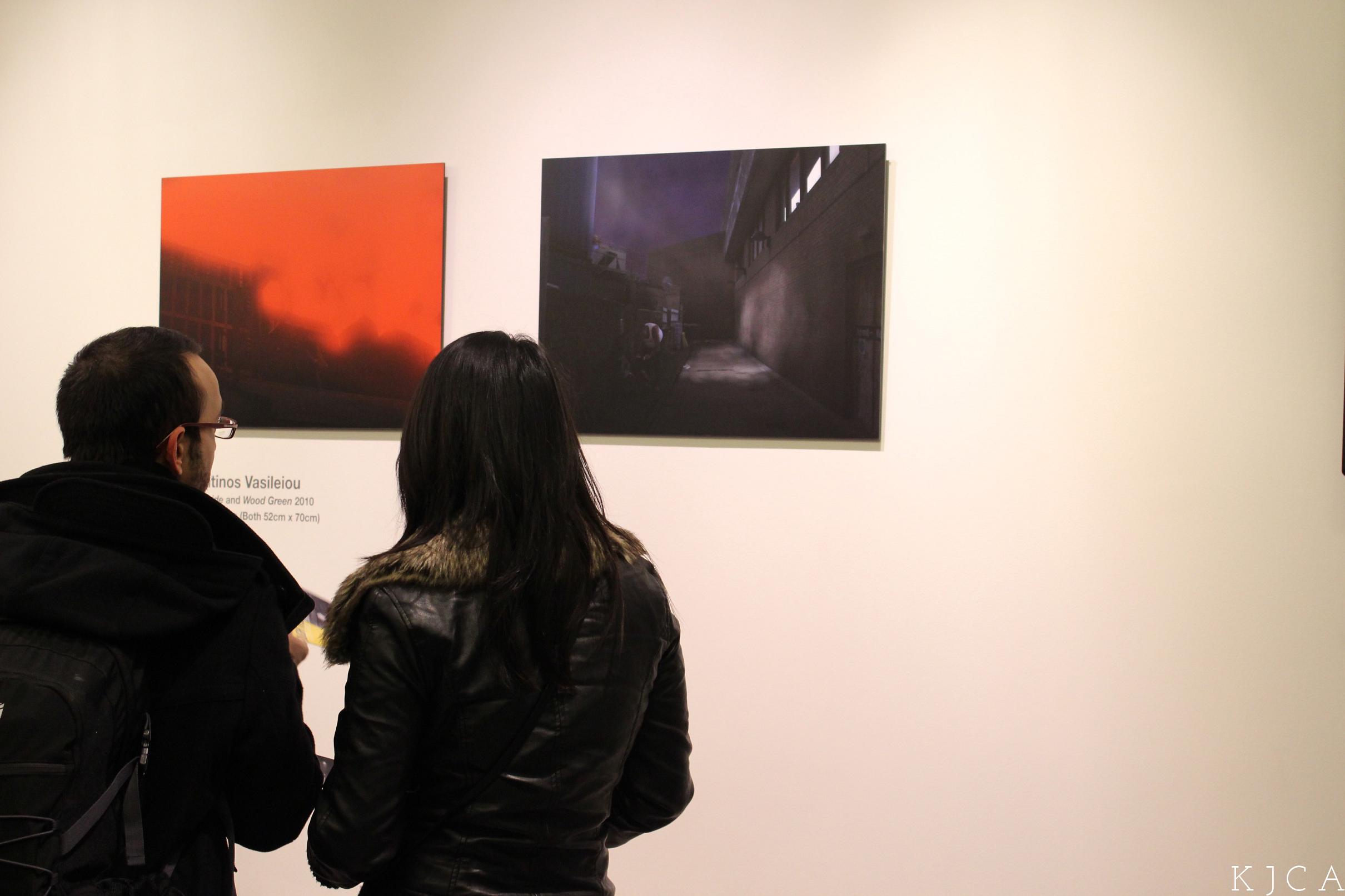
‘Through the Lens’ explores the relationship between the body and the urban environment. The collection of photographs explores the contrasts of corporeal dynamism and the solid urban canvas. The exhibition features contributions from four London based artists who each have an individual interpretation of the relationship between the people and the city: Michael Frank, Christina Lange, Peter Tweedie and Konstantinos Vasileiou. Further details on the exhibition website at: http://embodyingthecity.blogspot.com/
Curated by Eleni Tziourtzia, Angelica Sada, Xiaosong Liu, Ciara Fitzpatrick (curatorial); Alice Gibbs, Elena Griva, Katrina Macapagal (texts); Fliss Hooton, Nadia Little (production); Kristian Jeff Agustin, Alessandra Ferrini (design).
‘AV London’ is an exhibition of Stereoscopic (3D Photography) and Binaural recordings made the artist Gary Welch, which capture a cornucopia of sights, sounds and voices of the diverse metropolis of London. Welch’s installations transform the basic viewer into viewer-listener, who then becomes the ears and eyes of the ‘anyperson’ interacting with seven unique moments in London.
Curated by Elisa Adami, Miguel Corte Real, Leonardo Couto, Nihan Gumrukcuoglu, Silvia Morena, Menming Ran, Z Amber Richter, Kalliopi Tsipini-Kolaza, Simone van Eijk, Laura Vichick.
Contemporary Vernacular Photographies symposium
Tagged as photography, visual culture

Contemporary Vernacular Photographies
Saturday 3rd September 2011, 9.30 – 5.00
Portland Hall, University of Westminster, 101 New Cavendish Street, London W1W
The term ‘vernacular photography’ has been used to describe a type of imagery that has been produced by a non-professional for private purposes, and can also refer to photographs of vernacular practices that have been sanctioned by state mechanisms. In these contexts, this symposium will specifically address the political, cultural, and aesthetic ramifications of the relationship between private images and their migration to the public realm in the era of digitisation.
The day-long symposium will examine ways in which contemporary practices might contest traditional definitions of vernacular photography today, and topics for discussion will include: authenticity in light of citizenship journalism; personal images on shared online platforms; the ethics of family imagery in the media; oral history and the family album; and the problematic ubiquity of digital media and computing.
Speakers: Dr Sophie Beard (UCA); Dr Sarah Kember (Goldsmiths); Trish Morrissey (Photographer); Dr Annebella Pollen (University of Brighton); Prof Gillian Rose (The Open University); and Prof Julian Stallabrass (The Courtauld Institute of Art).
Click the red links for abstracts and timetable.
Tickets are free for University of Westminster staff and students in English, Linguistics and Cultural Studies, but numbers are limited so please book a place by email from Sas Mays: s.mays@westminster.ac.uk Other interested parties should book tickets online through The Photographers’ Gallery.
Co-Organised by Sas Mays (IMCC), in association with Johanna Empson and Karen McQuaid at The Photographer’s Gallery.
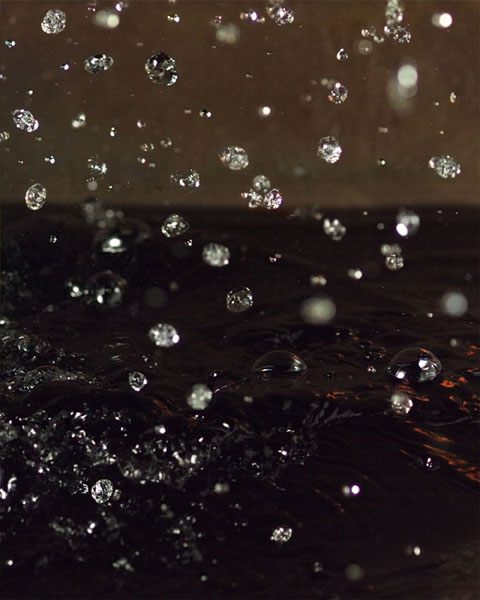
Our friends in the Group for War and Culture Studies at University of Westminster warmly invited you to:
Artist in Conversation: Ori Gersht
Group for War and Culture Studies Seminar
Thursday 16 June 2011, 6.30pm – 8.30pm
Fyvie Hall, 309 Regent Street, London W1B 2UW
Ori Gersht’s practice as a photographer is concerned with history and metaphor, journeys and geographical place, intertwined with metaphysical space. Such themes have been explored through major works that document, often obliquely, violent moments in Europe’s recent past: the scars and weals left on the sunlit, war-torn buildings in Sarajevo in his Afterwars series, the white images of ‘frustrating absence’ of his train journey to Auschwitz in White Noise, or the filmed forest loaded with the memory of war in the Ukraine in The Clearing.
At a pivotal moment in the history of photography where digital technology both threatens a crisis and promises a breakthrough, Gersht innovatively researches the possibilities and explores the materiality of his medium through still images and films that (literally) explode the genre of still life. In the films Pomegranate and Big Bang, Gersht has altered Renaissance-like still-life compositions with fast and violent interventions. Whilst a peaceful image is transformed into bloodshed and explosion, a dialogue is established between stillness and motion, peace and violence. In his most recent series of photographs, Chasing Good Fortune (2010), the cherry blossom resonates as a sign of the ephemerality of life. One of its illustrative manifestations was as propaganda in World War II as a representation of soldiers, who were thought of, in combat, to scatter like cherry blossoms, but also to die an honorable and therefore magnificent death.
At a time when many artists dealing with the political are producing work that has more in common with the medium of documentary, Gersht’s photographs, in between becoming and disappearing, have a fragile, phantom quality and dream-like texture on the verge of abstraction. More generally, his work is that of a provocative meditation.
Ori Gersht is an internationally renowned photographer and Professor of Photography at the University for the Creative Arts, Rochester.
Entrance free. R.S.V.P. Caroline Perret, tel. 020-7911-5000 ext 2307, or e-mail C.Perret@westminster.ac.uk.
Cloning Tom: An Audience with W.J.T. Mitchell, Monday 13th June, University of Westminster, 2-6
Tagged as photography, politics, visual culture
Cloning Tom: An Audience with W.J.T. Mitchell
Monday 13th June 2011, 2:00-6:00pm , 309 Regent Street, University of Westminster
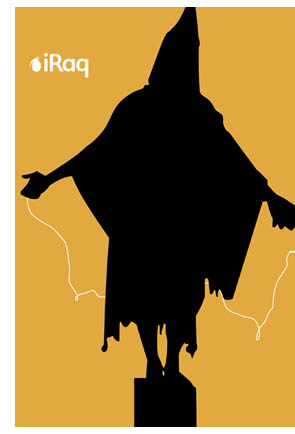
To celebrate the publication of Cloning Terror: The War of Images, 9/11 to the Present (University of Chicago Press), the Institute for Modern and Contemporary Culture is thrilled to host an audience with Professor W. J.T. Mitchell. Mitchell will deliver a presentation entitled ‘The Historical Uncanny: Phantoms, Doubles, and Repetition in the War on Terror’. His presentation will be followed by a Roundtable with contributors including Maxime Boidy (Strasbourg), Abdelwahab El-Affendi (Westminster), Eyal Weizman (Goldsmiths), and Mitchell himself. The event will be chaired by Dr Marquard Smith (Westminster).
The event is FREE but booking is essential so please RSVP to Sharon Sinclair: sinclas@wmin.ac.uk
Professor W. J. T. Mitchell is Editor of Critical Inquiry and the Gaylord Donnelley Distinguished Service Professor in the Department of English Language and Literature, the Department of Art History, and the College at the University of Chicago. He is the author of seminal books including What Do Pictures Want? and Iconology: Image, Text, Ideology, and editor of collections such as Against Theory, Landscape and Power, On Narrative, and Picture Theory.
Maxime Boidy is the French translator of W.J.T. Mitchell’s Cloning Terror (with S. Roth) and has also translated books by Susan Buck-Morss and Mike Davis, as well as Mitchell’s Iconography. He is a doctorial candidate in the Laboratoire Cultures et Sociétés en Europe at Université de Strasbourg.
Dr Abdelwahab El-Affendi is Reader in Politics at the Centre for the Study of Democracy, University of Westminster and co-ordinator of the Centre’s Democracy and Islam Programme. He is also currently an ESRC/AHRC Fellow in the Global Uncertainties Programme working on a project entitled ‘Narratives of Insecurity, Democratization and the Justification of (Mass) Violence.’ Dr El-Affendi is author of books including About Muhammad: The Other Western Perspective on the Prophet of Islam, The Conquest of Muslim Hearts and Minds, For a State of Peace: Conflict and the Future of Democracy in Sudan, Rethinking Islam and Modernity, and Who Needs an Islamic State?
Dr Marquard Smith is Director of the Institute for Modern and Contemporary Culture, University of Westminster, and Founder and Editor-in-Chief of Journal of Visual Culture.
Dr Eyal Weizman is Director of the Centre of Research Architecture at Goldsmiths, University of London. His work includes buildings and stage sets in Israel/Palestine and Europe. Weizman works with a variety of NGOs and Human right groups in Israel/Palestine. He co-curated the exhibition A Civilian Occupation: The Politics of Israeli Architecture, and co-edited the publication of the same title. These projects were based on his human-rights research, and were banned by the Israeli Association of Architects. They were later shown in the exhibition Territories in New York, Berlin, Rotterdam, San Francisco, Malmoe, Tel Aviv and Ramallah. His books include Lesser Evils, Hollow Land, A Civilian Occupation, and the series Territories 1,2 and 3.
W.J.T. Mitchell at the Institute on 13th June 2011
Tagged as art, photography, politics, visual culture
Hosted by the Institute, Tom Mitchell will be at the University of Westminster on the afternoon of 13th June, with a number of shiny interlocutors, to discuss his new book Cloning Terror: The War of Images, 9/11 to the Present. Watch this space for further details.
From The University of Chicago Press website: The phrase “War on Terror” has quietly been retired from official usage, but it persists in the American psyche, and our understanding of it is hardly complete. Nor will it be, W. J. T Mitchell argues, without a grasp of the images that it spawned, and that spawned it. Exploring the role of verbal and visual images in the War on Terror, Mitchell finds a conflict whose shaky metaphoric and imaginary conception has created its own reality. At the same time, Mitchell locates in the concept of clones and cloning an anxiety about new forms of image-making that has amplified the political effects of the War on Terror. Cloning and terror, he argues, share an uncanny structural resemblance, shuttling back and forth between imaginary and real, metaphoric and literal manifestations. In Mitchell’s startling analysis, cloning terror emerges as the inevitable metaphor for the way in which the War on Terror has not only helped recruit more fighters to the jihadist cause but undermined the American constitution with “faith-based” foreign and domestic policies.
Bringing together the hooded prisoners of Abu Ghraib with the cloned stormtroopers of the Star Wars saga, Mitchell draws attention to the figures of faceless anonymity that stalk the ever-shifting and unlocatable “fronts” of the War on Terror. A striking new investigation of the role of images from our foremost scholar of iconology, Cloning Terror will expand our understanding of the visual legacy of a new kind of war and reframe our understanding of contemporary biopower and biopolitics.
W. J. T. Mitchell is Professor of English and Art History at the University of Chicago. He is editor of the interdisciplinary journal Critical Inquiry, a quarterly devoted to critical theory in the arts and human sciences. A scholar and theorist of media, visual art, and literature, Mitchell is associated with the emergent fields of visual culture and iconology (the study of images across the media). He is known especially for his work on the relations of visual and verbal representations in the context of social and political issues. He has been the recipient of numerous awards including the Guggenheim Fellowship and the Morey Prize in art history given by the College Art Association of America. His publications include: “The Pictorial Turn,” Artforum, March 1992; “What Do Pictures Want?” October, Summer 1996; What Do Pictures Want? (2005); The Last Dinosaur Book: The Life and Times of a Cultural Icon (1998); Picture Theory (1994); Art and the Public Sphere (1993); Landscape and Power (1992); Iconology (1987); The Language of Images (1980); On Narrative(1981); and The Politics of Interpretation (1984).

Our colleagues on the MA Photography Studies in the School of Media, Art and Design, based in Harrow, have organized an excellent Open Photography Lecture Series on Wednesdays this semester. They are free, but please arrive early since places are limited.
29 Sept, 2pm Karen Knorr, Guest Photographer/Artist Talk
Lecture Theatre 2
6 Oct., 6pm Kobena Mercer, ‘Questioning the Cross-Cultural in Contemporary Art’
Lecture Theatre One (LT1)
13 Oct, 6pm Victor Burgin, ‘A Place to Read-a recent projection work for Istanbul’
Lecture Theatre One (LT1)
20 Oct, 6pm Michael Newman, ‘John Stezaker and the Image’
Lecture Theatre One (LT1)
27 Oct, 6pm Renata Salecl, ‘Identification in times of uncertainty’
Lecture Theatre One (LT1)
24 Nov, 1pm Paul Seawright, Guest Documentary Photographer/Artist Talk
Room TBC

We are thrilled to announce that the IMCC’s Dr Alexa Wright has been awarded an AHRC Fellowship for 2010-11, and will be spending part of the forthcoming academic year as a Fellow at the prestigious Banff Centre in Canada.
Alexa’s AHRC project is entitled ‘A View From Inside’, and is a collaboration with Professor Graham Thornicroft at the Institute of Psychiatry, King’s College, London and Post-Doctoral Research Fellow, Dr Heidi Lempp. For the project, Alexa will create a series of eight large-scale digitally manipulated photographic portraits of people with short-term psychotic disorders or episodic conditions like schizophrenia. These images will challenge the viewer to readdress his or her ideas about ‘the type of people’ represented. Subjects will be depicted in such a way that does not make them appear different in any way, but the settings in which they are located will be altered digitally to coincide with the perceptual experiences described by each person.
The project will draw on the symbolism and techniques of eighteenth-century portrait painting as a means of representing the lived experiences of the subjects. Alexa will spend time working with individuals who experience psychotic disorders that lead to an intermittent loss of contact with reality in order to find a language comparable to the codes employed in eighteenth-century portraiture to represent both their outward appearance and their internal experience of what is ‘real’.
At Banff, Alexa will be taking part in the residency ‘The distance between our minds and thoughts equals the distance between our words and mouths’, led by Jan Verwoert, where she will produce her audio/video installation, ‘Heart to Heart’.


The Institute for Modern and Contemporary Culture
University of Westminster Department of English, Linguistics and Cultural Studies
32-38 Wells Street, London W1T 3UW. United Kingdom.