
-
Architecture
archive
art
Ballard
body
China
cinema
ecology
education
Europe
Ezra Pound
futurology
gothic
image
law
Literature
London
magic
memory
Modern
Modernism
museums
music
novel
performance
photography
poetry
politics
radical philosophy
science
science fiction
Sinclair
Situationism
sound art
Surrealism
technology
television
the avant-garde
The Future
Theory
thomson
time
Urban
visual culture
war
Posts tagged Theory

Wednesday 19 March, 2014, 1 -3 pm
The Westminster Forum, 5th Floor, University of Westminster, Wells Street, London W1T
Illan rua Wall (Warwick)
“Crowds and Violence”
Dr Illan rua Wall is an Associate Professor in the School of Law, University of Warwick. His current research focuses upon the relation between law and disorder. Thinking about Occupy, the Indignados and the many current sites of unrest, it begins to develop the novel field of the ‘law of disorder’. This is not simply a collection of the various different legal apparatuses that repress or capture disorder, rather the ‘law of disorder’ thinks about law through and as disorder. He has published on critical legal theory, theories of constituent power, the Arab Spring, protest and transitional justice in Colombia, theories of human rights and revolt, and new Andean constitutional apparatuses. Illan is one of the editors of the blog www.criticallegalthinking.com, and is on the editorial board of Law and Critique, and the editorial advisory board of the Journal of Critical Globalization.
Wednesday 12 March, 4pm
Room 106, University of Westminster, 32-38 Wells Street, London W1T
Monika Loewy, Goldsmiths
“The Problem with Unity: Body Identity Integrity Disorder, The Phantom Limb and Maurice Blanchot”
Body Identity Integrity Disorder (BIID) is a condition in which a person desires to amputate a limb because she feels that it does not belong to her body. A phantom limb can be identified when someone who loses a limb feels as though she still has one, which causes her pain. Together, the phantom limb and BIID syndromes foreground examples of individuals who cling to fictional concepts of wholeness as a result of their perceived incompleteness. This paper connects these situations to an idea central to poststructuralist thought: that language is composed of false images of unity that hide its negation, the eternal referent. The paper explores this relationship through the writings of Maurice Blanchot, arguing for a conceptual framework through which language can be seen as a physical and mental coping mechanism – a compensatory system that offers a tentative ‘presence’ to the unknown or the absent signified. Developing these thoughts through Blanchot’s essay “Orpheus’s Gaze” (1982), it is argued that like the text and the limb sufferers, Orpheus lives in a broken body that is both present and absent at once, implicating the referential structures of language in (traumatic) encounter with the physical body.
NOTE: This seminar was originally due to take place in February but had to be rescheduled due to the tube strike. Apologies again for the inconvenience.
Reminder: Cold War Systems Symposium, Feb 27th
Tagged as ecology, science, technology, Theory, war

The Continuities of Cold War Systems: A Symposium
Thursday 27th February 2014, 9am-6pm.
The Boardroom, University of Westminster, 309 Regent Street
Hosted by John Beck (Westminster) and Ryan Bishop (Winchester School of Art), participants include Ele Carpenter (Goldsmiths), Fabienne Collignon (Sheffield), Mark Coté (King’s), Dan Grausam (Durham), Ken Hollings (Middlesex), Adrian Mackenzie (Lancaster), Jussi Parikka (Winchester), John Phillips (Singapore), Adam Piette (Sheffield), Jennifer Pybus (Winchester), James Purdon (Cambridge), Aura Satz (London Consortium), Neal White (Bournemouth).
From the late 1940s through the 1980s systems analysis, cybernetics, and information theory came to shape military, business, government and academic thinking on a wide array of subjects. The influence of such thinking is also evident in the arts, from the so-called systems novels of the 1960s and 70s, to minimalist and electronic music, conceptual art, and the emergence of electronic media. The end of the Cold War did not end systems thinking; indeed, given the phenomenal expansion of computer technologies into every aspect of contemporary life it is fair to say that we are now living in a world imagined and engineered during the Cold War. This event seeks to address the ways the Cold War, particularly through a consideration of systems thinking, continues to shape the contemporary.
RSVP John Beck: j.beck@westminster.ac.uk.

NOTE: Apologies – due to the tube strike, the seminar is postponed. We will arrange with Monika to reschedule this at another time.
Wednesday 5 February, 4pm
Room 106, University of Westminster, 32-38 Wells Street, London W1T
Monika Loewy, Goldsmiths
“The Problem with Unity: Body Identity Integrity Disorder, The Phantom Limb and Maurice Blanchot”
Body Identity Integrity Disorder (BIID) is a condition in which a person desires to amputate a limb because she feels that it does not belong to her body. A phantom limb can be identified when someone who loses a limb feels as though she still has one, which causes her pain. Together, the phantom limb and BIID syndromes foreground examples of individuals who cling to fictional concepts of wholeness as a result of their perceived incompleteness. This paper connects these situations to an idea central to poststructuralist thought: that language is composed of false images of unity that hide its negation, the eternal referent. The paper explores this relationship through the writings of Maurice Blanchot, arguing for a conceptual framework through which language can be seen as a physical and mental coping mechanism – a compensatory system that offers a tentative ‘presence’ to the unknown or the absent signified. Developing these thoughts through Blanchot’s essay “Orpheus’s Gaze” (1982), it is argued that like the text and the limb sufferers, Orpheus lives in a broken body that is both present and absent at once, implicating the referential structures of language in (traumatic) encounter with the physical body.

Materialisms Old and New: London Reading Group
Westminster Forum, 5th Floor, 32-38 Wells Street, London, W1T 3UW
The ‘Materialisms Old and New’ reading group organise regular meetings to discuss both old and new materialist understandings of markets, rationalities, agency, contingency, power and governance. This is not a lecture course so we will be mixing up the texts and approaching key or interesting readings in an informal and flexible way, with a brief introduction by one of the group. The next two meetings are:
Thursday 30 January 2014, 6.30-8.00 pm
Michael Callon et al., Acting in an Uncertain World: An Essay on Technical Democracy
Introduced by Michele Ledda (University of Westminster).
Wednesday 19 March 2014, 6.30-8.00 pm
William Connolly, The Fragility of Things: Self-Organizing Processes, Neoliberal Fantasies, and Democratic Activism
Introduced by David Chandler (University of Westminster).
Meetings are open to all. If you would like to be added to the working group mailing list, please contact David Chandler at d.chandler@wmin.ac.uk.
Sponsored by the Centre for the Study of Democracy, University of Westminster and the Centre for Media & Culture Research, London South Bank University.
Expanded Territories seminar, Dec 5th
Tagged as Architecture, ecology, science, Theory, Urban
Thursday 5 December, 12.30 – 14.00
Room M324, 35 Marylebone Road, London NW1 5LS
Measurement as Argument:
Planetary Constructions, PostNatural Histories, and the Will to Knowledge
Seth Denizen, Anna-Sophie Springer, Etienne Turpin
Organized by Lindsay Bremner
In this Expanded Territories seminar, Denizen Springer and Turpin will consider the relationship among the construction of systems of thought, our knowledge of the Earth System, and what Michel Foucault, following Nietzsche, describes as the will to knowledge. By examining several key episodes in the mid to late nineteenth century, including Antonio Stoppani’s argument for an “Anthropozoic” era, Vasily Dokuchaev’s proposal for a soil science distinct from geology, Franz Wilhelm Junghuhn’s early cartography of Java, and Alfred Russel Wallace’s theory of biogeographical distribution, they observe how measurement as argument has advanced our understanding of the Earth system in its manifold complexity. Because these systems of thought are not given, but produced, they suggest “what real struggles and relations of domination are involved in the will to knowledge.” As the Anthropocene as an object of knowledge is being constructed by stratigraphers and geologists, a series of affinities connecting measurement, aesthetic practices and the production of evidence can be discerned. How measurement as argument will challenge our inherited views of the architectural object in the Anthropocene remains to be seen; what is evident already is that this will to knowledge frames both our perception of the world and our capacity to change it.
Seth Denizen is a designer and researcher who currently teaches in the Division of Landscape Architecture at Hong Kong University. Anna-Sophie Springer is a writer, curator, and editor and co-director of the independent press K. Verlag in Berlin, Germany. Etienne Turpin is the founder and director of anexact office in Jakarta, Indonesia, and author of Architecture in the Anthropocene, Encounters among Design, Deep Time, Science and Philosophy.
Luhmann Observed book launch, Nov 22nd
Tagged as ecology, law, radical philosophy, Theory

Friday, 22 November, 5-7pm
Room 3.15, University of Westminster, 309 Regent Street, London W1B 2HW
A quick plug for the book launch and reception for an exciting new book, Luhmann Observed: Radical Theoretical Encounters, edited by our colleague Andreas Philippopoulos-Mihalopoulos along with Anders La Cour. With speeches by Hans-Georg Moeller (University College Cork) and Sven Opitz (Hamburg).
RSVP to: victoria.brooks@my.westminster.ac.uk

A plug for the Higher Education & Theory Reading Group that’s just been set up by and for staff and postgraduate students at Westminster. The first Organizing Meeting will take place on Wednesday October 2, 2013, from 1:00pm to 2:00pm , in room 359 in 309 Regent Street
This is a cross-faculty reading group on the theory of education, open to all staff and research students at the University of Westminster. The intention is to foster an increased awareness of the contributions of major critical thinkers to pedagogic debate and practice, supplementing the sociological, psychological, and empirical focus of current educational discourse with a broader transdisciplinary emphasis on the importance of philosophical and historical contributions to educational theory. The idea is that a productive critical perspective will be opened up on contemporary pedagogical practice through such theoretical and historical viewpoints, one that will also allow researchers to make connections between their research and their own practice as teachers by re-reading theoretical texts pedagogically. There will be a minimum of 3 reading groups per year. The group will initially meet once a term, with the possibility of meeting more frequently if time and interest permit.
The starting text for the autumn term will be Jean-Francois Lyotard’s The Postmodern Condition: A Report on Knowledge. Future texts will be decided by the group. The first 5 chapters of the Lyotard text are online here. The full scanned version is here. Pages 47-53 in particular look at higher education.
See also the HERC Community blog webpage: http://hercwestminster.wordpress.com/
To RSVP or register your interest, please email: Steven Cranfield, cranfis@westminster.ac.uk or Matthew Charles, M.Charles1@westminster.ac.uk
Salon#1: The Future of ‘Theory’ in Art and Design Education
Whitechapel Gallery, 77-82 Whitechapel High Street, London E1
Thursday 26 September 2013, 7pm – 9pm
Join Curator Kirsty Ogg, artist Uriel Orlow, and Head of Central Saint Martins Jeremy Till for the first in a new series of Whitechapel Salons debating the future of ‘theory’ in art and design education. Chaired by Marquard Smith.
Tickets £8/£6 concessions (£4 Members). Includes a glass of wine. Book your ticket here.
Co-organised by the IMCC and University for the Creative Arts
Materialities of Text: New Formations special issue
Tagged as archive, Literature, technology, Theory

A new issue of the journal New Formations is out co-edited by the IMCC’s Sas Mays. Entitled ‘Materialities of Text: From the Codex to the Net’, the collection came out of an online conference hosted by the Institute’s ‘Archiving Cultures’ affiliate. Further information on the issue is available here. You can also download a copy of Sas’s introduction to the issue, co-authored with Nick Thoburn, for free at: http://www.lwbooks.co.uk/journals/newformations/pdfs/nf78 intro.pdf
Call for Papers: Archives for the Future: An Art and Visual Culture Conference
Tagged as archive, art, The Future, Theory, visual culture

Archives for the Future: An Art and Visual Culture Conference
Organised by Mnemoscape and supported by the IMCC.
Call for Papers: Deadline submission: 18 November 2013
Archives are becoming increasingly fetishized and (an)aestheticized in contemporary art practice and academic discourse. This conference comes out of a shared sense of frustration at this. In response, it intends to explore the present and futuristic potential embedded in the archive. Archives have generally been considered as conservative institutions aimed at preserving the past in the present – and so perpetuating the traditional structures of power. In contrast, we are interested in bringing to light the generative and creative side of the archive, what Derrida has defined as its ‘institutive’ power. How can archives be used to generate the ‘new’ and to convey possible alternatives to the present status quo? How can we turn archives from historical records into instruments of future planning and agencies of radical thinking? Is it possible to build an archive which works as an open space of imagination and a mean of projection into the future? Is it possible to archive the future to come and, at the same time, to remain open to the unpredictable and the unknown?
We invite submissions that are concerned with reinstating the archive as site of political confrontation, of action and intervention in the present, as well as as site of re-projection and re-imagination for the future. We are particularly interested in creating a dialogue between theory and practice and as such we welcome contributions from artists, thinkers and curators alike.
To submit a proposal please send an abstract (300-500 words), a CV, five key words and a short biographical note (100 words). Please send in a single Word document to: mnemoscape@gmail.com
For more information about the conference, please contact the conveners, Elisa Adami and Alessandra Ferrini at mnemoscape@gmail.com
Launch of new book: Monstrosity: The Human Monster in Visual Culture
Tagged as body, Theory, visual culture

We are delighted to announce the publication of a new book by the IMCC’s Alexa Wright, Monstrosity: The Human Monster in Visual Culture, from I.B. Tauris.
From the ‘Monster of Ravenna’ to the ‘Elephant Man’, Myra Hindley and Ted Bundy, the visualization of ‘real’, human monsters has always played a part in how society sees itself. But what is the function of a monster? Why do we need to embody and represent what is monstrous? This book investigates the appearance of the human monster in Western culture, both historically and in our contemporary society. It argues that images of real (rather than fictional) human monsters help us both to identify and to interrogate what constitutes normality; we construct what is acceptable in humanity by depicting what is not quite acceptable.
There will be a drinks reception to celebrate the launch of Monstrosity on Wednesday 26 June, from 6.30-8.30, in the café at Toynbee Studios, 28 Commercial Street, London E16AB. RSVP to Naomi French at: nfrench@ibtauris.com
Alexa Monstrosity Book Launch Invitation
Alex has also written a new piece for the IB Tauris blog. Read it here: http://theibtaurisblog.com/2013/06/25/facing-evil/
Foreclosure conference, June 17-18 2013
Tagged as art, law, politics, Theory, Urban

FORECLOSURE
Brunel University & University of Westminster
1st Joint Researching the Arts/Social Sciences Conference for Research Students
The Pavilion, University of Westminster, 115 New Cavendish Street, London
June 17 & 18, 2013, 10:30-5pm
Keynote: Oren Ben-Dor, University of Southampton
‘Placial [in]justice: reflections on the wounded origin of political affectation’
Please join us at this two-day interdisciplinary conference Foreclosure that aims to bring together law, art and politics. We understand foreclosure as the art of ordering and securing a common ground for the unfolding of a common experience; the exchange of affects and perspectives; and the performance of bodies and spaces. Art, Law and Politics habitually build walls around their concepts and practices. Foreclosure aims to encourage the exploration of practices and performances of law, art and politics through the prism of their shared operation; the investigation of the juncture between their disciplinary fences; and the unfolding of the fragility of their mechanisms. This is our aim: to dissect, dismantle and improve the operations of art, law and politics in order to locate cracks, produce apertures, and ride the lines of flight where new potentialities are generated. The conference programme is attached.
Admission is free but places are limited. RSVP at foreclosuresconference@gmail.com
Walter Benjamin, Pedagogy and the Politics of Youth conference programme
Tagged as education, radical philosophy, Theory
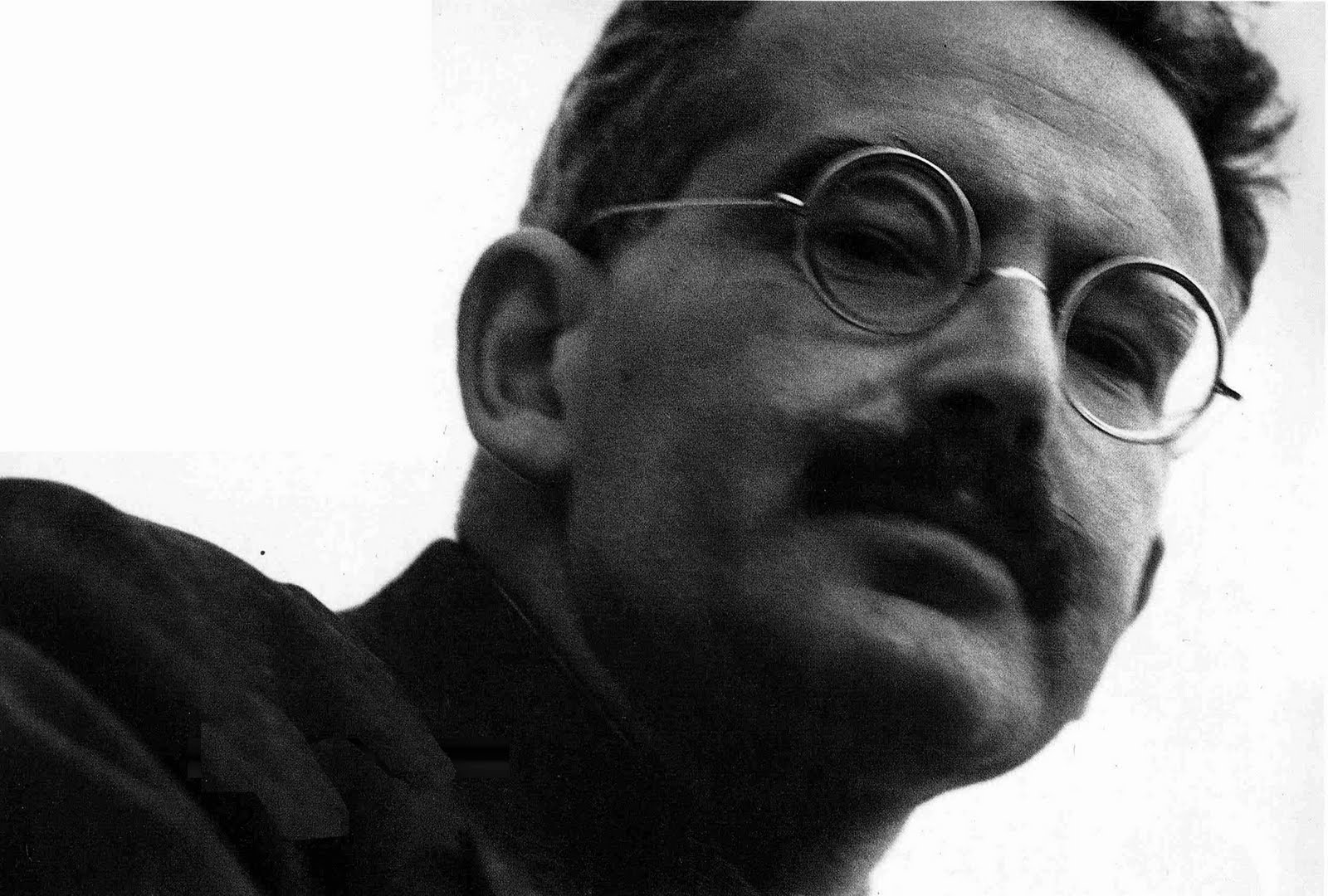
Walter Benjamin, Pedagogy and the Politics of Youth
Friday 31 May & Saturday 1 June 2013
Fyvie Hall, University of Westminster, 309 Regent Street, London, W1B 2UW
Provisional programme now announced:
Friday 31st May
13.15-14.00 Registration
14.00 –14.30 Welcome
14.30-15.30 Antonia Birnbaum (Paris 8), ‘The Life of Students is a Great Transformer’
16.00-17.00 Howard Caygill (CRMEP), ‘Attunement and Interference:
Benjamin’s Hölderlin Reading’
Saturday 1st June
09.45-10.30 Registration
10.30-11.30 Milan Jaros (Newcastle), ‘Quo Vadis? Knowing and being in the digital age’
12.00-13.00 Élise Derroitte (Louvain), ‘Chockerlebnis and Education: Learning from Modern Experience’
13.00-14.15 Lunch
14.15-15.15 Mike Neary (Lincoln), ‘Student as Producer: a pedagogy of the avant-garde; or, how do revolutionary teachers teach?’
15.30-17.00 Howard Eiland (MIT), ‘Education as Awakening’, with Response by Peter Osborne (CRMEP)
The conference is free, open to all and there is no need to pre-register. Attendance on each day will be allocated on a “first come, first served” basis: the registration desk will be open on Friday 31st May from 13:15 – 14:00 and on Saturday 1st June from 9:45 – 10:30 and will be located in the main entrance hall to the University of Westminster, 309 Regent Street, London.
Further details: http://benjaminpedagogy.wordpress.com/2012/12/10/conference-announcement/
Help publicise the conference: http://www.facebook.com/events/339458196165504/
Romantic Transdisciplinarity: Art and the New
Tagged as art, radical philosophy, Theory
From our friends at the Centre for Research in Modern European Philosophy. Now Open for Registration:
Romantic Transdisciplinarity: Art and the New
May 8–9 2013
Senate House, University of London, Malet Street (http://goo.gl/maps/Sjkmr)
An International Conference about the transdisciplinary legacies of early German Romanticism in contemporary theory and practice in the arts and humanities. Organised by the CRMEP as part of its AHRC project on Transdisciplinarity and the Humanities in collaboration with the Institute of Germanic and Romance Studies, School of Advanced Study, University of London
Speakers include:
Howard Caygill (CRMEP, Kingston University)
David Cunningham (English, IMCC, University of Westminister)
Boris Groys (Slavic Studies, NYU)
Claude Imbert (Philosophy, ENS, Paris)
Gertrud Koch (Film Studies, Free University Berlin)
Olivier Schefer (Aesthetics, Panthéon Sorbonne, Paris 1)
Alison Stone (Philosophy, Lancaster University)
Hito Steyerl (artist, Berlin)
Peter Weibel (ZKM, Karlsruhe)
Registration is *REQUIRED* via: http://fass.kingston.ac.uk/activities/item.php?updatenum=2379.
Please note that the fees for the conference – waged £60.00; students & unwaged £20.00; Covers tea/coffee, the reception and lunch for both days.
Enquiries to: crmep@kingston.ac.uk
Le Corbusier and the Challenge of a Pascalian Technocracy
Tagged as Architecture, technology, Theory, Urban

Wednesday 6th March, 4pm – 5.15pm
Wells Street, room 106
Allan Stoekl (Penn State University / IMCC)
“Le Corbusier and the Challenge of a Pascalian Technocracy”

Foreclosure
Joint Brunel University and University of Westminster Conference for Research Students
University of Westminster, June 17 and 18, 2013
Doctoral students are invited to submit a proposal for the two-day interdisciplinary conference, Foreclosure, that aims to bring together law, art and politics. We understand foreclosure as the art of ordering and securing a common ground for the unfolding of a common experience; the exchange of affects and perspectives; and the performance of bodies and spaces. Art, Law and Politics habitually build walls around their concepts and practices. Foreclosure aims to encourage the exploration of practices and performances of law, art and politics through the prism of their shared operation; the investigation of the juncture between their disciplinary fences; and the unfolding of the fragility of their mechanisms. This conference invites you to take up this task, to think, write, speak, draw and perform ways to disclose the foreclosures; to propose artistic, political and legal modes able to unleash the potentialities often imprisoned within their [individual] apparatuses.
This call is for PhD students only and invites papers or performances from all areas in the Arts, Humanities and Social Sciences. Papers can be critical articles, fieldwork reports, creative readings or/and performance/presentation (including sound, film, installation, theatre, exhibition, etc) of no longer than 20 minutes in length. Please send a 200-word proposal including the title of your project along with a short biography to: foreclosuresconference@gmail.com.
Deadline: February 28 2013
With regards from the student committee: Caterina Nirta, Danilo Mandic, Andrea Pavoni, Serena Volpi, Jessica Worden, Roswitha Gerlitz

Reading Group at Carroll / Fletcher Gallery
Chapter 2 | Theory from the South
February 13th 2013,7.30pm
Carroll / Fletcher, 56-57 Eastcastle Street, London W1W 8EQ
Chapter 2 continues Carroll / Fletcher’s series of participatory discussions that use relevant, accessible texts to consider pertinent issues of our times. In this session, the starting point will be the first chapter of Theory From The South. Or, How Euro-America Is Evolving Toward Africa by Jean Comaroff and John L. Comaroff, with particular attention on pages one through nineteen. With this text, the Camaroff’s attempt to recontextualize global relations, and challenge our perceptions about ‘developed’ and ‘developing’ nations.
The discussion will be initiated by Lara Pawson and David Dibosa. Lara Pawson is a writer and journalist who has just completed her first book, a work of literary non-fiction about Angola’s recent history. She has held writing fellowships at the University of the Witwatersrand in Johannesburg and Wolfson College, Cambridge, and worked for the BBC World Service in London and as a correspondent in Mali, Ivory Coast and Angola. Dr. David Dibosa is co-author of Post-Critical Museology: Theory and Practice in the Art Museum (Routledge, 2012). He is Joint Course Director for MA Art Theory and MA Curating at Chelsea College of Art and Design. The conversation will be open to the audience and their contributions welcome.
Download Theory from the South here
Further suggested reading includes, the text in its entirety (pages one through forty-nine); Ato Quayson’s ‘Coevalness, Recursivity and the Feet of Lionel Messi’ (found here); and Achille Mbembe’s ‘Theory from the Antipodes. Notes on Jeans & John Comaroff’s Theory from the South‘ (found here).
Booking essential as places are limited: carrollfletcher.eventbrite.co.uk
Refreshments will be provided
t +44 (0)20 7323 6111
e info@carrollfletcher.com
www.carrollfletcher.com
Transdisciplinary Problematics workshop, May 17-18 2012
Tagged as radical philosophy, Theory
From our friends at the Centre for Research in Modern European Philosophy (CRMEP), Kingston University
Workshop – Transdisciplinary Problematics
Anti-humanism and Gender Studies
17-18 May 2012, London
This two-day workshop will examine the notion of a transdisciplinary problematic, via the cases of anti-humanism and gender studies. The first day will approach theoretical anti-humanism from the standpoint of its destructive effect upon disciplinary fields in the humanities and as a radical problematisation of the discipline of philosophy in particular. The second day will focus on gender studies as a transdisciplinary problematic and on the transdisciplinary nature of the concept of gender itself. Topics will include the historical reconstruction of ‘gender’ as a boundary-crossing concept; the relation of its conceptual content to its functioning as a general concept across disciplines; the transformation of the disciplines in the humanities by ‘gender’ and gender studies; and the current productivity of ‘gender’.
Day 1: Anti-humanism
17 May 2012, 10.00–18.00
Bolivar Hall, 54 Grafton Way, London WC1
Introduction: Peter Osborne & Eric Alliez (CRMEP, Kingston University)
Etienne Balibar (Philosophy, University of Paris X/Irvine)
‘Anti-Humanism, and the Question of Philosophical Anthropology’
Respondent: Patrice Maniglier (University of Essex)
Nina Power (Philosophy, Roehampton University/Royal College of Art)
‘Is Antihumanism Transdisciplinary?’
David Cunningham (English, University of Westminster)
‘Intersciences, Philosophy and Writing’
Respondent: Simon Morgan Wortham (English, Kingston University)
Day 2: Gender Studies
18 May 2012, 10.00–18.00
Large Common Room, Goodenough College, Mecklenburgh Square, London WC1N
Introduction: Stella Sandford (CRMEP, Kingston University)
Tuija Pulkkinen (Women’s Studies, University of Helsinki)
‘Disciplinarity and Transdisciplinarity in Gender Studies’
Sara Heinamaa (Philosophy, University of Helsinki)
‘Sex, Gender and Embodiment: A Critique of Concepts’
Elsa Dorlin (Political Science, University of Paris VIII)
title tba
Ken Corbett (Psychotherapy & Psychoanalysis, New York University)
‘The Transforming Nexus: Psychoanalysis, Social Theory and Queer Childhood’
Respondent: Lynne Segal (Psychosocial Studies, Birkbeck, London)
The event is free, but registration is essential at the following website: http://workshopthree.eventbrite.com/
Further information and background texts, go to: http://fass.kingston.ac.uk/activities/item.php?updatenum=1962
Other enquiries: S.Sandford@kingston.ac.uk
This is the third public workshop of the AHRC-funded project ‘Transdisciplinarity and the Humanities: Problems, Methods, Histories, Concepts’
2011–2013 (AHRC 914469)
Wyndham Lewis and Cinema talk, Feb 22nd
Tagged as cinema, Literature, Modernism, Theory

Wednesday 22nd February, 1.15pm – 2.30pm
Room 359, University of Westminster, 309 Regent Street
Anthony Paraskeva (University of Dundee)
‘Wyndham Lewis, Cinema Hypnotism and the Frankfurt School’


The Institute for Modern and Contemporary Culture
University of Westminster Department of English, Linguistics and Cultural Studies
32-38 Wells Street, London W1T 3UW. United Kingdom.