-
Architecture
archive
art
Ballard
body
China
cinema
ecology
education
Europe
Ezra Pound
futurology
gothic
image
law
Literature
London
magic
memory
Modern
Modernism
museums
music
novel
performance
photography
poetry
politics
radical philosophy
science
science fiction
Sinclair
Situationism
sound art
Surrealism
technology
television
the avant-garde
The Future
Theory
thomson
time
Urban
visual culture
war
Posts tagged Modernism
Lou Reed: Rock as Minimal Modernism
Tagged as Modernism, music, radical philosophy

For those of an art rock bent, David Cunningham’s ‘obituary’ of Lou Reed is now up as a freebie on the Radical Philosophy website here: http://www.radicalphilosophy.com/obituary/rock-as-minimal-modernism
Modernity on Display: International Exhibitions seminar
Tagged as Architecture, Modern, Modernism, science, technology, visual culture

Modernity on Display: Technology, Science and the Culture Wars at International Expositions circa World War II
Thursday 4th April 2013, 4 – 7 p.m.
Boardroom, University of Westminster, 309 Regent Street, London W1B 2UW.
Speakers:
Professor Robert Kargon, Willis K. Shepard Professor of the History of Science, Johns Hopkins University, Baltimore.
Dr Arthur Molella, Director, The Lemelson Center, National Museum of American History, Smithsonian Institution, Washington DC.
International expositions are receiving significant attention from historians of science and technology, and of culture more generally. These complex events mirror ideological and national rivalries as well as domestic social, economic and political struggles. In short, they are remarkable indices of important historical tensions. Especially interesting are the international expositions planned and/or mounted just before the outbreak of the Second World War. These expositions reflected the political regimes of the host countries, and in some cases serious divisions within them. They also highlight increasingly tense ideological divisions between nations representing liberal or social democratic republics (France and the US), communist (Soviet Union) and reactionary modernist or fascist regimes such as Germany, Italy and Japan.
The book in progress on which this seminar will be based includes chapters about World’s Fairs and expositions from 1937 to 1942, drawing upon three actually built, Paris, 1937, Dusseldorf 1937 and New York 1939, and two planned in detail but, owing to the coming of war, never executed, Tokyo 1940 and Rome 1942. The presentations will use two examples – New York 1939 and Rome 1942 – to illuminate the representation of science and technology at these fairs as indicators of modernity as part of the on-going culture and propaganda wars preceding actual hostilities.
Organised by the Graduate School, University of Westminster
R.S.V.P. Sharon Sinclair, sinclas@westminster.ac.uk
Modernism and Magic
Tagged as cinema, Literature, magic, Modernism

We’re delighted to announce the publication of Leigh Wilson’s new book Modernism and Magic: Experiments with Spiritualism, Theosophy and the Occult (Edinburgh University Press), which we will be launching at the Green Man pub in Riding House Street on Thursday 10th January.
The book presents a new account of the relation between modernism and occult discourses. While modernism’s engagement with the occult has been approached by critics as the result of a loss of faith in representation, an attempt to draw on science as the primary discourse of modernity, or as an attempt to draw on a hidden history of ideas, Wilson argues that these discourses have at their heart a magical practice which remakes the relationship between world and representation. As she demonstrates, the courses of the occult are based on a magical mimesis which transforms the nature of the copy, from inert to vital, from dead to alive, from static to animated, from powerless to powerful. Modernism and Magic explores the aesthetic and political implications of this relationship in the work of those writers, artists and filmmakers who were most self-consciously experimental, including James Joyce, Ezra Pound, Dziga Vertov and Sergei M. Eisenstein.
Reminder: China in Britain #4 this Saturday 8th
Tagged as Architecture, China, Literature, Modernism, visual culture

China in Britain: Myths and Realities
Aesthetics: Visual and Literary Cultures
December 8th 2012, 9:30am – 4:00pm
The Cayley Room, 309 Regent Street, London W1B 2UW
You are warmly invited to the fourth in this University of Westminster/AHRC funded series. The day will present an eclectic programme with presentations on modernist architecture, fashion and literature, chinoiserie, and both literature and photography ‘then and now’. Speakers in the morning are Sarah Cheang (Royal College of Art), Edward Denision (Bartlett, UCL), Patricia Laurence (City University of New York), and David Porter (Michigan). The afternoon sessions will include a presentation by photographer Grace Lau and conversations with Paul French, author of Midnight in Peking (Penguin 2012) and novelist Xiaolu Guo. The day will end with a drinks reception.
The full programme along with abstracts and biogs can be found at: www.translatingchina.info
UPDATE: You can find an excellent account of the day’s event on Rachel Marsden’s blog at: http://rachelmarsdenwords.wordpress.com/2012/12/08/china-in-britain-4/
Architecture_Media_Politics_Society Kenneth Frampton interview
Tagged as Architecture, Modernism, Urban

If there is a modern invention that is apocalyptical, it is not the atomic bomb. It is the automobile…
A quick notice that Vol 1, no. 4 of ARCHITECTURE_MEDIA_POLITICS_SOCIETY is now available on-line. This month’s issue, ‘A Critical Architecture: Comments on Politics and Society’, is a fascinating interview-article with Kenneth Frampton.
Read it at: http://architecturemps.com/full-text/
Anne Witchard on ‘Lucky cat’ show, resonance fm this Saturday
Tagged as China, Literature, London, Modernism
Listen this Saturday 1st December at 3.30pm to our own Anne Witchard on the Lucky Cat show on Resonance FM, hosted by Zoe Baxter. Anne will be talking about her latest book Lao She in London (Hong Kong University Press 2012) which details the time Chinese writer Lao She spent in London in the 1920s. The book reveals Lao She’s encounter with British high modernism and literature from Dickens to Conrad to Joyce as well as his tiem spent in the notorious and much sensationalised East End Chinatown of Limehouse.
If you don’t happen to be in central London, you can listen online at: Resonance 104.4FM.
China in Britain.4: Visual and Literary Cultures
Tagged as Architecture, China, Literature, Modernism, photography, visual culture
China in Britain: Myths and Realities
Aesthetics: Visual and Literary Cultures
December 8th 2012, 9:30am – 4:00pm
The Cayley Room, 309 Regent Street, London W1B 2UW
You are warmly invited to the fourth in this University of Westminster/AHRC funded series. The day will present an eclectic programme with presentations on modernist architecture, fashion and literature, chinoiserie, and both literature and photography ‘then and now’. Speakers in the morning are Sarah Cheang (Royal College of Art), Edward Denision (Bartlett, UCL), Patricia Laurence (City University of New York), and David Porter (Michigan). The afternoon sessions will include a presentation by photographer Grace Lau and conversations with Paul French, author of Midnight in Peking (Penguin 2012) and novelist Xiaolu Guo. The day will end with a drinks reception.
The full programme along with abstracts and biogs can be found at: www.translatingchina.info
Entrance – including lunch and refreshments – is free of charge so for catering purposes it is essential to book your place by emailing: anne@translatingchina.info
Lao She in London out now!
Tagged as China, Literature, London, Modernism
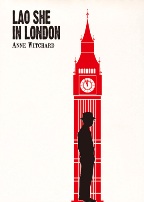
We’re delighted to announce the publication of Anne Witchard’s new monograph from Hong Kong University Press, Lao She in London. Focusing on one of China’s great modern writers, the book contributes to the rethinking of modernism as an event outside the boundaries of a single language, a single historical moment, or a single national formation.
“A beautifully written book that combines literary biography with a remarkably succinct account of British modernism and an evocative portrait of interbellum London, as viewed through Chinese eyes. Anne Witchard reminds us eloquently of the key role played by Chinese influences—both classical and modern—in literary modernism, and makes a great contribution to our understanding of Lao She’s London years.” — Julia Lovell, Birkbeck College, University of London
Details at: www.hkupress.org/book/9789888139606.htm
August 2012 188 pp. 14 b/w illus.
Paperback ISBN 978-988-8139-60-6
Socialism, Literature and the Radiant Future seminar
Tagged as Literature, Modernism, politics, the avant-garde, The Future

Wednesday 7th March, 1.15pm – 2.30pm
Room 257, University of Westminster, 309 Regent Street
Matthew Taunton (Queen Mary, University of London)
‘Socialism, Literature and the Radiant Future: Before and After 1917’
Abstract: The idea that a “radiant future” (in Zinoviev’s phrase) was just around the corner was central to the Soviet myth. But how were Western ideas about the future affected by the advent of the Bolshevik revolution? This paper will suggest that the bright eyed visions of the future prevalent in the fin de siècle and the Edwardian period were increasingly replaced, after 1917, by sectarian debates about Russia. The future had become a spatial, rather than a purely temporal entity – whether it was to be welcomed as the true democracy (Shaw, the Webbs) or feared as a totalitarian nightmare (Orwell, Koestler, Nabokov). Speculative fictions like those of Morris, Bellamy, and Wells gave way to anti-Communist texts like Darkness at Noon, Nineteen Eighty-Four and Bend Sinister, and endorsements of Stalinism by Day Lewis, Shaw and others. This paper explores a range of ways in which ‘the future’ had to be rethought in light of the events of 1917.
PLEASE NOTE: We have changed seminar rooms this week and will be in Regent Street room 257.
Wyndham Lewis and Cinema talk, Feb 22nd
Tagged as cinema, Literature, Modernism, Theory

Wednesday 22nd February, 1.15pm – 2.30pm
Room 359, University of Westminster, 309 Regent Street
Anthony Paraskeva (University of Dundee)
‘Wyndham Lewis, Cinema Hypnotism and the Frankfurt School’
Literature Research Seminars, Feb-March 2012
Tagged as Literature, Modernism
A heads up on the line up of speakers and list of dates for this semester’s series of English Literature and Culture seminars. All will take place from 1.15-2.30pm on Wednesday lunchtimes in the University’s Regent Street building (room 359).
8th February 2012
Morgan Daniels (Queen Mary, London)
‘Satire and Childishness’
22nd February 2012
Anthony Paraskeva (University of Dundee)
”Wyndham Lewis, Cinema Hypnotism and the Frankfurt School’
7th March 2012
Matthew Taunton (Queen Mary, London)
‘Socialism, Literature and the Radiant Future: Before and After 1917’
21st March 2012
Aisling McKeown (Westminster)
‘Once Upon a Time in the West: Rural Idyll in Contemporary Irish Fiction and Film’
Further details at: http://seminarserieswmin.wordpress.com/2012/01/11/semester-two-seminars-unveiled/
Modernism, a Sentimental Myth
Tagged as Architecture, art, Modern, Modernism

This Saturday 10th December, our Visiting Fellow, Victoria Walsh, will be taking part in a panel discussion for Modernism, a Sentimental Myth, part of the Bloomberg New Contemporaries 2011 at the ICA. Other panellists include our former colleague, and member of the IMCC Advisory Board, Murray Fraser.
The panel is at 5pm, preceded by a walking tour around the back streets of the ICA, and followed by a Club Night. For more details visit www.ica.org.uk
Anne Witchard talk on Lao She, Weds 7 December
Tagged as China, Literature, London, Modernism
.jpg "lao she")
The IMCC’s Anne Witchard will be speaking about her forthcoming book at the following event organised by our friends in the Contemporary China Centre:
Wednesday 7 December 2011, 4.30-6.30pm
Westminster Forum, Fifth Floor, 32-38 Wells Street, London W1T 3UW
‘Lao She: A Chinese Writer in Modernist London’
Anne Witchard (University of Westminster)
Chinese cultural and intellectual texts engaged in various ways with Western constructions of modernism. Of these exchanges and encounters, my focus in this paper will be on the early life and work of the famous Chinese novelist and short story writer, Lao She (1898 – 1966). Lao She was uniquely positioned in his engagement with specific conditions of modernity and nationhood both in Britain and in China. By birth a disenfranchised Manchu, he lived and worked in London during the late 1920s, a period seen as the apex of high modernism and his writing registers this interaction in ways that suggest we rethink his work beyond the parameters of the socialist realist tradition to which, chiefly because of his proletarian magnum opus, Rickshaw Boy (1936), it has largely been confined. Reading Lao She as an incipient modernist, initiating in China new subjects and new styles of writing in the endeavour to remake the sensibility of the Chinese people, serves also to unsettle Eurocentric considerations of modernism as exclusively Western, its place of origin unquestionably the metropolitan West.
Anne Witchard teaches in the Department of English, Linguistics and Cultural Studies at the University of Westminster. She specialises in representations of China and the Chinese in early-twentieth-century Britain (see her book Thomas Burke’s Dark Chinoiserie, Ashgate, 2010; and most recent of various papers, a chapter in the collection Chinatowns in a Transnational World, Routledge, 2011). Her book Lao She, London and China’s Literary Revolution will be published in Autumn 2012 by the University of Hong Kong Press.
All welcome, but non-Westminster attendees should register in advance with Derek Hird: d.hird@westminster.ac.uk

Words and Wars
Group for War and Culture Studies Research Seminar
Monday 21 November 2011, 5.30-7.30pm
Room 152, University of Westminster, 309 Regent Street, London W1B
Adam Piette (University of Sheffield), “Sputniks, Ice-Picks, KGB: Nabokov’s Pale Fire”
Adam Piette is the author of Remembering and the Sound of Words: Mallarmé, Proust, Joyce, Beckett and Imagination at War: British Fiction and Poetry, 1939-1945. His latest book, The Literary Cold War, 1945 to Vietnam (Edinburgh University Press, 2009), is a study of the psychological and cultural impact of the Cold War on the imaginations of citizens in the UK and US. The Literary Cold War examines writers working at the hazy borders between aesthetic project and political allegory, with specific attention being paid to Vladimir Nabokov and Graham Greene as Cold War writers. The book looks at the special relationship as a form of paranoid plotline governing key Anglo-American texts from Storm Jameson to Sylvia Plath and Ted Hughes, as well as examining the figure of the non-aligned neutral observer caught up in the sacrificial triangles structuring cold war fantasy.
Alan Morrison ( University of Westminster), “Virginia Woolf: War and Patriarchy”
Alan Morrison is also a Research Associate at the Smithsonian’s National Museum of American History, and teaches on the Museum Studies Master’s Program at Johns Hopkins University. He is currently working on education and exhibition programmes linked to the centenary commemorations of World War I.
Including Book Launch for Adam Piette, The Literary Cold War, 1945 to Vietnam
Entrance FREE but RSVP Dr Caroline Perret: C.Perret@westminster.ac.uk or tel. 020 7911 5000 ext. 2307.
Modern in Miniature
Tagged as Architecture, Modernism

For anyone interested in architectural models, design education, and photography, the Institute’s Dr Davide Deriu, a colleague from the Department of Architecture here at University of Westminster, has curated a fascinating exhibition entitled ‘Modernism in Miniature’ at The Canadian Centre for Architecture. If you happen to be in Montreal, why not swing by, it’s on until January 2012:
http://www.cca.qc.ca/en/exhibitions/1487-modernism-in-miniature

Wednesday 8 December 2010, 1.15-2.30pm
Room 106, University of Westminster, 32-38 Wells Street, London W1T 3UW
Stephen Ross (University of Victoria, Canada)
‘Ghostmodernism and Ethics’
Further details on the English Literature and Culture research seminar series here.
Science Fiction and Mass Observation
Tagged as Literature, Modernism, novel, science fiction
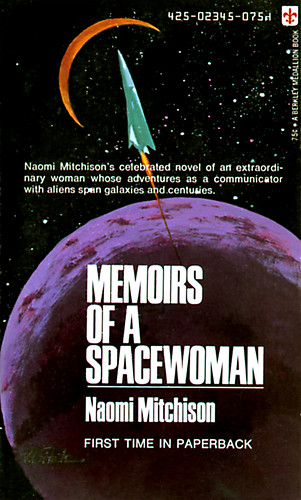
Wednesday 27th October, 1.15-2.30pm
Room 106, University of Westminster, 32-38 Wells Street, W1T 3UW
Nick Hubble (Brunel University)
‘Naomi Mitchison: From Intermodernism to Science Fiction (via Mass-Observation)’
From her 1920s novels, influenced by Lawrence but aimed at the audience of Wells, to her subsequent deployment of modernist techniques for political ends, Naomi Mitchison may be considered a key intermodern writer. Her relentless pursuit of the ‘just society’, free from gender-based and sexual repression, made her a controversial figure even in that controversial decade. And her close literary associates of that decade – including Auden, Aldous Huxley, Olaf Stapledon, Stevie Smith, Wyndham Lewis and Walter Greenwood – suggest different ways of thinking about literary networks and cultural history in general. She was also a friend and supporter of Tom Harrison and Mass-Observation, for whom she kept a wartime diary. Nick Hubble’s paper analyses this intermodern work and investigates how it relates to Memoirs of a Spacewoman (1962), a forerunner of the 1970s feminist utopian science fiction of writers such as Ursula Le Guin, Marge Piercy and Joanna Russ.
Rescheduled from last semester. Further details here.
Modernism lives
Tagged as art, Literature, Modernism, novel

Excellent guest blog by our own Michael Nath at Exclusively Independent about Gabriel Josipovici’s Whatever Happened to Modernism? and the media fuss that it’s generated:
“Professor Josipovici argues that the English novel has become caged in recent decades, and that its famous practitioners have been putting on a tame show, for all their swaggering. This has annoyed the literary reviewers and metropolitan columnists, who’re in the habit of making a fuss of certain big names, and don’t appreciate being told they’ve been cheering cows; but it happens to be true. The ranking writers and the prize-winners make it solely because the idea has caught on that ‘Modernism is dead’; the consequence of this is that contemporary writing can prowl about quite safely in its cage, or not prowl at all but just peep through its fingers.”
Read more here. And while you’re at it, check out David Cunningham’s review of Nicolas Bourriaud’s Altermodern exhibition in a recent issue of the Journal of Visual Culture. The defence of modernism begins here!
The Modernist Muse Programme Announced
Tagged as Modernism, the avant-garde

Westminster English Colloquium #15
“No Hawkers: No Models”: The Vicissitudes of the Modernist Muse
Saturday 19th June 2010, The Pavilion, University of Westminster, 115 New Cavendish Street, London W1W
10.00 Coffee
10.15 Introduction
10.30 – 11.30 Becky Bowler (Sheffield), ‘The strange poses of an untrained dancer’: performance and visual identity in Dorothy Richardson’s Pilgrimage
11.30 -12.30 Hana Leaper (Liverpool), ‘Caught and tangled in a woman’s body?’: The dualities of the artist’s body in self-portraits by Vanessa Bell, Gwen John and Laura Knight
12.30 – 2.00 Lunch
2.00 – 3.00 Emma West (Independent Scholar), This is My Life: Kay Boyle and Modernist Women’s Autobiographics
3.00 – 4.00 Lucy Howarth (Plymouth), ‘Dress address name’: Fashioning the Modernist Self
4.15 – 5.15 Jane Goldman (Glasgow), Laughing Torso: Muse, Model, Creatrix (The Vicissitudes of Nina Hamnett, Modernist Bohemian, Artist and Writer)
5.15 – 5.30 Roundtable discussion
See the Call for Papers here.
The Modernist Muse: Call for Papers
Tagged as art, Modernism, the avant-garde

Westminster English Colloquium #15
“No Hawkers: No Models”: The Vicissitudes of the Modernist Muse
Saturday 19th June 2010, The Pavilion, University of Westminster, 101 New Cavendish Street, London W1W
Keynote speaker: Jane Goldman (University of Glasgow)
In the spirit of Rhythm magazine’s (1911-1913) declared editorial remit – to cover the widest ‘manifestations of modernism in every province of art’ – this conference will seek to expand those categories structured round the hegemony of painting, sculpture, and literature, by looking especially at what might be considered gestural modernism, that is the experimental social aesthetics, or self-fashioning which vied with bourgeois norms. The impact of modern life on the founding processes of subjectivity was expressed in newly considered metropolitan modes of the material of identity – dress, interior décor, dance styles, cabaret/performance, photography, cinema, music, and sex. While modernist masquerades of virile masculinity were adopted by Augustus John and Wyndham Lewis, the swaggering style of the gipsy, or the apache, required emancipated women to support it. This conference aims to explore the especial difficulties and excitements of negotiation undergone by women in pre-WW1 London in their cultural positioning as artist, muse or model, or as was often the case, in these interchangeable roles.
Papers are invited on unnoticed or sidelined texts and the ways that they explore the artistic self, both structured and structuring, and that look at how modernist women produced their artistic identity or ‘enacted biography’. Possible subjects for papers: Vorticist artists sidelined by their male contemporaries: Helen Saunders, Jessica Dismorr, Kate Lechmere, and others; Jean Rhys, Katherine Mansfield and Mary Butts, who fictionalised their experiences as variously chorus girl, artist’s model, film extra, witch, dope addict and prostitute; the memoirs and anecdotes of ‘celebrity’ artists’ models, e.g. Dolores, Puma (Minnie Lucy Channing), Betty May, Viva (Booth) King, Euphemia Lamb, Lillian Shelley; the work of dancers such as Margaret Morris, Gertrude Hoffmann, Alice Mayes, Lydia Sokolova …
Proposals of around 300 words should be sent by no later than May 1st to Anne Witchard: a.witchard@westminster.ac.uk


The Institute for Modern and Contemporary Culture
University of Westminster Department of English, Linguistics and Cultural Studies
32-38 Wells Street, London W1T 3UW. United Kingdom.