
-
Architecture
archive
art
Ballard
body
China
cinema
ecology
education
Europe
Ezra Pound
futurology
gothic
image
law
Literature
London
magic
memory
Modern
Modernism
museums
music
novel
performance
photography
poetry
politics
radical philosophy
science
science fiction
Sinclair
Situationism
sound art
Surrealism
technology
television
the avant-garde
The Future
Theory
thomson
time
Urban
visual culture
war
Posts tagged politics
Book Launch at Architectural Association, Friday 6 June
Tagged as Architecture, politics, radical philosophy, Urban

Architecture Against the Post-Political book launch
Friday 6 June 2014, 6.30pm
The Book Shop, Architectural Association
36 Bedford Square, Bloomsbury, London WC1B 3ES
A general welcome to the launch of two books edited by our friend Nadir Lahiji at the Architectural Association in London: Architecture Against the Post-Political: Essays in Reclaiming the Critical Project (Routledge, 2014) and The Missed Encounter of Radical Philosophy With Architecture (Bloomsbury, 2014)
Join Nadir in conversation with the IMCC’s David Cunningham, along with other contributors to the collections, including Douglas Spencer, Libero Andreotti and Uta Gelbke.

Wednesday 19 March, 2014, 1 -3 pm
The Westminster Forum, 5th Floor, University of Westminster, Wells Street, London W1T
Illan rua Wall (Warwick)
“Crowds and Violence”
Dr Illan rua Wall is an Associate Professor in the School of Law, University of Warwick. His current research focuses upon the relation between law and disorder. Thinking about Occupy, the Indignados and the many current sites of unrest, it begins to develop the novel field of the ‘law of disorder’. This is not simply a collection of the various different legal apparatuses that repress or capture disorder, rather the ‘law of disorder’ thinks about law through and as disorder. He has published on critical legal theory, theories of constituent power, the Arab Spring, protest and transitional justice in Colombia, theories of human rights and revolt, and new Andean constitutional apparatuses. Illan is one of the editors of the blog www.criticallegalthinking.com, and is on the editorial board of Law and Critique, and the editorial advisory board of the Journal of Critical Globalization.
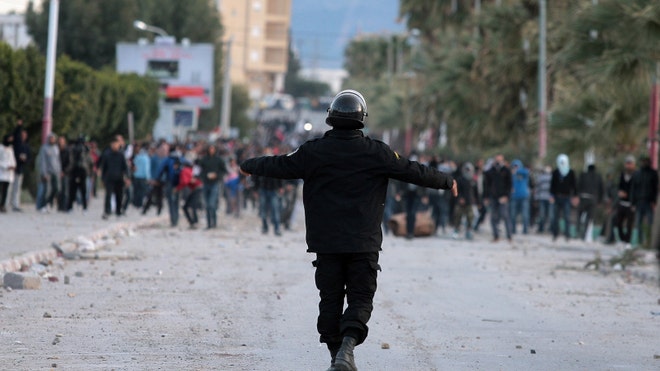
Reflections on Politics and Violence seminar, March 5th
Tagged as politics, radical philosophy
Wednesday 5th March, 13:00-15:00
The Westminster Forum, 5th Floor, University of Westminster, 32-38 Wells Street, London W1T 3UW
Kimberly Hutchings and Elizabeth Frazer
“Reflections on Politics and Violence”
Kimberly Hutchings is Professor of International Relations at the London School of Economics. Her main research interests are in international ethical and political theory, feminist ethical and political theory, and the work of Kant and Hegel. She is the author of Kant, Critique and Politics (Routledge, 1996), Hegel and Feminist Philosophy (Polity, 2003), Time and World Politics: Thinking the Present (Manchester, 2008) and Global Ethics: An Introduction (Polity, 2010).
Full list of the Faculty ‘On Violence’ seminars can be found online here

Wednesday 26th February, 13:00-15:00
The Westminster Forum, 5th Floor, University of Westminster, 32-38 Wells Street, London W1T 3UW
Michael Dutton (Goldsmiths)
“Becoming Political: My China”
Michael Dutton is Professor of Politics at Goldsmiths, University of London, and author of, among other texts, Beijing Time (Harvard, 2008) and Policing Chinese Politics (Duke, 2005).
Full list of the Faculty ‘On Violence’ seminars can be found online here
Wednesday 19th February, 13:00-15:00
The Westminster Forum, 5th Floor, University of Westminster, 32-38 Wells Street, London W1T 3UW

Paola Forgione, Pavia
“The Crime of Genocide Denial”
Paola Forgione is a PhD candidate at the University of Pavia in Italy, where she researches genocide prevention. Her thesis focuses on genocide denial and incitement to genocide. Paola is also a lawyer in Italy and worked as an intern in the Pre-Trial Division of the International Criminal Court in The Hague.
Full list of the Faculty ‘On Violence’ seminars can be found online here
Laura Hird literature research seminar, Weds 19th
Tagged as Literature, politics, Scotland
Wednesday 19th February, 4.00pm
Room 106, University of Westminster, 32-38 Wells Street, London W1T
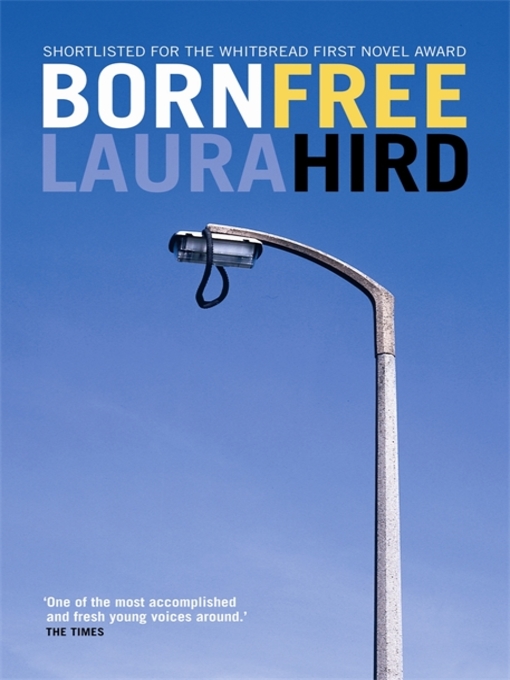
“No Horizons: Queering the Scottish Devolutionary Moment in Laura Hird’s Born Free”
Kate Turner, University of Westminster
Taken from a broader research project entitled ‘The Queer Moment: Post-devolution Scottish Literature’, this paper seeks to queer the nation which, in Lauren Berlant and Elizabeth Freeman’s words, ‘touts a subliminal sexuality more official than a state flower or national bird’ (‘Queer Nationality’ 195). Specifically, my research explores the queer potential that stems from Scottish devolution in 1999 and tracks this through to the referendum on Scottish independence to be held 18th September 2014. The paper considers Scottish devolution a site of rupture for Scottish nationhood; so often imagined into being with reference to its lack or loss of statehood, it is argued that Scotland finds itself at a disorientating moment of introspection in the wake of its own devolution. Within this context the paper offers a queer reading of Laura Hird’s Born Free (1999) using Lee Edelman’s No Future and Judith Halberstam’s In a Queer Time and Place. This analysis examines the breakdown of the nuclear family, uses Edelman’s term ‘reproductive futurism’ to regard devolution as queerly ‘beyond the horizon’, and uses Halberstam’s ideas to explore Hird’s characters as ‘queer subjects’. Through attention to the Scottish devolutionary setting of the text, the paper then draws links between Born Free’s queer aspects and this moment in order to conceptualise the disorientating impact of devolution, and the queer potential of this.

Materialisms Old and New: London Reading Group
Westminster Forum, 5th Floor, 32-38 Wells Street, London, W1T 3UW
The ‘Materialisms Old and New’ reading group organise regular meetings to discuss both old and new materialist understandings of markets, rationalities, agency, contingency, power and governance. This is not a lecture course so we will be mixing up the texts and approaching key or interesting readings in an informal and flexible way, with a brief introduction by one of the group. The next two meetings are:
Thursday 30 January 2014, 6.30-8.00 pm
Michael Callon et al., Acting in an Uncertain World: An Essay on Technical Democracy
Introduced by Michele Ledda (University of Westminster).
Wednesday 19 March 2014, 6.30-8.00 pm
William Connolly, The Fragility of Things: Self-Organizing Processes, Neoliberal Fantasies, and Democratic Activism
Introduced by David Chandler (University of Westminster).
Meetings are open to all. If you would like to be added to the working group mailing list, please contact David Chandler at d.chandler@wmin.ac.uk.
Sponsored by the Centre for the Study of Democracy, University of Westminster and the Centre for Media & Culture Research, London South Bank University.
Reading group at Carroll / Fletcher: Hard Road to Renewal, Nov 12th
Tagged as politics, radical philosophy

A quick plug for our friends and neighbours at the Carroll/Fletcher Gallery:
Reading Group | Chapter 5: The Hard Road to Renewal with Peter Osborne
Tuesday 12 November, 7:00-9:00pm
Carroll / Fletcher, 56-57 Eastcastle Street, London W1W 8EQ
Tickets £5.00, refreshments included
“There is no alternative to making anew the ‘revolution of our times’ or sinking slowly into historical irrelevance. I believe, with Gramsci, that we must first attend ‘violently’ to things as they are, without illusions or false hopes, if we are to transcend the present. … And from that starting point, begin to construct a possible alternative scenario, an alternative conception of ‘modernity’, an alternative future.”
Stuart Hall, The Hard Road to Renewal, 1988
Chapter 5, led by Professor Peter Osborne, will take as its starting point the introduction and conclusion of Stuart Hall’s 1988 collection of essays The Hard Road to Renewal: Thatcherism and the Crisis of the Left. In the twenty-five years since the publication of The Hard Road to Renewal, a period that included thirteen continuous years of Labour government, how has the Left in Britain (both the Labour party and the non-Labour left) responded to Thatcherism’s ‘authoritarian populism’ and ‘the decisive break with the post-war consensus, the profound reshaping of social life which it has set in motion’? And does Hall’s analysis of Thatcherism as a ‘hegemonic conception of politics as a war of position’, and his adoption of a ‘discursive conception of ideology’ and, after Ralph Milliband, of a notion of ‘an accelerated process of recomposition’ of class, provide the basis for an ‘alternative conception of modernity, an alternative future’?
Reading material: Please click here to download.
Book here: www.carrollfletcher.eventbrite.com
Historical Novel of the Contemporary Symposium
Tagged as Literature, novel, politics

The Historical Novel of the Contemporary: A Symposium
Tuesday 3rd December, 2-6pm
Carroll / Fletcher Gallery, 56 – 57 Eastcastle Street, London W1W 8EQ
Speakers: Emmanuel Bouju (Rennes), David Cunningham (Westminster), John Kraniauskas (Birkbeck), Fiona Price (Chichester), Leigh Wilson (Westminster)
The subject of a revival in recent decades, in both its ‘literary’ and ‘popular’ forms, for Georg Lukács the historical novel was, above all, that which narrated the ‘pre-history of the present’. Discussing authors ranging from Roberto Bolano to David Peace, Hilary Mantel to Wu Ming, this afternoon symposium considers the historiographic and political forms of the historical novel today as it might narrate the pre-history of our own contemporary.
The Science Fiction Politics of Urban Crisis article
Tagged as cinema, novel, politics, radical philosophy, science fiction, Urban

A new article by David Cunningham and Alex Warwick has just appeared in the most excellent journal CITY, vol. 13, no. 4: ‘Unnoticed Apocalypse: The Science Fiction Politics of Urban Crisis’. The essay ranges over a number of contemporary texts from The Coming Insurrection to Rem Koolhaas’ Junkspace to the film District 9.
The nice people at Taylor & Francis Press are offering the first 50 people to make use of it free access to an eprint version from the following link: http://www.tandfonline.com/eprint/AqbgvrWCkCSXg8XZEwgd/full
Visual Activism conference, March 14-16 2014, San Francisco
Tagged as politics, visual culture

Call for Proposals: Visual Activism
The International Association of Visual Culture (IAVC) invites proposals for its third biennial conference in San Francisco, March 14-16, 2014.
The conference is centered on the concept of Visual Activism. How can we better understand the relationships between visual culture and activist practices? There are ways in which art can take the form of political/social activism and there are also ways in which activism takes specific, and sometimes surprising, visual forms that are not always aligned with or recognizable by art-world frameworks. How can we engage in conversations about abstract or oblique visual activism, for instance as is demanded in conditions of extreme censorship? How can we approach the complexity of governmental or commercial ‘visual activism’ to better address hegemonies of visual culture (for example, in advertising and the mass media)? To what degree do forms of visual activism travel, and in what ways are they necessarily grounded in locally specific knowledge and geographically specific spaces?
Presentations should respond to these questions or related topics and may take the form of scholarly papers (20 minutes), artist talks (20 minutes), short performances (5 to 30 minutes), or lighting-round interventions (5 minutes). Proposals should include a 400-word abstract, links to websites with additional publications or relevant images and information, and a CV. Please send proposals to edu@sfmoma.org (with ‘visual activism’ as the subject line) no later than October 1, 2013.
Please email edu@sfmoma.org to be added to the mailing list to receive updates about the conference such as registration, the calendar of events and participants.
For further information about the International Association of Visual Culture, or to join the IAVC, please click here.

Thursday 11 July, 7:00-9:00pm
Carroll / Fletcher, 56-57 Eastcastle Street, London W1W 8EQ
Our friends at Carroll / Fletcher, round the corner from our IMCC base, have announced their next reading group, Chapter 4: The Price of Sex, led by artist Lora Hristova on Thursday 11 July.
Chapter 4 leads on from Chapter 3: The Dialectics of Sex, that took radical feminist Shulasmith Firestone’s pioneering 1970’s text as it’s starting point, generating a lively debate led by Stella Sandford. With a focus on what twenty-first century suffragettes would fight for now, Chapter 4 explores the sex industry and sexual politics.
The reading for Chapter 4: The Price of Sex is on Hristova’s Tumblr – www.lorahri-priceofsex.tumblr.com where she asks What is the price of sex? What (and who) are we willing to sacrifice in the name of pleasure? How often is the need for physical release actually a desire for control and is having sex a human right? The discussion aims to navigate the territory of the sex industry; from its everyday reflections in heterosexual life to the heated debate around the legalisation of prostitution and the dark corners of human trafficking.
Lora Hristova’s mixed media practice engages with gendered themes of identity and sexuality, exploring issues of gender inequality and representations of women in contemporary culture in reference to universal experiences of desire and shame, intimacy and anxiety and insecurities surrounding the body. Her recent work has investigated the sex industry, and the cultural, psychological and social impact of pornography. She recently discussed her research in an Artists’ Presentation for the Zabludowicz Invites exhibition.
Tickets £5.00 including refreshments.
To book go to carrollfletcher.eventbrite.com
Foreclosure conference, June 17-18 2013
Tagged as art, law, politics, Theory, Urban

FORECLOSURE
Brunel University & University of Westminster
1st Joint Researching the Arts/Social Sciences Conference for Research Students
The Pavilion, University of Westminster, 115 New Cavendish Street, London
June 17 & 18, 2013, 10:30-5pm
Keynote: Oren Ben-Dor, University of Southampton
‘Placial [in]justice: reflections on the wounded origin of political affectation’
Please join us at this two-day interdisciplinary conference Foreclosure that aims to bring together law, art and politics. We understand foreclosure as the art of ordering and securing a common ground for the unfolding of a common experience; the exchange of affects and perspectives; and the performance of bodies and spaces. Art, Law and Politics habitually build walls around their concepts and practices. Foreclosure aims to encourage the exploration of practices and performances of law, art and politics through the prism of their shared operation; the investigation of the juncture between their disciplinary fences; and the unfolding of the fragility of their mechanisms. This is our aim: to dissect, dismantle and improve the operations of art, law and politics in order to locate cracks, produce apertures, and ride the lines of flight where new potentialities are generated. The conference programme is attached.
Admission is free but places are limited. RSVP at foreclosuresconference@gmail.com
An Encounter with Agnes Heller, June 11
Tagged as politics, radical philosophy

An Encounter with Agnes Heller
Tuesday 11th June, 11am – 7pm
The Boardroom, University of Westminster, 309 Regent Street, London W1B 2UW
Organised by our friends in the Centre for the Study of Democracy
10.30-11.00 Registration
11.00-1.00 Roundtable I
Bethania Assey (Rio de Janeiro), Laura Boella (Milan), David Cunningham (Westminster), David Roberts (Monash)
2.30-4.30 Roundtable II
Albena Azmanova (Kent), Steglinde Rosenberger (Vienna), Kate Soper (London Met), Simon Tormey (Sydney)
5.00-6.30 Public Lecture by Agnes Heller
“What went wrong with the religion of Reason?”
Chaired by Chantal Mouffe
This is a free event but registration is required.
Registration link: csdagnesheller.eventbrite.com
Cunningham on Bifo
Tagged as poetry, politics, radical philosophy
David Cunningham’s reviews of Franco ‘Bifo’ Berardi’s latest book, The Uprising: On Poetry and Finance, is currently up as a freebie on the Radical Philosophy website here.

The Political Unconscious of Architecture
February 28 2013, 6.30pm
UCL Urban Laboratory @ Bartlett School of Architecture
UCL Royal Ear Hospital, Ground Floor, Capper Street, London WC1E 6AP
An evening of presentation and discussion to celebrate the publication of a new paperback edition of The Political Unconscious of Architecture, edited by Nadir Lahiji. Contributors David Cunningham (IMCC, Westminster), Donald Kunze (Penn State), Nadir Lahiji (Pennsylvania), Jane Rendell (Bartlett), and Robin Wilson (Bartlett), along with respondents Camillo Boalo (DPU, UCL) and Douglas Spencer (AA), take up Fredric Jameson’s radical critique at the juncture of aesthetics and politics. All welcome!
Cybernetic Revolutionaries review
Tagged as politics, radical philosophy, technology
Jon Goodbun’s review of Eden Medina’s fascinating Cybernetic Revolutionaries: Technology and Politics in Allende’s Chile is currently up as a freebie on the Radical Philosophy website here.

A quick notice that Vol 2, no. 2 of ARCHITECTURE_MEDIA_POLITICS_SOCIETY is now available on-line.
Ten years ago this month Daniel Libeskind won the competition for Ground Zero. It was a story of politics, economics and media manipulation. In this month’s edition of the journal, he looks back on the most emotive and polemic architectural project of recent times and discusses the relationship between politics and architecture in the context of trauma.
Read it at: http://architecturemps.com/
Eyal Weizman lecture, January 29th
Tagged as Architecture, politics, Urban, visual culture, war

Eyal Weizman, The Roundabout Revolution
January 29th 2013, 7pm
Department of Architecture, University of Westminster, 35 Marylebone Road, London NW1 5LS
Eyal Weizman, architect, curator and author of The Least of All Possible Evils: Humanitarian Violence from Arendt to Gaza will speak at the first of a 6 part lecture series: ‘Critical Humanitarianism’. Eyal Weizman is Professor of Visual Cultures and director of the Centre for Research Architecture at Goldsmiths, University of London. Since 2011 he also directs the European Research Council funded project, Forensic Architecture, on the place of architecture in international humanitarian law. He is a founding member of the architectural collective DAAR in Beit Sahour/Palestine.
Religious tension, diminishing resources, city dwelling and environmental catastrophes continue to create vulnerable regions throughout the world. The necessity for architects to address humanitarian and environmental issues in their practice is increasing. Do architects have the means to address these issues through their work? Or are we powerless to act? Through a series of 6 talks addressing ‘Critical Humanitarianism’ by Architects volunteering for Charities or working with NGOs in the Development Sector we aim to raise some of the difficult ethical and political questions about Humanitarian work and it’s relation to power.

Reading Group at Carroll / Fletcher Gallery
Chapter 2 | Theory from the South
February 13th 2013,7.30pm
Carroll / Fletcher, 56-57 Eastcastle Street, London W1W 8EQ
Chapter 2 continues Carroll / Fletcher’s series of participatory discussions that use relevant, accessible texts to consider pertinent issues of our times. In this session, the starting point will be the first chapter of Theory From The South. Or, How Euro-America Is Evolving Toward Africa by Jean Comaroff and John L. Comaroff, with particular attention on pages one through nineteen. With this text, the Camaroff’s attempt to recontextualize global relations, and challenge our perceptions about ‘developed’ and ‘developing’ nations.
The discussion will be initiated by Lara Pawson and David Dibosa. Lara Pawson is a writer and journalist who has just completed her first book, a work of literary non-fiction about Angola’s recent history. She has held writing fellowships at the University of the Witwatersrand in Johannesburg and Wolfson College, Cambridge, and worked for the BBC World Service in London and as a correspondent in Mali, Ivory Coast and Angola. Dr. David Dibosa is co-author of Post-Critical Museology: Theory and Practice in the Art Museum (Routledge, 2012). He is Joint Course Director for MA Art Theory and MA Curating at Chelsea College of Art and Design. The conversation will be open to the audience and their contributions welcome.
Download Theory from the South here
Further suggested reading includes, the text in its entirety (pages one through forty-nine); Ato Quayson’s ‘Coevalness, Recursivity and the Feet of Lionel Messi’ (found here); and Achille Mbembe’s ‘Theory from the Antipodes. Notes on Jeans & John Comaroff’s Theory from the South‘ (found here).
Booking essential as places are limited: carrollfletcher.eventbrite.co.uk
Refreshments will be provided
t +44 (0)20 7323 6111
e info@carrollfletcher.com
www.carrollfletcher.com


The Institute for Modern and Contemporary Culture
University of Westminster Department of English, Linguistics and Cultural Studies
32-38 Wells Street, London W1T 3UW. United Kingdom.